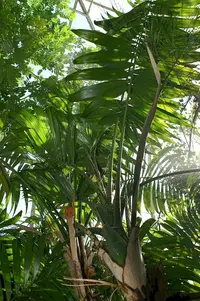
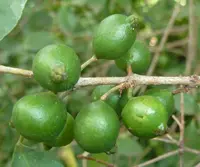
Puerto Rico palmetto Care (Sabal causiarum)

Puerto Rico palmetto

About Puerto Rico palmetto

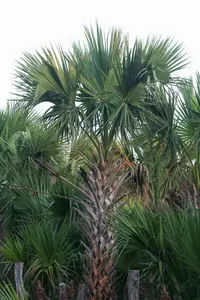
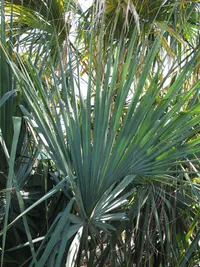
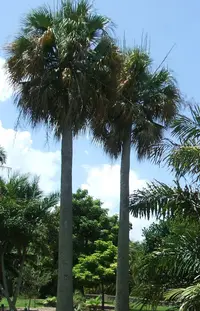
Puerto Rico palmetto (Sabal causiarum) is a large, slow-growing fan palm native to Puerto Rico and nearby Caribbean islands. It forms a thick, smooth trunk topped with a rounded crown of stiff, blue-green fan-shaped leaves.

In the landscape it develops into a bold, architectural specimen and can reach impressive height in warm climates. The plant is adapted to dry coastal areas and rocky soils, which makes it relatively tolerant of heat, wind, and salt spray.

Its tough nature and slow growth habit usually make it easier to manage once established, though it needs space and patience. Understanding how to care for Puerto Rico palmetto starts with providing sun, good drainage, and modest but consistent moisture while it is young.

Main Plant Requirements

Care Difficulty

Easy Care

Light Preference

Full Sun

Water Requirements

Moderate Water

Temperature Preference

Warm Climate

Hardiness Zone

9–11

Soil Texture

Sandy, Loamy, Rocky

Soil pH

Slightly acidic (6.5–7.0), Neutral (7.0)

Soil Drainage

Well-drained

Fertilization

Minimal (feed rarely)

Get Personalized Care Plan

Scan your plant to receive care tips personalized for your specific plant

Available on iOS and Android

How to Care for the Puerto Rico palmetto

This large palm prefers strong light and adapts well to open landscapes in warm climates.

  • Provide full sun for 6–8 hours per day once established; young plants benefit from 2–3 years of bright, filtered light to prevent leaf scorch.
  • Puerto Rico palmetto tolerates light partial shade, though growth slows and crowns become more open with less than 4–5 hours of direct sun.
  • In hot inland areas, prioritize morning sun with slight afternoon shade; watch for bleached or crispy fronds as a sign of excessive, reflected heat exposure.

This palm is drought tolerant once established but grows best with deep, infrequent watering in well-drained soil.

  • Allow the top 5–8 cm of soil to dry before watering; then irrigate deeply so moisture reaches at least 20–30 cm into the root zone.
  • During the first 2–3 years, monitor more closely in summer, increasing frequency during hot, dry spells and reducing it during cool, rainy periods.
  • For Sabal causiarum, symptoms of overwatering include yellowing lower fronds and soft crown tissue, while prolonged drooping and crisp leaf tips indicate underwatering.

This palm thrives in warm, frost-free climates and handles significant heat once established.

  • Optimal growth occurs around 75–90°F (24–32°C), with steady development in long, warm seasons typical of subtropical regions.
  • Mature plants tolerate brief drops to about 20–25°F (-6 to -4°C) with some leaf damage, but repeated hard frosts can deform or kill the growing point.
  • In very hot periods above 100°F (38°C), young palms benefit from extra soil moisture and light afternoon shade to reduce heat stress on new fronds.

This palm handles a fairly wide humidity range but benefits from moderate ambient moisture.

  • Aim for 40–60% humidity, which suits most homes and supports steady leaf growth.
  • It tolerates drier air, but prolonged <30% can lead to brown leaflet tips and edges.
  • If air is very dry, group plants, place a tray of damp pebbles nearby, or run a small humidifier close to the Puerto Rico palmetto.

Sabal causiarum prefers a mineral-based mix that drains freely yet holds some moisture.

  • Use a sandy or sandy-loam structure with 40–60% inorganic material such as coarse sand, perlite, or pumice for strong root aeration.
  • Incorporate a modest amount of compost or fine bark to provide organic matter without creating a dense, waterlogged medium.
  • Target a slightly acidic to neutral pH around 6.0–7.2, avoiding highly alkaline mixes that can limit nutrient uptake.
  • Avoid heavy clay, peat-heavy, or compacted mixes and break up any fine particles that slow drainage or form crusts on top.

This species can be grown in containers when young or in cooler climates, but it eventually becomes too large for long-term pot culture.

  • Choose a deep, wide, and heavy container that resists tipping as the palm forms a tall, stout trunk and large fronds.
  • Select thicker-walled clay or concrete pots outdoors to balance moisture retention with weight for wind stability.
  • Raise the pot slightly on feet or blocks so large drainage holes stay clear and excess water exits rapidly after irrigation.

This species grows slowly and needs only modest feeding when cultivated, including Puerto Rico palmetto in landscapes or large containers.

  • Use a balanced slow-release fertilizer (for example 10-10-10) or well-rotted compost at the start of spring.
  • Feed once every 3–4 months during the warm growing season, depending on soil fertility.
  • Apply at half the label rate for palms, keeping granules away from the trunk base.
  • Stop fertilizing in late fall and do not feed during winter dormancy or cool periods.

Sabal causiarum benefits from light, conservative pruning focused on safety and plant health rather than shaping.

  • Carry out pruning in late winter or early spring before strong new growth begins.
  • Remove only dead, diseased, broken, or heavily browned fronds, plus hanging flower or fruit stalks if messy.
  • Avoid cutting green fronds close to the trunk to maintain vigor and a stable canopy structure.
  • Use clean, sharp loppers or a pruning saw, disinfecting blades between plants to limit disease spread.

This large palm is usually grown in-ground, so care focuses on correct transplanting rather than frequent repotting.

  • Transplant young plants in late spring or early summer once soil is warm and air temperatures are stable.
  • Look for circling roots in nursery containers and slow or stalled growth as signs a larger planting space is needed.
  • Dig a wide hole, keep the root ball intact, and set the palm at the same soil level as in its container.
  • Water deeply after planting, shade the crown if exposed, and maintain even moisture for several weeks to reduce transplant shock.

Seed is the standard method for propagating Sabal causiarum, and it requires patience and consistent warmth.

  • Collect fully ripe, cleaned seeds and sow them in late spring or early summer.
  • Use a sterile, well-drained medium such as a sand and peat or coco mix in deep containers.
  • Maintain 75–85°F soil temperature, consistent moisture, and high humidity to support slow germination.
  • Provide bright, indirect light and do not disturb seedlings until roots have filled the container and growth is steady.

This palm is relatively cold tolerant for a tropical species and usually needs minimal winter care in mild climates.

  • Mature plants can handle light frosts but may show leaf damage below about 25°F, especially in exposed sites.
  • In marginal zones, apply a 5–8 cm mulch layer around the root zone, keeping it slightly away from the trunk.
  • Move container-grown plants into a bright, cool, frost-free space before hard freezes arrive.

Care Tips

Trunk Base Protection

When mowing or using string trimmers, maintain a grass-free, mulched ring at least 45–60 cm around the trunk to prevent mechanical damage that can permanently scar the palm and open entry points for disease.

Wind Establishment Support

In windy sites, install 3 sturdy stakes and soft ties around young palms for the first 12–18 months, checking and loosening ties every few months so the trunk can move slightly and strengthen without being abraded.

Root Zone Aeration

On compacted sites, use a soil probe or narrow auger to create vertical holes 20–30 cm deep in a ring 60–120 cm from the trunk, then backfill with a mix of excavated soil and coarse sand to improve oxygen flow to the root zone.

Salt Exposure Management

In coastal landscapes, periodically hose off foliage with fresh water during dry spells to remove salt spray, and avoid piling de-icing or irrigation salts within the root zone to reduce long-term salt stress while growing Puerto Rico palmetto.

Hurricane Readiness

In storm-prone regions, remove only clearly dead or hanging fronds before peak hurricane season and leave healthy lower fronds in place, as they help stabilize the canopy and reduce the risk of crown damage in high winds.

Common Pests and Diseases

Palmetto weevil

This pest attacks stressed or recently transplanted palms, boring into the crown and trunk and destroying internal tissues. Symptoms include wilting or collapse of the newest fronds and a foul odor from the crown area.

Solution

Remove and destroy heavily infested palms, as recovery is rare once the crown is damaged. To prevent problems, avoid stressing the palm, limit major pruning, and use a labeled systemic insecticide as a preventative treatment on high‑value or freshly transplanted specimens in regions where palmetto weevil is common.

Royal palm bug

These insects feed on the newest leaflets, causing yellow streaks, speckling, and distorted fronds that may appear folded or scorched. Damage is usually concentrated on the youngest, still‑unfolding fronds in the crown.

Solution

Prune and dispose of badly damaged young fronds if practical, and monitor the crown for new damage during warm months. Where populations are high, apply a systemic insecticide labeled for palm sap‑feeding insects to the soil or trunk, following all label directions, and avoid overhead irrigation that favors rapid population increase.

Ganoderma butt rot

This disease affects the lower trunk and root flare, slowly rotting internal tissues and weakening structural support. Symptoms include a thinning canopy, smaller new leaves, and hard, shelf‑like white‑to‑reddish conks at the base of the trunk.

Solution

There is no curative treatment, so affected palms should be removed, including as much of the stump and root system as possible, and not replaced with another palm in the exact spot. Avoid trunk wounds, maintain good soil drainage, and prevent chronic stress to reduce the likelihood of infection in nearby palms.

Leaf spot

This disease produces small brown, gray, or black spots on leaflets, sometimes with yellow halos, which can merge into larger blotches during humid weather. Symptoms often start on older fronds, especially in dense plantings or where foliage stays wet for long periods.

Solution

Remove and discard heavily spotted fronds, improving air circulation around the canopy and watering at the soil level rather than over the leaves. In persistently humid or rainy climates, a copper‑based fungicide labeled for palms can be used preventively on new foliage according to label directions.

Scale insects

These insects appear as small bumps or crusty patches on leaf stalks and undersides of leaflets, sucking sap and causing yellowing, reduced vigor, and sticky honeydew that may lead to sooty mold. Infestations tend to build up on sheltered parts of the fronds and along the midribs.

Solution

Physically remove light infestations by wiping fronds with a cloth dampened in mild soapy water, then rinsing with clean water. For heavier infestations, encourage natural predators when the palm is outdoors and, if needed, apply a horticultural oil or a systemic insecticide labeled for scale on palms, repeating as directed to target newly hatched crawlers.

Interesting Facts

Massive palmetto trunk

This species develops one of the thickest trunks among palmettos, often appearing much stouter than other Sabal species, which makes it especially resistant to tropical storms and high winds in its native Caribbean range.

Island limestone specialist

In the wild it often grows on exposed limestone hills and coastal slopes in Puerto Rico and nearby islands, tolerating alkaline, rocky soils that are challenging for many other tree species.

Cultural landscape icon

In Puerto Rico this palm has been widely planted along roads, in plazas, and in coastal developments, becoming a characteristic element of the designed landscape and a regional symbol of robust Caribbean palms.

Botan icon

Did you know?

Mature individuals can live for many decades and slowly develop very large, heavy crowns that remain intact through hurricanes, so this palm is frequently studied and recommended in coastal urban planning as a model for wind‑resilient tree selection.

FAQs about Puerto Rico palmetto

This species is slow to moderate, often adding about 15–30 cm of trunk per year once established. Juveniles stay low and fan-like for many years before forming a visible trunk and canopy.

Grow Healthy Plants with Botan Care

Keep your plants happy and healthy with plant identification, disease detection, and easy care guidance.

Botan plant care app — identify plants on mobile

Explore More Plants