Wind-hardening young plants
For the first 1–2 seasons, expose young shrubs gradually to stronger wind by shifting them from a sheltered spot to their final position over several weeks, which encourages sturdier stems and reduces later wind damage.

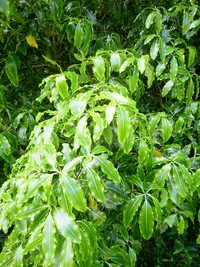
Tarata (Lemonwood), Pittosporum eugenioides, is an evergreen shrub or small tree valued for its glossy light green leaves and dense, upright habit. The foliage releases a sweet, lemony scent when crushed, which makes it popular for hedging and shelter plantings.
This species is native to New Zealand, where it grows in lowland and coastal forests. It adapts well to many mild, temperate climates and is generally considered easy to manage once established.
It responds best to full sun or light shade, moderately moist but well-drained soil, and protection from extreme cold or drought, which helps clarify how to care for Tarata (Lemonwood).

Care Difficulty
Easy Care

Light Preference
Full Sun

Water Requirements
Moderate Water

Temperature Preference
Warm Climate

Hardiness Zone
8–11

Soil Texture
Sandy, Loamy, Clay

Soil pH
Slightly acidic (6.5–7.0), Neutral (7.0)

Soil Drainage
Moist but well-drained

Fertilization
Minimal (feed rarely)
Scan your plant to receive care tips personalized for your specific plant
Available on iOS and Android
This evergreen shrub prefers bright conditions but handles a range of light in temperate gardens.
This shrub prefers evenly moist but not saturated soil once established in the landscape.
This species suits mild climates and tolerates moderate heat and light frost once mature.
This species adapts well to typical household humidity but benefits from slightly moist air in very dry homes.
This shrub prefers moderately fertile, well-structured soil that drains freely yet holds some moisture.
This shrub can grow successfully in containers when the pot is chosen to manage its eventual size and weight.
Tarata (Lemonwood) grows well in average soil but responds to light feeding in containers or poor ground.
Pittosporum eugenioides benefits from thoughtful pruning to maintain structure and plant health.
This species is usually grown in the ground, so focus on careful transplanting and occasional container up-potting.
Pittosporum eugenioides is commonly propagated from semi-ripe cuttings and sometimes from seed.
This shrub is moderately cold hardy but benefits from some winter attention in colder regions.

Plant Health Check
Not sure what's wrong with your plant? Check your plant's health inside the app.
When the leaves are crushed, they release a strong lemon-like scent due to volatile oils in the tissue, a feature that makes the shrub easy to recognize even without flowers.
In late spring to early summer, it produces many small, creamy-yellow flowers in tight clusters that are strongly sweet-scented and attract night-flying moths and other pollinators.
This evergreen shrub or small tree is endemic to New Zealand and is naturally common in lowland and coastal forests, where it tolerates wind, salt spray, and a wide range of soils.

Traditional Māori plant knowledge records Tarata as an important source of fragrant gum and resin, which were historically used for scenting oils and as a kind of natural chewing material, making it one of the more valued aromatic trees in lowland New Zealand forests.
It can be grown indoors in bright, cool rooms but performs best outdoors. Indoors it needs strong light, good air movement, and regular pruning to control size. Tarata (Lemonwood) indoor care is easier in large, bright spaces.
Keep your plants happy and healthy with plant identification, disease detection, and easy care guidance.