Seasonal Growth Pause
Allow the plant to rest in the hottest part of summer by reducing water slightly and avoiding repotting or major disturbance while rosettes look stalled or slightly closed.

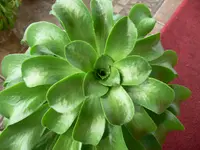
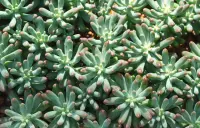
Viscid houseleek (Aeonium glutinosum) is a small succulent shrub known for its sticky, spoon-shaped leaves arranged in tight rosettes. It stays compact and forms low mounds, often with branching stems. Native to the Madeira archipelago, it grows in mild, coastal climates on rocky slopes with good drainage. The leaves are usually green with reddish tones at the edges when exposed to stronger light. This species is generally considered easy to grow if kept in bright light, well-drained soil, and protected from frost. Understanding how to care for Viscid Houseleek mainly involves avoiding excess water and prolonged cold, wet conditions.

Care Difficulty
Moderate Care

Light Preference
Partial Sun

Water Requirements
Low Water

Temperature Preference
Warm Climate

Hardiness Zone
10–11

Soil Texture
Sandy, Loamy, Rocky

Soil pH
Slightly acidic (6.5–7.0), Neutral (7.0)

Soil Drainage
Well-drained

Fertilization
Minimal (feed rarely)
Scan your plant to receive care tips personalized for your specific plant
Available on iOS and Android
Aeonium glutinosum prefers bright, gentle light that avoids harsh midday sun.
Aeonium glutinosum prefers thorough but infrequent watering that allows the soil to dry slightly between soakings.
This species prefers mild, frost-free conditions with moderate seasonal variation.
Aeonium glutinosum handles typical indoor humidity well and rarely needs special adjustment.
Aeonium glutinosum prefers a lean, fast-draining, mineral-rich substrate that prevents waterlogging around its shallow roots.
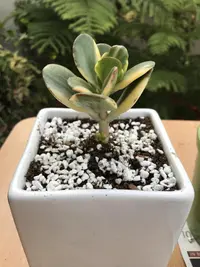
This species is well suited to container growing due to its shallow, fibrous root system and compact rosettes.
Aeonium glutinosum benefits from light, controlled feeding during its active growing season.
Aeonium glutinosum responds well to light, purposeful pruning to maintain shape and plant health.
Aeonium glutinosum grows slowly and prefers infrequent repotting in well-drained containers.
Aeonium glutinosum is commonly propagated from stem cuttings taken during its active season.
Aeonium glutinosum is frost sensitive and needs specific winter care in most temperate climates.

Plant Health Check
Not sure what's wrong with your plant? Check your plant's health inside the app.
The rosettes produce a noticeably sticky surface due to glandular hairs and secretions, which can trap small debris and may help reduce water loss and deter tiny herbivores on its native cliffs.
This species is naturally restricted to Madeira and nearby islands, where it grows on steep, often north-facing cliffs and rock walls, tolerating high winds, salt-laden air, and shallow pockets of substrate.
In its mild oceanic habitat, this plant grows mainly in the cooler, moist season and often slows or partially rests in the hot, dry period, following a Mediterranean-type growth pattern even on Atlantic islands.

Aeonium glutinosum can form large, mound-like colonies composed of many rosettes interconnected by branching stems, allowing long-lived clonal patches to persist for many years on the same rock faces in Madeira.
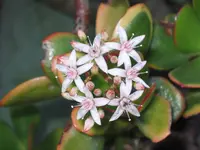
Flowering usually occurs once rosettes are mature, often after several years. Lack of bloom is commonly due to immaturity, heat stress, or recent repotting. After flowering, that rosette dies, but offsets typically continue growing.
Keep your plants happy and healthy with plant identification, disease detection, and easy care guidance.