Broadleaf stonecrop Care (Sedum spathulifolium)

Also known as: Broad-leaved Stonecrop, Colorado Stonecrop
Broadleaf stonecrop

About Broadleaf stonecrop

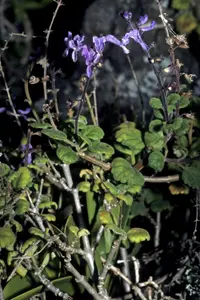
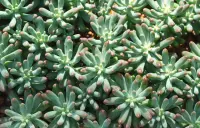
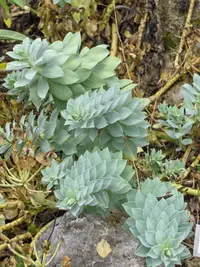
Broadleaf stonecrop (Sedum spathulifolium) is a small, evergreen succulent from western North America, often found on rocky slopes and coastal cliffs. It forms dense, low mats of spoon-shaped leaves that range from silvery green to purple-toned, depending on light and temperature.

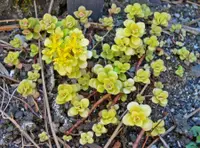
Short stems carry clusters of star-shaped yellow flowers, which attract pollinators and add color above the foliage. Its compact, spreading habit makes it suitable for rock gardens, shallow containers, and green roofs.

This species is adapted to lean, fast-draining soils and dry conditions, so it suits gardeners who prefer low-maintenance plants. Understanding how to care for Broadleaf stonecrop starts with providing strong light, good drainage, and avoiding consistently wet soil.

Main Plant Requirements

Care Difficulty

Easy Care

Light Preference

Full Sun

Water Requirements

Low Water

Temperature Preference

Cold Hardy

Hardiness Zone

5–9

Soil Texture

Sandy, Loamy, Rocky

Soil pH

Acidic (5.5–6.5), Slightly acidic (6.5–7.0)

Soil Drainage

Well-drained

Fertilization

Minimal (feed rarely)

Get Personalized Care Plan

Scan your plant to receive care tips personalized for your specific plant

Available on iOS and Android

How to Care for the Broadleaf stonecrop

This succulent thrives in bright conditions and forms best color with strong light exposure.

  • Provide 6–8 hours of direct sun daily, ideally with cool morning sun and light afternoon shade, especially in hotter regions.
  • Tolerates partial shade (around 3–4 hours sun), but Broadleaf stonecrop may stretch and lose foliage color in too much shade.
  • In summer, watch for leaf scorch or pale, crispy patches from intense afternoon sun and, in winter, ensure an open, unobstructed site for maximum low-angle light.

This drought-tolerant succulent needs infrequent, careful watering to avoid root rot.

  • Outdoors in well-drained soil, water deeply only when the top 3–5 cm are completely dry; in most climates this means after prolonged dry spells, not on a fixed schedule.
  • Reduce watering sharply in cool or wet seasons, since Sedum spathulifolium stores moisture in its leaves and excess soil water quickly causes root and stem rot.
  • Watch for mushy, yellowing leaves as a sign of overwatering, and for wrinkling, limp leaves and slow recovery after light rain as indicators of underwatering.

This hardy succulent tolerates a wide temperature range but grows best in mild conditions.

  • Active growth is strongest around 60–75°F (16–24°C), where foliage stays compact and coloration is most intense.
  • Mature plants generally survive down to about 10–15°F (-12 to -9°C) with good drainage; brief colder snaps are possible but prolonged freeze-thaw in wet soil increases crown damage.
  • In summer, it copes with 85–95°F (29–35°C) if soil drains very fast; provide afternoon shade and avoid reflected heat from walls or pavement to limit stress.

Humidity is rarely a concern for this drought-adapted succulent.

  • Tolerates very dry air down to 20–30% without stress, making caring for Broadleaf stonecrop straightforward in most homes.
  • Aim for 30–50% humidity; avoid prolonged exposure above 70%, which can promote fungal spots on leaves and stems.
  • Soft, water-soaked foliage or gray mold patches indicate excess humidity; improve air flow rather than misting or using trays.

This species needs very fast-draining, mineral-rich soil to prevent root rot.

  • Use a gritty mix such as 50–70% mineral components (coarse sand, pumice, or perlite) blended with 30–50% lean cactus mix or low-organic potting mix.
  • Aim for a slightly acidic to neutral pH around 6.0–7.0, which supports nutrient availability without encouraging excessive, weak growth.
  • Improve aeration by using coarse, not fine, sand and adding pumice or crushed lava rock so water drains through in seconds, not minutes.
  • Avoid heavy, peat-dense or clay-based mixes and any site where water lingers after watering, as Sedum spathulifolium is highly susceptible to rot in soggy conditions.

This low, spreading succulent is well suited to container growing.

  • Choose a shallow, wide pot that matches the plant’s spreading habit, allowing rosettes to fill the surface while keeping the root zone close to the warm top layer of the mix.
  • Select unglazed terracotta or other porous materials in wet climates to speed moisture loss, while denser ceramic helps retain moisture slightly longer in hot, dry areas.
  • Elevate the pot or use pot feet so drainage holes stay clear and water runs off quickly, preventing the thin roots from sitting in any collected runoff.

This drought-tolerant succulent needs minimal feeding, so Broadleaf stonecrop usually grows well in lean soil.

Sedum spathulifolium needs only light pruning to keep rosettes tidy and prevent overcrowding.

  • Trim spent flower stems at soil level after blooming to maintain a compact mound.
  • Snip off dead, damaged, or leggy shoots in late winter or early spring with clean scissors or snips.
  • Thin crowded rosettes gently, lifting whole clusters to improve air flow and reduce rot risk.

This low-growing sedum is usually transplanted in the garden rather than repotted frequently in containers.

  • Transplant in spring or early fall when temperatures are mild and soil is workable.
  • Move plants only when clumps outgrow their space, growth slows, or roots circle a small pot.
  • Lift clumps with a trowel, keeping root balls intact, and replant into gritty, sharply drained soil.
  • Water lightly after transplanting, then allow soil to dry between waterings to limit root stress.

Sedum spathulifolium is commonly propagated to expand groundcover patches or share plants.

  • Take 3–5 cm stem or leaf cuttings in late spring or summer and allow cut surfaces to dry 1–2 days.
  • Set cuttings on or just into gritty, barely moist mix in bright, indirect light until roots form.
  • Divide mature clumps in spring, separating rosettes with roots attached, then replant immediately.
  • Sow seeds on the soil surface in spring, keeping them lightly moist and exposed to light for germination.

This sedum is generally cold hardy and needs little special winter care in most temperate climates.

  • In-ground plants tolerate typical frost and snow when soil drains well and does not stay waterlogged.
  • Apply a light gravel or stone mulch to keep crowns dry and reduce freeze–thaw heaving.
  • For small containers in very cold zones, move pots to a sheltered, unheated area to limit root freeze damage.

Care Tips

Encourage Dense Mats

Pinch or cut back leggy stems after flowering to encourage branching and a tighter mat, then lightly press a few trimmed rosettes into nearby bare soil to quickly fill gaps.

Rock-Crevice Planting

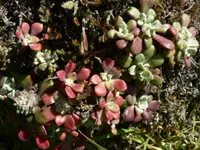
Tuck small rosettes into narrow rock crevices or between paving stones with very gritty substrate to mimic natural cliff habitats and reduce rot risk at the crown.

Controlled Spreading

Lift and remove rosettes that creep into unwanted areas in late winter or early spring, then replant them in a designated zone so the colony stays attractive and contained.

Winter Wet Protection

In climates with cold, wet winters, place plantings in slightly raised spots or on rocky slopes and, if needed, add a simple clear rain shield to keep excess moisture off the crowns.

Low-Maintenance Propagation

Use fallen leaves or small offsets collected during routine grooming, lay them on dry, gritty mix, and mist very lightly until new roots appear to expand plantings without stressing mature clumps while caring for Broadleaf stonecrop.

Common Pests and Diseases

Aphids

These insects feed on tender shoots and flower stems, causing distortion and sticky honeydew that can attract sooty mold. This pest is most common on soft, new growth, especially in spring or on well-watered plants.

Solution

Rinse colonies off with a firm stream of water and pinch back badly infested tips. For persistent infestations, apply insecticidal soap or a light horticultural oil, coating stems and leaf undersides, and reduce excess nitrogen fertilization that encourages lush, soft growth.

Mealybugs

These insects appear as small white cottony clusters in leaf rosettes and along stems, where they suck sap and weaken the plant. Symptoms include stunted growth and sticky honeydew deposits.

Solution

Dab visible insects with cotton swabs dipped in 70% isopropyl alcohol, then rinse the plant after a few minutes. For larger outbreaks, use insecticidal soap or systemic insect control labeled for succulents and isolate affected plants to prevent spread, especially in Broadleaf stonecrop indoor care situations.

Spider mites

These pests thrive on dry, sheltered plants and cause fine stippling, dull foliage, and very fine webbing between leaves and stems. This pest is more common on container or indoor plants with low humidity and poor air movement.

Solution

Spray foliage thoroughly with water to dislodge mites and increase air movement around plants. For ongoing problems, use insecticidal soap or a light horticultural oil on all plant surfaces, repeating at 5–7 day intervals until new growth appears clean.

Powdery mildew

This disease causes a white, powdery coating on leaves and stems, which can lead to yellowing and premature leaf drop. Symptoms include patchy, dusty spots that spread in warm, dry air with poor airflow around dense mats of foliage.

Solution

Remove and discard the most affected leaves and thin crowded patches to improve air movement. Avoid overhead watering in the evening, water at the soil level, and if needed apply a sulfur-based or potassium bicarbonate fungicide labeled for ornamentals, following the label exactly.

Botrytis blight

This disease produces gray, fuzzy mold on older leaves, decaying stems, or spent flower stalks, especially in cool, damp conditions. Symptoms include soft, water-soaked patches that quickly collapse and spread through tight groundcover mats.

Solution

Promptly remove and dispose of affected tissue, including any dead leaves trapped in the rosettes, and improve drainage so the soil dries between waterings. Increase spacing or lightly thin dense patches to improve air circulation, and in persistent cases use a labeled ornamental fungicide as a spot treatment rather than over the entire planting.

Interesting Facts

Native cliff specialist

This species is naturally found clinging to rocky cliffs, bluffs, and outcrops along the Pacific coast of western North America, often rooting in very shallow crevices with minimal organic soil.

Rosette color variation

Its spoon-shaped leaves form tight rosettes that can appear silvery, bluish, or purple-red depending on sun exposure, temperature, and the presence of a natural waxy coating called epicuticular wax.

Mat-forming rock stabilizer

Over time, it spreads into dense, low mats that help stabilize thin soils on rock faces and slopes, reducing small-scale erosion in its native habitats.

Botan icon

Did you know?

This plant is the official floral emblem of the city of Vancouver, British Columbia, chosen for its resilience on local cliffs and rocky shorelines and its strong visual connection to the region’s natural landscapes.

FAQs about Broadleaf stonecrop

This species spreads slowly to moderately by short creeping stems and rosettes, forming low mats over time. It is generally not aggressive and is easy to keep within bounds with occasional edging or division.

Grow Healthy Plants with Botan Care

Keep your plants happy and healthy with plant identification, disease detection, and easy care guidance.

Botan plant care app — identify plants on mobile

Explore More Plants