Gradual light hardening
When moving a plant from indoor light to full sun, increase exposure by 1–2 hours every few days to prevent stem scorch and sudden leaf drop on new growth.

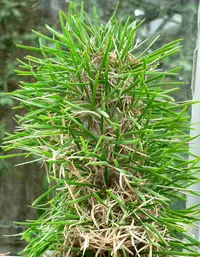
Didierea madagascariensis, commonly called Madagascar octopus tree, is a spiny, drought-adapted succulent shrub or small tree from the dry forests of southwestern Madagascar. It forms tall, candelabra-like branches covered in sharp spines with small, seasonally present leaves clustered near the tips.
This species is slow-growing and long-lived, suited mainly to advanced collectors or patient growers who can provide strong light and very well-drained, gritty soil. It dislikes excess moisture and cold, which makes it challenging outdoors except in arid, frost-free climates.
In containers, it can adapt to bright indoor spaces or greenhouses if given minimal but regular watering and excellent drainage. Understanding how to care for Madagascar Octopus Tree starts with replicating its hot, sunny, and dry native habitat as closely as possible.

Care Difficulty
Hard Care

Light Preference
Full Sun

Water Requirements
Low Water

Temperature Preference
Tropical / Frost Sensitive

Hardiness Zone
11–12

Soil Texture
Sandy, Rocky, Loamy

Soil pH
Slightly acidic (6.5–7.0), Neutral (7.0)

Soil Drainage
Well-drained

Fertilization
Minimal (feed rarely)
Scan your plant to receive care tips personalized for your specific plant
Available on iOS and Android
This spiny succulent thrives in bright, intense light similar to its native arid habitat.
This drought-adapted species requires sparse, thorough watering and fast-drying soil.
This species prefers consistently warm, arid conditions and does not tolerate frost.
This species prefers relatively dry air and usually does well in typical indoor humidity.
Didierea madagascariensis requires a very fast-draining, mineral-heavy mix to prevent root rot.
This species is suitable for container growing, especially in cooler climates where outdoor winters are too cold.
This extremely nutrient-efficient succulent shrub needs only light feeding in cultivation.
Didierea madagascariensis needs minimal pruning due to its naturally architectural, spiny form.
This species dislikes disturbance, so repot or transplant only when clearly necessary.
Propagation of Didierea madagascariensis is specialized and usually limited to experienced growers or conservation programs.
Cold sensitivity means this plant needs careful winter management in most climates.

Plant Health Check
Not sure what's wrong with your plant? Check your plant's health inside the app.
This species forms dense spiraled whorls of stiff, sharp spines along its stems, which reduce leaf loss, shade the stem surface, and help the plant survive in the extreme aridity of southwest Madagascar’s spiny thicket.
The plant is seasonally deciduous, dropping its small leaves during the harsh dry season to limit water loss, then refoliating when moisture becomes available.
It occurs naturally only in the spiny thicket ecoregion of southwest Madagascar, where it is a characteristic structural species of this globally unique, highly specialized shrubland.

The bizarre, candelabra-like silhouettes of this species, combined with its dense armor of spines, make it a key component of the iconic “spiny forest” landscape of southwest Madagascar, where it provides perching and nesting structure for several endemic bird species.
Growth is slow. In cultivation it may add only 5–15 cm per year, sometimes less. Limited water, cool temperatures, or low light slow it further. Consistent warmth and sharp drainage are key when aiming to grow Didierea madagascariensis successfully.
Keep your plants happy and healthy with plant identification, disease detection, and easy care guidance.