Succession Sowing
Sow a small patch every 1–2 weeks rather than all at once so you always have young, tender leaves before plants bolt in warm weather.

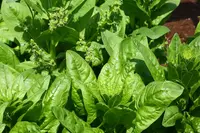
Spinach, Spinacia oleracea, is a cool-season leafy vegetable grown for its tender, edible leaves. It is usually a compact, low-growing annual with smooth or crinkled foliage in dense rosettes.
This species likely originated in southwestern Asia and is now widely cultivated in home gardens and on farms across temperate regions. Plants complete their life cycle quickly, which allows repeated sowing through the cooler months.
Spinach prefers cool temperatures, consistent moisture, and fertile, well-drained soil, and it can bolt or decline in strong heat. These traits make it easy to grow in mild conditions but more demanding in hot climates, so learning how to care for spinach helps keep plants productive.

Care Difficulty
Moderate Care

Light Preference
Full Sun

Water Requirements
Keep Soil Moist

Temperature Preference
Cool Climate

Hardiness Zone
2–9

Soil Texture
Loamy, Silty, Organic-rich

Soil pH
Acidic (5.5–6.5), Slightly acidic (6.5–7.0)

Soil Drainage
Moist but well-drained

Fertilization
Moderate (every 2–4 weeks)
Scan your plant to receive care tips personalized for your specific plant
Available on iOS and Android
This leafy crop performs best in cool conditions with consistent light exposure.
This shallow-rooted plant needs steady soil moisture without prolonged saturation.
This cool-season vegetable prefers moderate temperatures and struggles in sustained heat.
Humidity is not a major factor for Spinacia oleracea compared with temperature, light, and soil moisture.
Spinacia oleracea grows best in loose, moist, well-drained ground rich in organic matter.
This species is well suited to container growing when root depth and drainage are managed carefully.
Nutrient-rich soil supports fast leaf production, so spinach benefits from light, steady feeding during its short growing season.
Pruning Spinacia oleracea focuses on harvest technique rather than structural shaping.
Spinach is usually grown as a short-lived crop, so transplanting timing matters more than long-term repotting.
Spinach is propagated almost exclusively from seed due to its rapid life cycle and taprooted habit.
In many climates spinach tolerates cool conditions well and needs only modest winter protection outdoors.

Plant Health Check
Not sure what's wrong with your plant? Check your plant's health inside the app.
This species is botanically an annual that rapidly completes its life cycle, channeling most of its energy into producing a dense rosette of edible leaves rather than sturdy stems or woody tissue.
When exposed to long days and warmer temperatures, spinach quickly shifts from leaf production to sending up a tall flowering stalk, a process called bolting that makes the leaves smaller and more bitter.
Cultivated spinach is known for accumulating relatively high levels of folate and vitamin K in its leaves compared with many other common leafy vegetables, while also concentrating nitrate in older leaves under high-nitrogen fertilization.

Domesticated spinach is thought to have originated in ancient Persia, from where it spread to India and China, and it was not introduced into Europe until the Middle Ages, making it a comparatively recent addition to European vegetable crops.
Growth is relatively quick. Under cool, consistent conditions, seedlings emerge in 5–10 days and baby leaves are often harvestable in 25–35 days. Full-sized leaves usually form within 35–50 days, depending on temperature and variety.
Keep your plants happy and healthy with plant identification, disease detection, and easy care guidance.