






Best Soil for spinach (Spinacia oleracea)

For Spinacia oleracea, a loose, organic-rich, well-drained soil helps roots spread evenly and supports steady, healthy growth.

Soil Texture

Loamy, Silty, Organic-rich

Soil pH

Acidic (5.5–6.5), Slightly acidic (6.5–7.0)

Soil Drainage

Moist but well-drained

Spinacia oleracea Soil Guide

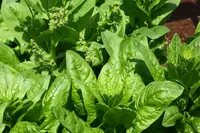
A loose, fertile soil with plenty of organic matter suits spinach best. Spinacia oleracea is native to western and central Asia, where it grew as a cool-season annual in cultivated ground and disturbed soils rather than dense, compact sites. That background explains its preference for soil that holds steady moisture but still drains well.

Because spinach forms a relatively shallow root system, the best soil for spinach should stay evenly moist near the surface without becoming airless. Loamy or silty textures work well because they balance water retention, aeration, and easy root movement, which supports quick leaf growth and steady establishment.

A simple homemade blend can give Spinacia oleracea the balance of moisture retention and air space this crop prefers in containers or raised beds.

100% total mix = 20 scoops
10%
perlite or pumice2 scoops
20%
coco coir or peat moss4 scoops
30%
loam-based garden soil or raised bed soil6 scoops
40%
high-quality compost8 scoops

The finished mix should feel soft and crumbly, hold together lightly in the hand, and drain evenly without becoming muddy.

This species can react quickly when the root zone stays stressed for long periods. Checking the soil early often helps prevent a small issue from becoming a larger setback.

Compacted soil:

Compacted soil: Dense ground can slow root spread and reduce air around roots, so gently loosen the top layer and work in fresh organic material if possible.

Waterlogged mix:

Waterlogged mix: Soggy soil that stays heavy may lead to decline in spinach, so pause extra watering and check that excess water can drain freely.

Dry, shrinking soil:

Dry, shrinking soil: If the mix pulls away from the pot edge, re-moisten it gradually and press it back into light contact with the root zone.

Crusted surface:

Crusted surface: A hard top layer can block even moisture movement, so break it up carefully and add a thin layer of finer organic material.

Better Soil Starts Here

Botan helps match this plant to more suitable soil conditions, so it is easier to choose a mix that supports steadier root health.

FAQ

Yes. A deeper pot gives roots more room to spread into evenly moist soil and helps buffer temperature swings. Around 6–8 in. of soil depth is usually a practical minimum.

Everything About spinach

More Plant Soil Guides

Could It Be the Soil?

If growth looks off, soil may be one factor worth checking. Botan’s photo-based assessment can help point to likely care issues.

Botan app helping with soil and plant care
Frozen vs Fresh Vegetable Nutrients: Which Option Is Healthier?

6 min read · 8 Sept 2026

Frozen vs Fresh Vegetable Nutrients: Which Option Is Healthier?

Frozen and fresh vegetables are nutritionally comparable: frozen produce often retains vitamins just as well as fresh and may sometimes contain more. Here’s how blanching and storage affect nutrients—and when to choose each.

Plant Recommendations

Frozen vs Fresh Vegetable Nutrients: Which Option Is Healthier?
20 Most Popular Fruits Around the World

7 min read · 22 Jul 2026

20 Most Popular Fruits Around the World

Curious which fruits the world actually eats the most? Here's the top-20 by production volume, an overview of what people choose in each region, and a few figures that defy common assumptions.

Plant Recommendations
20 Most Popular Fruits Around the World
How To Revive a Dying Plant: 6 Steps To Bring A Plant Back To Life

6 min read · 1 Sept 2026

How To Revive a Dying Plant: 6 Steps To Bring A Plant Back To Life

Drooping leaves and brown tips don't always mean the end, and a weakened plant can often recover with a little help. These six simple steps will help you revive a dying plant and restore its health.

Plant Care
How To Revive a Dying Plant: 6 Steps To Bring A Plant Back To Life