Seasonal light shift
Move pots slightly farther from intense south-facing windows in peak summer to reduce leaf scorching, then return them closer to the light in autumn to maintain compact, dense clumps.

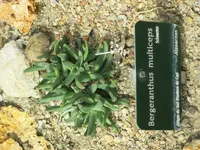
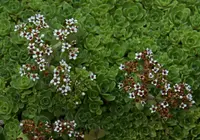
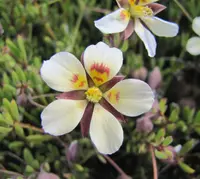
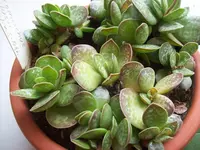
Bergeranthus multiceps is a compact, clump-forming succulent from arid regions of South Africa. It stores water in its thick, triangular leaves and grows low to the ground. Dense rosettes slowly expand into small mats, topped in the growing season by yellow, daisy-like flowers that open in bright light. This growth habit makes it suitable for small pots, rock gardens, or windowsills. Its desert origin means it prefers strong light, fast-draining soil, and careful watering, which influences how to care for Bergeranthus multiceps. Once its basic needs are understood, it is generally considered a low-maintenance plant for indoor and outdoor collections in warm climates.

Care Difficulty
Easy Care

Light Preference
Full Sun

Water Requirements
Low Water

Temperature Preference
Tropical / Frost Sensitive

Hardiness Zone
10–11

Soil Texture
Sandy, Loamy, Rocky

Soil pH
Slightly acidic (6.5–7.0), Neutral (7.0)

Soil Drainage
Well-drained

Fertilization
Minimal (feed rarely)
Scan your plant to receive care tips personalized for your specific plant
Available on iOS and Android
This compact South African succulent thrives with bright, mostly direct light in dry climates.
This species prefers thorough but infrequent watering that allows the root zone to dry between soakings.
This drought-tolerant succulent prefers mild, dry conditions and struggles in hard frost or extreme humidity.
This succulent tolerates typical indoor humidity and does not need special humidity management.
This compact succulent needs very sharply drained, mineral-based soil to prevent root rot.
This species is well suited to container growing, especially in small, shallow pots.
This small succulent needs only light feeding to stay compact and healthy in containers.
Pruning needs for Bergeranthus multiceps are minimal and focus on hygiene rather than shaping.
This compact succulent prefers to stay slightly root-bound and does not need frequent repotting.
Bergeranthus multiceps is most often propagated by division of offsets, with seeds as a slower option.
This succulent dislikes prolonged frost and benefits from simple winter protection in cooler climates.

Plant Health Check
Not sure what's wrong with your plant? Check your plant's health inside the app.
This species is naturally found on rocky slopes and cliff faces in South Africa’s Eastern Cape Karoo, where its clustered rosettes anchor in shallow crevices exposed to intense sun and wide temperature swings.
In habitat it experiences a winter-rainfall climate, tending to put on most growth in the cooler, moister months and slowing or resting during the hottest, driest part of summer.
The plant forms many small, tight rosettes on short branching stems, creating dense, cushion-like mats that help shade the root zone and reduce water loss in its arid environment.
Lack of flowering usually comes from insufficient light, too much nitrogen-rich fertilizer, or keeping the plant too cool in winter. A short, cool, relatively dry rest period often improves bud formation and encourages more reliable spring flowering.
Keep your plants happy and healthy with plant identification, disease detection, and easy care guidance.