

Cutting Propagation Timing
Take 5–8 cm non-flowering tip cuttings in late spring or early summer, let them dry for 1–2 days, then set them on gritty mix so they root quickly without rotting.

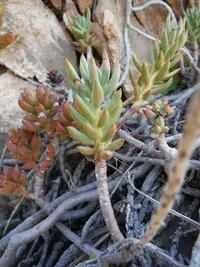
Pale stonecrop, Petrosedum sediforme, is a small, clump-forming succulent native to rocky, dry areas of the Mediterranean region. It is often grown in rock gardens, containers, and green roofs.
The plant forms tight mats of slender, blue-green leaves on upright stems, topped with small yellow star-shaped flowers in season. Its compact habit and slow spread make it suitable for edging and small spaces.
This species is adapted to strong sun, low rainfall, and poor, fast-draining soils, which makes it drought-tolerant and low-maintenance. These traits mean many gardeners find it straightforward to care for Pale Stonecrop, provided it is not overwatered or kept in heavy, soggy soil.

Care Difficulty
Easy Care

Light Preference
Full Sun

Water Requirements
Low Water

Temperature Preference
Warm Climate

Hardiness Zone
7–10

Soil Texture
Sandy, Loamy, Rocky

Soil pH
Slightly acidic (6.5–7.0), Slightly alkaline (7.0–7.5)

Soil Drainage
Well-drained

Fertilization
Minimal (feed rarely)
Scan your plant to receive care tips personalized for your specific plant
Available on iOS and Android
This sun-loving Mediterranean succulent grows best with strong light and minimal shade.
This drought-tolerant succulent prefers infrequent, deep watering and fast-drying soil.
This hardy succulent tolerates a broad temperature range but responds best to moderate warmth and dry conditions.
This succulent tolerates a wide humidity range and rarely needs special humidity management indoors.
This species prefers very well-drained, mineral, sandy soil that dries quickly between waterings.
This plant is very suitable for container growing, especially in shallow, fast-draining pots.
This drought-tolerant succulent needs only light feeding to stay compact and healthy.
Pruning Petrosedum sediforme is mainly for tidiness and to maintain a compact, dense clump.
This succulent prefers staying slightly root-bound and is repotted or transplanted infrequently.
Petrosedum sediforme is commonly multiplied by stem cuttings and division under warm, bright conditions.
This species is fairly cold hardy but benefits from simple winter care, especially in containers.

Plant Health Check
Not sure what's wrong with your plant? Check your plant's health inside the app.
This species naturally grows on rocky limestone slopes and cliffs around the western Mediterranean, where its shallow roots anchor into cracks and very thin soils.
Its blue-green, needle-shaped leaves are succulent, meaning they store water in internal tissues to survive intense sun, wind, and long dry periods in its native habitat.
Wild populations often occur in coastal zones exposed to salt-laden winds, showing a notable tolerance to both wind stress and mild salt spray compared with many other small succulents.

In some Mediterranean regions, it is one of the few low-growing succulents that can form sparse mats on old stone walls and tiled roofs, subtly stabilizing mortar joints and tiny crevices without developing deep or aggressive roots.
The small star-shaped flowers are rich in nectar and pollen, so they commonly attract bees, hoverflies, and sometimes small butterflies. Planting several together creates a better visual target and a more useful food source for pollinators.
Keep your plants happy and healthy with plant identification, disease detection, and easy care guidance.

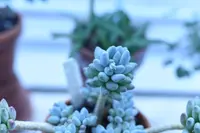
Pachyphytum hookeri
Pachyphytum hookeri
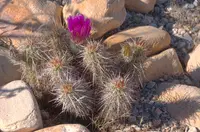
Engelmann's hedgehog cactus
Echinocereus engelmannii
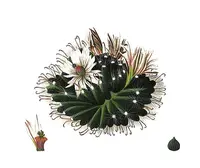
Mammillaria zephyranthoides
Mammillaria zephyranthoides
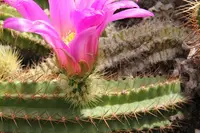
Echinocereus viereckii
Echinocereus viereckii
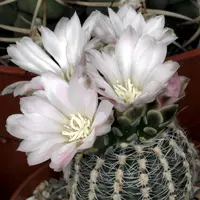
Gymnocalycium bruchii
Gymnocalycium bruchii

kingcup cactus
Echinocereus triglochidiatus
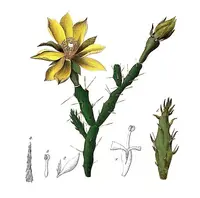
cockspur pricklypear
Opuntia pusilla
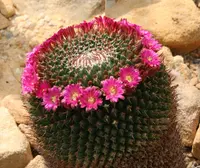
Mammillaria mystax
Mammillaria mystax