Strategic leaf removal
Remove only the lowest, most shriveled leaves by gently twisting them off at the stem base to improve air circulation around the rosette and reduce the chance of rot at soil level.

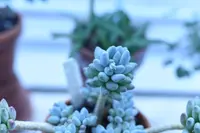
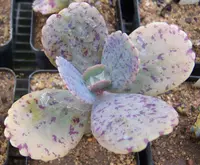
Pachyphytum hookeri is a small, compact succulent from arid regions of Mexico, adapted to rocky slopes and strong sunlight. It forms tight rosettes of plump, bluish to gray-green leaves often coated with a waxy bloom.
Growth is slow and low, making it suitable for containers, rock gardens, and windowsills with bright, dry conditions. Its drought tolerance and low nutrient needs generally make it easier to grow than many leafy houseplants.
For those learning how to care for Pachyphytum hookeri, its main requirements are strong light, very well-drained soil, and careful watering that allows the roots to dry between waterings.

Care Difficulty
Easy Care

Light Preference
Full Sun

Water Requirements
Low Water

Temperature Preference
Tropical / Frost Sensitive

Hardiness Zone
10–11

Soil Texture
Sandy, Loamy, Rocky

Soil pH
Slightly acidic (6.5–7.0), Neutral (7.0)

Soil Drainage
Well-drained

Fertilization
Minimal (feed rarely)
Scan your plant to receive care tips personalized for your specific plant
Available on iOS and Android
This succulent prefers bright, direct light but needs protection from extreme midday sun in hot climates.
This species stores water in its leaves and needs infrequent but thorough watering.
This succulent prefers warm, dry conditions and is sensitive to hard frost.
This succulent handles typical indoor humidity well and rarely needs special humidity care.
Use a very fast-draining, mineral-rich mix to prevent root and stem rot.
This species is well suited to container growing when drainage and stability are controlled carefully.
This compact succulent needs only light feeding to support healthy, firm leaves during active growth.
This species needs minimal pruning but benefits from occasional cleanup to maintain a compact, tidy form.
This slow-growing succulent prefers infrequent repotting and a stable root environment.
This plant is commonly multiplied from cuttings and leaves rather than seeds in home collections.
This succulent is not frost hardy and needs careful winter management in most temperate climates.

Plant Health Check
Not sure what's wrong with your plant? Check your plant's health inside the app.
This species is native to rocky slopes and cliffs of central Mexico, where it grows in crevices with very shallow, fast-draining mineral soils and strong sun exposure.
In habitat it grows mainly during the cooler, slightly wetter months and slows down or almost stops in the hottest, driest part of the year, a typical drought-avoidance strategy in succulent shrubs.
Its leaves often develop a pale, waxy coating called epicuticular wax (or farina), which reduces water loss and protects the tissues from intense solar radiation at high light sites.
This species grows slowly, adding only a few centimeters per year under good conditions. Growth is faster in warm seasons and slows markedly in winter. Limited root space, low light, or frequent disturbance further reduce growth.
Keep your plants happy and healthy with plant identification, disease detection, and easy care guidance.