

Cluster management
Rotate the pot every 2–3 weeks and gently remove offset pups only when they have several visible roots, which keeps the main clump compact and reduces rot risk at fresh separation points.

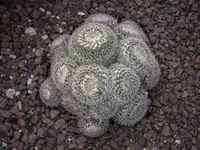
Owl's eye cactus (Mammillaria parkinsonii) is a small globular cactus known for its dense white spines that create a soft, woolly look. Older plants often form clumping mounds, giving a textured, sculptural appearance in pots.
This species is native to arid regions of central Mexico, where it grows on rocky slopes with strong light and excellent drainage. Its slow growth, drought tolerance, and compact size make it suitable for containers and windowsills.
Understanding how to care for Owl's eye cactus starts with providing bright light, very fast-draining mineral soil, and careful, infrequent watering to avoid root rot.

Care Difficulty
Easy Care

Light Preference
Full Sun

Water Requirements
Low Water

Temperature Preference
Warm Climate

Hardiness Zone
9–11

Soil Texture
Sandy, Loamy, Rocky

Soil pH
Acidic (5.5–6.5), Slightly acidic (6.5–7.0)

Soil Drainage
Well-drained

Fertilization
Minimal (feed rarely)
Scan your plant to receive care tips personalized for your specific plant
Available on iOS and Android
This small cactus needs bright, direct light for compact, healthy growth.
Watering should imitate an arid habitat with thorough soakings followed by complete drying.
Stable warmth supports strong growth and flowering in this cactus.
Humidity is rarely critical for Mammillaria parkinsonii, which prefers dry indoor air.
Mammillaria parkinsonii needs a very fast-draining, mineral-rich substrate to prevent root rot.
This species is well suited to container growing due to its compact, shallow root system.
This cactus has modest nutrient needs, but light feeding supports compact, healthy growth when conditions are bright and warm.
Mammillaria parkinsonii needs minimal pruning, mainly to keep the plant tidy and disease free.
This small cactus is slow growing and prefers infrequent repotting in a well-drained, mineral-rich mix.
New Mammillaria parkinsonii plants are usually produced from offsets or seeds under warm, bright, and dry-leaning conditions.
This cactus prefers a cool, very dry winter rest and is only mildly frost tolerant.

Plant Health Check
Not sure what's wrong with your plant? Check your plant's health inside the app.
Mature plants often produce a complete ring of pale pink to whitish flowers around the crown, giving a distinctive halo effect that is especially noticeable in late winter to spring in its native habitat.
The stem apex and areoles develop thick white wool that helps protect the growing point from intense sun and rapid temperature swings in its highland Mexican habitat.
This species is native to rocky limestone slopes in central Mexico at relatively high elevations, where it grows in very shallow, mineral soils and endures strong light and cool, dry winters.

In habitat, old individuals can form multi-headed clumps that sit on the rock surface for many years, showing clear growth rings that reflect seasonal pauses in growth and making them useful indicator plants for studying long-term environmental conditions in their microhabitats.
Lack of flowers usually relates to insufficient winter rest, low light, or excess nutrients. Cooler, drier conditions in winter and strong light in spring promote buds. Avoid frequent repotting, which can delay flowering for a season.
Keep your plants happy and healthy with plant identification, disease detection, and easy care guidance.

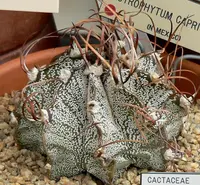
Goat's Horn Cactus
Astrophytum capricorne
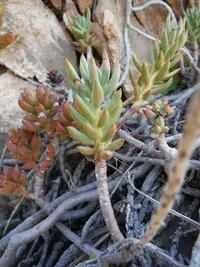
Pale Stonecrop
Petrosedum sediforme
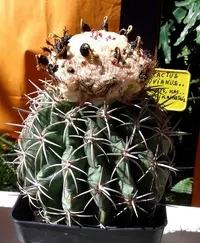
Melocactus peruvianus
Melocactus peruvianus
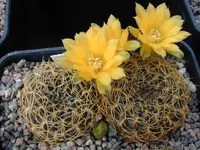
arenaceous crown cactus
Rebutia arenacea
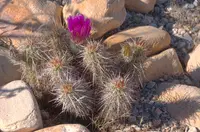
Engelmann's hedgehog cactus
Echinocereus engelmannii
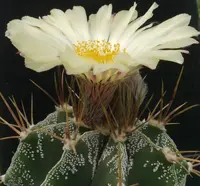
bishop's hat
Astrophytum ornatum
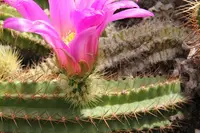
Echinocereus viereckii
Echinocereus viereckii

kingcup cactus
Echinocereus triglochidiatus