


Pot height choice
Use a taller, narrow clay pot so the deep taproot can develop fully while excess moisture still evaporates efficiently from the sides.

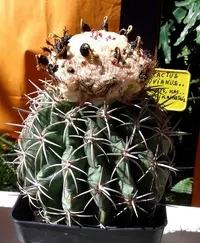
Melocactus peruvianus is a small globular cactus known for its distinctive cephalium, a woolly, bristly structure that forms on top of mature plants. This feature gives it a very characteristic two-part look.
It is native to arid and semi-arid regions of Peru, where it grows in rocky, well-drained habitats with intense sun and sparse rainfall. In cultivation, it stays compact and slow-growing, which makes it suitable for containers but also less forgiving of overwatering and poor drainage.
Understanding how to care for Melocactus peruvianus starts with providing strong light, a very free-draining mineral substrate, and careful watering that avoids prolonged moisture around the roots.

Care Difficulty
Hard Care

Light Preference
Full Sun

Water Requirements
Low Water

Temperature Preference
Tropical / Frost Sensitive

Hardiness Zone
11–12

Soil Texture
Sandy, Rocky, Loamy

Soil pH
Slightly acidic (6.5–7.0), Neutral (7.0)

Soil Drainage
Well-drained

Fertilization
Minimal (feed rarely)
Scan your plant to receive care tips personalized for your specific plant
Available on iOS and Android
This cactus needs strong light but benefits from some protection from extreme midday sun.
Watering should mimic an arid climate with brief soakings and long dry intervals.
Stable warmth is essential, as this species is sensitive to cold and sudden temperature swings.
This cactus prefers dry air and usually does not need extra humidity control indoors.
Use a very fast-draining, mineral-rich substrate to prevent root rot.
This species is well suited to container growing due to its small, slow-growing root system.
This cactus benefits from light, controlled feeding during its warm growing season only.
Melocactus peruvianus needs almost no structural pruning, only careful removal of damaged tissue when necessary.
This species prefers stability and should be repotted infrequently to avoid stress to its sensitive roots.
Melocactus peruvianus is seldom propagated at home because it rarely offsets and seed culture is slow and specialized.
This cactus is frost sensitive and needs warm, dry winter conditions, especially in colder climates.

Plant Health Check
Not sure what's wrong with your plant? Check your plant's health inside the app.
This species develops a striking cephalium, the woolly flowering structure on top of the stem, with a characteristic combination of whitish wool and reddish-brown bristles that helps distinguish it from many other Melocactus species in its native range.
Melocactus peruvianus is naturally found in arid, often coastal zones of western South America, especially along the Peruvian coast on rocky slopes and cliffs influenced by the cool Humboldt Current, which shapes its growth conditions.
Its tubular pink to reddish flowers typically open in the cephalium and are visited by nocturnal or crepuscular insects that navigate using the pale wool and strong contrast of the cephalium as a visual guide in low light.
This species stays compact, usually forming a rounded stem about 8–15 cm tall, with a woolly, bristly cephalium on top. It rarely becomes much taller, so size changes mainly in thickness and cephalium development.
Keep your plants happy and healthy with plant identification, disease detection, and easy care guidance.

Cream Spike Agave
Agave applanata
Peyote
Lophophora diffusa
Giant Chin Cactus
Gymnocalycium saglionis
Coleus
Coleus scutellarioides 'Fishnet Stockings'
Aylostera albopectinata
Aylostera albopectinata
seashore palm
Allagoptera arenaria
Melocactus violaceus
Melocactus violaceus
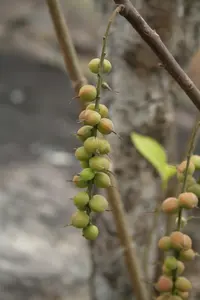
Alchornea cordifolia
Alchornea cordifolia