Leucostele atacamensis Care

Leucostele atacamensis

About Leucostele atacamensis

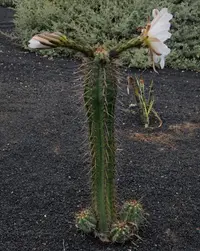
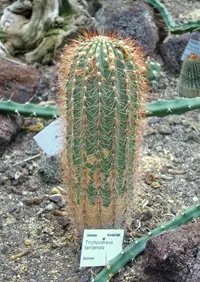
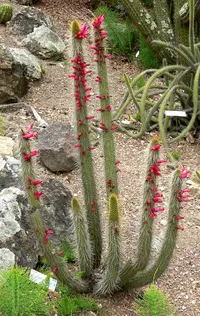
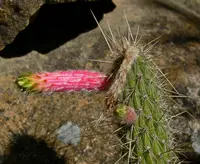
Leucostele atacamensis, often called the Atacama cactus, is a columnar cactus adapted to very dry, high-radiation environments. It forms tall, upright stems with pronounced ribs and dense clusters of spines, sometimes branching to create striking clumps over time.

This species is native to the Atacama Desert region of Chile and Argentina, one of the driest places on Earth. Its slow growth and strong drought tolerance make it relatively easy to maintain when light and drainage are correct.

To care for Leucostele atacamensis successfully, provide strong light, very well-drained gritty soil, and infrequent watering that allows the root zone to dry fully between waterings.

Main Plant Requirements

Care Difficulty

Moderate Care

Light Preference

Full Sun

Water Requirements

Low Water

Temperature Preference

Warm Climate

Hardiness Zone

9–11

Soil Texture

Sandy, Rocky, Loamy

Soil pH

Slightly acidic (6.5–7.0), Neutral (7.0)

Soil Drainage

Well-drained

Fertilization

Minimal (feed rarely)

Get Personalized Care Plan

Scan your plant to receive care tips personalized for your specific plant

Available on iOS and Android

How to Care for the Leucostele atacamensis

This desert columnar cactus needs intense light but benefits from gradual exposure outside harsh desert conditions.

  • Provide 6–10 hours of direct sun daily, ideally with strong morning sun and some protection from low-angle, scorching late-afternoon rays in hot climates.
  • Young or recently moved Leucostele atacamensis should be acclimated over 1–2 weeks to full sun to prevent bleaching or brown sun scorch patches.
  • In very cloudy or high-latitude winters, move plants to the brightest, south-facing position available to avoid weak, etiolated growth.

This species is highly drought-tolerant and is more often harmed by excess moisture than by dryness.

  • Water only when the soil is completely dry; in warm, active growth this often means waiting until the top 5–10 cm are bone-dry and the pot or bed feels very light.
  • Use very fast-draining, gritty soil so water runs through in seconds and no puddling remains; persistent dampness leads to root rot and blackening at the base.
  • Reduce watering sharply in cool seasons, sometimes to once a month or less; wrinkling ribs indicate thirst, while mushy tissue or sour smell suggest overwatering.

This cactus prefers warm, arid conditions and copes well with heat but is sensitive to prolonged cold and frost.

  • Aim for 70–90°F (21–32°C) during active growth, with plenty of air movement; short spikes to 100°F (38°C) are tolerated if roots are dry and there is ventilation.
  • Protect from frost; brief dips to 28–32°F (-2–0°C) may be survived by mature plants if bone-dry, but repeated freezing damages tissue and can kill the growing tips.
  • In winter, a cooler, dry rest at 45–55°F (7–13°C) helps harden growth and support flowering in the next season, provided the plant stays dry and frost-free.

This cactus thrives in very dry air and usually does not need extra humidity.

  • Ideal humidity is 20–40%, similar to arid indoor air or heated rooms.
  • Tolerates even lower humidity; problems come more from excess moisture than from dryness.
  • If stems become soft or show dark, moldy patches, reduce ambient humidity and increase air circulation rather than adding moisture.

Leucostele atacamensis needs a very fast-draining, mineral-heavy substrate that mimics desert soil.

  • Use a gritty mix: 50–70% inorganic material such as coarse sand, pumice, or fine gravel, with 30–50% cactus potting mix.
  • Aim for slightly acidic to neutral pH, around 6.0–7.0, to support root function without nutrient lockout.
  • Ensure the mix is loose and airy; large mineral particles create air pockets that prevent root suffocation and rot.
  • Avoid peat-heavy, compact, or moisture-retentive mixes, which hold water around the roots for too long.

This species is suitable for container growing, provided the pot is stable and promotes rapid drainage.

  • Choose a deep, heavy pot to counterbalance the tall, columnar stems and reduce tipping risk outdoors.
  • Select unglazed clay if extra evaporation is needed, or thick plastic in very hot, dry sites to slow moisture loss slightly.
  • Top-dress the soil with a layer of coarse gravel to protect the root neck from splashing, surface rot, and compaction near the stem.

This desert cactus needs very modest feeding when grown in containers or poor substrates.

  • Use a low-strength balanced liquid or slow-release fertilizer labeled for cacti, diluted to 25–50% strength.
  • Feed Leucostele atacamensis once every 6–8 weeks during the warm growing season only, after watering.
  • Avoid rich compost or high-nitrogen products that encourage weak, elongated growth.
  • Stop feeding entirely in winter dormancy to prevent soft tissue and root problems.

This cactus needs minimal pruning, mainly to maintain safety and remove problem tissue.

  • Carry out any work in late spring or early summer, when healing is fastest.
  • Remove dead, rotting, or storm-damaged stems using clean, sharp loppers or a pruning saw.
  • Cut only small sections at a time to preserve the natural columnar shape of Leucostele atacamensis.
  • Disinfect tools before and after cutting to limit disease transfer and rot.

Container-grown plants and young transplants prefer minimal disturbance due to sensitive roots.

  • Repot or transplant only when roots circle the pot, emerge from drainage holes, or growth slows noticeably.
  • Plan moves for late spring, allowing warm, dry conditions for root recovery.
  • Handle the root ball gently, keeping as much soil intact as possible around Leucostele atacamensis.
  • Replant into very free-draining cactus mix, water lightly once, then keep almost dry for 1–2 weeks to reduce stress.

This columnar cactus is usually propagated by seed, with stem cuttings used in some collections.

  • Sow seeds in late spring in a sterile, very free-draining cactus mix, barely covering them.
  • Maintain 70–80°F, bright shade, and steadily slightly moist (not wet) conditions until germination.
  • For cuttings, remove a healthy stem segment, then air-dry the cut surface for 2–4 weeks until well callused.
  • Root callused cuttings upright in gritty mix, keeping warm and almost dry until new roots and growth appear.

Mature plants are relatively cold tolerant when dry but suffer in prolonged wet, freezing conditions.

  • Leucostele atacamensis tolerates brief light frosts if soil stays dry, but young plants are more sensitive.
  • In-ground plants in marginal climates benefit from a 5–8 cm gravel mulch to keep the root zone dry.
  • For containers, move under a dry roof or indoors to a bright, cool spot above 35–40°F through winter.

Care Tips

Deep container choice

Use a tall, heavy pot with ample depth to accommodate the long taproot and to prevent the plant from tipping as it gains height.

Rocky surface mulch

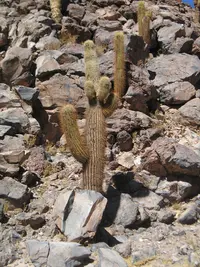
Top-dress the soil with a 1–2 cm layer of coarse gravel or small stones to keep the stem base dry, reduce splashing on the epidermis, and mimic its natural rocky habitat.

Gradual sun hardening

When moving a plant outdoors or into stronger light, increase exposure over 10–14 days to avoid corky sunburn patches on the stem ribs.

Winter dryness management

In cool winter rest periods, keep the substrate completely dry and place the plant under cover where rain cannot reach it to prevent root loss.

Stability and safety support

For tall specimens, anchor the pot inside a heavier outer cachepot or wedge bricks around the container to improve stability and reduce the risk of the column snapping in strong winds when growing Leucostele atacamensis.

Common Pests and Diseases

Cochineal scale

This pest forms white cottony clusters on ribs and in areole wool, feeding on plant sap and weakening stems over time. Symptoms include localized yellowing and sticky honeydew that can attract sooty mold.

Solution

Remove clusters with a firm jet of water or by gently brushing with a soft brush dipped in diluted isopropyl alcohol (50–70%). Improve light and air movement, then use a horticultural soap or light paraffinic oil spray directed onto colonies, repeating every 7–10 days until no new insects appear.

Red spider mites

These insects thrive in hot, very dry conditions, causing a dull, grayish surface and fine webbing between ribs. Symptoms include small pale speckles on the skin that can merge into larger discolored patches if untreated.

Solution

Increase ambient humidity slightly around the plant without wetting the stem, and rinse the cactus under a gentle but thorough stream of water to dislodge mites. Follow with a miticidal soap or specific acaricide labeled for cacti, repeating several times at 5–7 day intervals, and reduce heat stress while maintaining strong light.

Soft scale

This pest appears as small, tan to brown, dome-shaped bumps on stems that do not brush off easily. This pest slowly drains sap, leading to stunted growth and sticky honeydew on nearby surfaces.

Solution

Manually remove scales with a cotton swab dipped in diluted isopropyl alcohol, taking care not to damage the epidermis. For heavier infestations, apply a light horticultural oil spray to fully coat stems, repeat after 10–14 days, and quarantine the plant from other succulents during treatment.

Bacterial stem rot

This disease enters through wounds or frost damage and causes soft, water-soaked, foul-smelling areas on the stem. Symptoms include rapidly spreading dark, mushy patches that may collapse sections of the column.

Solution

Cut out all affected tissue back to firm, healthy, dry tissue using a sterile knife, and discard all infected material. Allow the cut surfaces to dry and callus in a warm, airy spot, dusting with sulfur powder or a copper-based product if available, and adjust watering to remain sparing and only in warm conditions.

Fungal stem spot

This disease produces small sunken brown or black lesions on the outer skin that may enlarge and become corky under prolonged humidity or poor ventilation. Symptoms include scattered spots that can coalesce into irregular patches, slightly weakening affected tissue but usually progressing slowly in dry conditions.

Solution

Improve airflow and ensure the plant is kept in a bright, dry position, avoiding overhead watering. Remove severely affected sections if spots are deep, or lightly trim and let the area dry and callus; in persistent cases, use a sulfur or copper-based fungicide labeled for ornamental cacti, applied as directed and kept off the root zone as much as possible.

Interesting Facts

Atacama Desert giant

This columnar cactus is native to the high-altitude valleys and slopes of the Atacama Desert in northern Chile, where it forms tall stands that can dominate the local landscape despite the extreme aridity.

Fog and dew reliance

In its native range it benefits from coastal fogs and occasional dew, which supplement the minimal rainfall and help the plant maintain water balance in one of the driest regions on Earth.

Keystone for desert birds

Its large, fleshy fruits provide food for birds and other animals in otherwise resource-poor habitats, and these animals in turn disperse the seeds across rocky slopes, contributing to the species’ patchy but stable populations.

Botan icon

Did you know?

Individual plants of this species can reach over 7 m tall and live for many decades, forming multi-branched columns that act as long-term structural elements in the Atacama Desert ecosystem.

FAQs about Leucostele atacamensis

Growth is slow to moderate. Young plants may add only a few cm per year, while established specimens can lengthen 5–15 cm annually in ideal conditions. Patience is essential when growing Leucostele atacamensis as a landscape feature.

Grow Healthy Plants with Botan Care

Keep your plants happy and healthy with plant identification, disease detection, and easy care guidance.

Botan plant care app — identify plants on mobile

Explore More Plants