Bolivian Torch Cactus Care (Echinopsis lageniformis)

Bolivian Torch Cactus

About Bolivian Torch Cactus

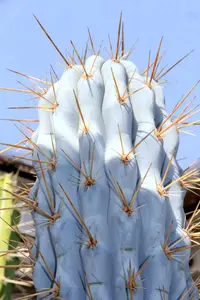
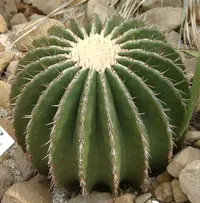
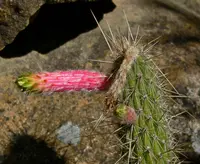
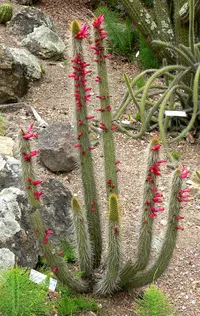
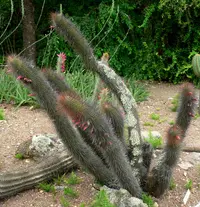
Bolivian torch cactus, Echinopsis lageniformis, is a fast-growing columnar cactus valued for its upright stems and prominent ribs lined with small, neat spines. Mature plants can branch to form a striking clump, sometimes producing large, night-blooming flowers in suitable conditions.

This species is native to high-altitude regions of Bolivia, where it experiences strong sun, cool nights, and very well-drained, rocky soils. Its drought tolerance and relatively forgiving nature make it suitable for growers who want to care for Bolivian Torch Cactus without complex routines.

It prefers bright, direct light, low humidity, and sparse watering in a gritty, fast-draining cactus mix, which helps prevent root problems and maintains a compact, healthy form.

Main Plant Requirements

Care Difficulty

Easy Care

Light Preference

Full Sun

Water Requirements

Low Water

Temperature Preference

Warm Climate

Hardiness Zone

8–11

Soil Texture

Sandy, Loamy, Rocky

Soil pH

Slightly acidic (6.5–7.0), Neutral (7.0)

Soil Drainage

Well-drained

Fertilization

Minimal (feed rarely)

Get Personalized Care Plan

Scan your plant to receive care tips personalized for your specific plant

Available on iOS and Android

How to Care for the Bolivian Torch Cactus

This cactus prefers strong light with some protection from harsh summer sun.

  • Provide 6–8 hours of direct sun daily, ideally with morning sun and light afternoon shade, especially in hot, arid regions.
  • In very intense climates, use filtered light or a 30–40% shade cloth at midday to prevent yellowing, corking, or sunburn patches on the stems.
  • When caring for Bolivian Torch Cactus, increase sun exposure gradually in spring to avoid shock after low-light winter conditions.

Watering should mimic brief desert rains followed by dry periods.

  • Let the top 3–5 cm of soil dry completely before watering, then soak thoroughly so excess drains away without pooling around the roots.
  • In spring and summer, expect deeper watering every 1–3 weeks depending on heat, while in fall and winter watering may drop to monthly or less.
  • Watch for shriveling ribs as a sign of underwatering and for soft, darkened stem bases as early evidence of overwatering and root rot.

This species thrives in warm, dry conditions with cool but not freezing winters.

  • Aim for 70–90°F (21–32°C) during active growth; short peaks up to 95°F (35°C) are tolerated if soil is sharply drained and not waterlogged.
  • Protect from frost; growth slows below 50°F (10°C), and prolonged exposure under 40°F (4°C) can cause tissue damage or scarring.
  • Overwinter in a cool, dry location around 45–55°F (7–13°C) to encourage a natural rest period and stronger flowering the following season.

This cactus handles typical indoor humidity well and rarely needs special humidity management.

  • Tolerates 20–40% humidity and very dry air, similar to desert conditions for Bolivian Torch Cactus.
  • Low humidity is rarely harmful; issues usually come from excess moisture rather than dry air.
  • If stems look shriveled, check watering and roots first, as this is usually drought or rot stress, not humidity.

Soil for this cactus must be very fast-draining and strongly mineral to prevent root rot.

  • Use a gritty, sandy mix such as 50–70% inorganic material (pumice, coarse perlite, or grit) with 30–50% cactus potting mix.
  • Aim for slightly acidic to neutral pH around 6.0–7.0, which supports nutrient uptake without encouraging rot organisms.
  • Improve drainage and aeration by using large, irregular particles (4–10 mm) rather than fine sand that compacts over time.
  • Avoid heavy, peat-rich, or clay-based mixes that stay wet for more than 2–3 days after watering, as this suffocates roots.

This species is well suited to container growing when the pot is chosen for drainage and stability.

  • Select a heavy, wide-based pot to counter the tall, columnar stems and reduce the risk of tipping in wind or accidental bumps.
  • Choose a pot only 2–5 cm wider than the root mass so the mix dries evenly instead of staying wet around unused space.
  • Unglazed terracotta is helpful in cooler or humid climates because it releases moisture faster and keeps roots from staying damp.

This cactus needs modest feeding, focused only on the active growing season for healthy stems and flowering.

  • Use a diluted balanced liquid fertilizer (around 10-10-10 or similar NPK) at 1/4–1/2 strength in spring and summer.
  • Apply every 4–6 weeks when growth is active, especially for container-grown Bolivian Torch Cactus.
  • Avoid compost-rich or high-organic mixes that hold excess moisture and can cause root rot.
  • Stop feeding in fall and winter to allow full dormancy and prevent weak, elongated growth.

Echinopsis lageniformis requires minimal pruning, mainly for health, safety, and space management.

  • Carry out any pruning in late spring or early summer when growth is active and healing is faster.
  • Remove dead, diseased, frost-damaged, or scarred stems using clean, sharp pruning knives or saws.
  • Cut at the base of the affected stem, leaving clean, angled cuts that shed water and reduce rot risk.
  • Use pruning to thin overcrowded stems, improving light penetration and airflow while keeping the columnar shape manageable.

This cactus grows slowly and is repotted or transplanted infrequently, mainly to refresh soil or accommodate root growth.

  • Repot every 3–5 years, or when roots circle the pot, emerge from drainage holes, or growth becomes noticeably slower.
  • Choose late spring as the best time, using a slightly larger pot and a very fast-draining cactus mix.
  • Wear gloves, gently loosen the root ball, and remove old, compacted soil without breaking healthy roots.
  • Let roots dry 1–2 days after repotting, then water lightly once, allowing extended drying between subsequent waterings to limit stress.

Echinopsis lageniformis is commonly propagated from stem cuttings, with seeds also used for larger-scale growing.

  • Take stem cuttings in late spring or early summer, choosing healthy, unscarred segments.
  • Allow cut surfaces to callus in a dry, shaded place for 7–14 days before planting.
  • Set cuttings upright in a gritty, barely moist cactus mix at 70–80°F with bright, indirect light.
  • For seeds, sow on the surface of a sterile, fine mix, keep slightly moist, and provide warmth and gentle light for germination.

This cactus is not reliably frost hardy and benefits from structured winter care, especially in cold or wet climates.

  • Keep temperatures around 40–50°F in winter with plenty of light and very low humidity if grown indoors.
  • Move container plants indoors or into an unheated greenhouse before frost, ensuring completely dry soil.
  • Withhold watering through winter or water only sparingly to keep stems firm but not plump.
  • In mild outdoor climates, provide a raised, sharply drained bed and a rain shelter to avoid cold, wet soil around roots.

Care Tips

Stabilize Tall Stems

Once stems exceed 30–40 cm, anchor the pot with top-dressing gravel and, if needed, use a single discreet stake loosely tied with soft plant tape to prevent wind or accidental knock-over damage.

Rotate For Even Columns

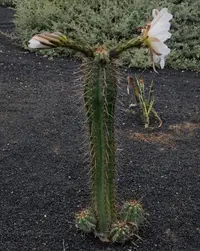
Turn the pot 90° every 2–3 weeks during active growth so the columns receive even light, which reduces leaning and produces symmetrical rib development.

Cool, Dry Winter Rest

Provide a distinct rest period by keeping the plant almost dry and, where possible, cooler at 45–55°F for 8–10 weeks to encourage stronger flowering and more compact growth the following season.

Inspect Areoles Closely

Check the woolly areoles and rib creases every month with a flashlight or hand lens for early signs of mealybugs or scale, and isolate and treat promptly if any white tufts or sticky spots appear.

Use Deep, Heavy Pots

Choose a deep, relatively heavy container (clay or ceramic) that is at least 1/3 as tall as the expected stem height to support the top-heavy columns and reduce the risk of tipping when growing Bolivian Torch Cactus.

Common Pests and Diseases

Red spider mites

This pest often appears in hot, dry indoor or greenhouse conditions and can cause dull, stippled, or bronzed patches on the cactus skin. Fine webbing may be visible in rib grooves or around areoles.

Solution

Increase humidity around the plant slightly without wetting the stems, and rinse the cactus under a gentle shower or hose to remove mites and webbing. Follow with repeated applications of insecticidal soap or a horticultural oil labeled for mites, making sure to cover ribs and areoles, and improve air movement to reduce reinfestation when caring for Bolivian Torch Cactus.

Scale insects

These insects appear as small, hard, brown or gray bumps clustered along ribs and around areoles, where they suck sap and cause yellowing or sunken spots. Heavy infestations can weaken stems and slow growth.

Solution

Manually remove visible scale with a cotton swab dipped in isopropyl alcohol, working carefully between spines. After physical removal, apply insecticidal soap or a light horticultural oil, repeating every 7–10 days until no new scale appears and isolating the plant from others during treatment.

Mealybugs

This pest forms white, cottony clusters around areoles, in rib grooves, and at the stem base, where it feeds on plant sap and excretes sticky honeydew. Symptoms include distorted new growth and a general decline in vigor.

Solution

Inspect the plant closely, then dab visible mealybugs with isopropyl alcohol using a cotton swab to dissolve the wax coating. For heavier infestations, rinse the plant, allow it to dry fully, and then treat with insecticidal soap or systemic granules labeled for cacti, keeping the plant isolated until no new insects are seen.

Corking and sunscald complex

Symptoms include brown, rough, bark-like tissue that may start at the base and move upward, sometimes combined with bleached or scarred patches from sudden strong sun. This is often a mix of natural aging (corking) and damage from abrupt light or temperature changes.

Solution

Protect plants from sudden exposure to intense midday sun by acclimating them over 1–2 weeks, and avoid moving shade-grown plants directly outdoors into full sun. Remove only severely damaged tissue if it becomes soft or cracked, but otherwise maintain stable light, watering, and temperature so new growth forms clean, healthy tissue.

Fusarium stem rot

This disease usually enters through wounds or old areoles and causes localized soft, sunken, or reddish-brown areas that can expand along a rib. In advanced cases, tissue becomes mushy and may exude discolored fluid or show internal reddish streaks.

Solution

At the first sign of soft, discolored tissue, cut out affected areas with a sterile knife back into firm, healthy green tissue and allow the wound to dry and callus in a warm, dry place. Disinfect tools between cuts, discard infected material, reduce watering until full callus forms, and avoid overhead watering or unnecessary wounding to limit future infections.

Interesting Facts

Native highland habitat

This species is naturally distributed in the dry inter-Andean valleys of Bolivia at relatively high elevations, where it experiences strong sun, large day–night temperature swings, and seasonal drought.

Columnar growth form

It typically forms upright, bluish‑green columns with 4–8 rounded ribs and small, closely spaced areoles, which distinguishes it from many more heavily ribbed or spiny South American columnar cacti.

Night-blooming flowers

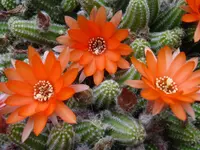
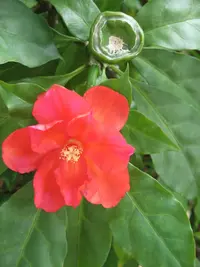
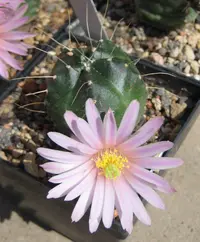
Mature plants produce large, white, fragrant flowers that open at night and are pollinated mainly by nocturnal insects, an adaptation that aligns flowering with cooler temperatures and nighttime pollinator activity.

Botan icon

Did you know?

This cactus has a long record of traditional use in Andean cultures as a ritual plant, and its psychoactive properties are attributed to the presence of mescaline and related phenethylamine alkaloids that are well documented in phytochemical research.

FAQs about Bolivian Torch Cactus

Growth is moderate for a columnar cactus. Young plants may add 5–15 cm per year in warm, bright, dry conditions, slowing with age. Cool temperatures, low light, cramped roots, or heavy soil reduce growth rate significantly.

Grow Healthy Plants with Botan Care

Keep your plants happy and healthy with plant identification, disease detection, and easy care guidance.

Botan plant care app — identify plants on mobile

Explore More Plants