Early spine management
Use long tweezers or tongs to remove any damaged or crossing spines on young ribs before they harden, which reduces future snagging risk and makes repotting and inspection safer.

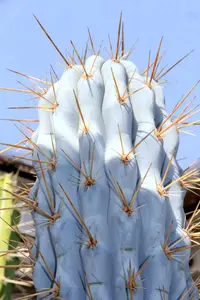
Browningia hertlingiana is a columnar cactus native to arid regions of Peru, where it grows on rocky slopes and dry hillsides. In nature, it can form tall, tree-like stems with prominent ribs and short spines.
In cultivation it stays much smaller, especially in containers, but still shows a strong upright habit and slow, steady growth. The plant prefers strong light, very fast-draining mineral soil, and careful watering with long dry periods.
Its slow growth and need for precise watering make it moderately challenging for beginners, but stable indoor conditions and patience make it easier to care for Browningia hertlingiana over time.

Care Difficulty
Moderate Care

Light Preference
Full Sun

Water Requirements
Low Water

Temperature Preference
Tropical / Frost Sensitive

Hardiness Zone
10–11

Soil Texture
Sandy, Rocky, Loamy

Soil pH
Slightly acidic (6.5–7.0), Neutral (7.0)

Soil Drainage
Well-drained

Fertilization
Minimal (feed rarely)
Scan your plant to receive care tips personalized for your specific plant
Available on iOS and Android
This tall Andean cactus thrives in strong sun but benefits from some protection in very hot lowland sites.
This species prefers deep, infrequent watering with thorough drying between soakings.
This cactus prefers warm, dry conditions with cool but not freezing winters.
This cactus handles low household humidity well and rarely needs special humidity care.
Browningia hertlingiana prefers very fast-draining, mineral-rich soil that mimics rocky desert slopes.
This species is suitable for container growing when the pot supports its tall, columnar form.
This cactus has low nutrient demand but benefits from light feeding in active growth.
Pruning needs are minimal and mainly focused on safety and plant health.
Container-grown plants appreciate infrequent but careful repotting due to a sensitive root system.
Propagation is most reliable from seed and requires warmth, high light, and patience.
This cactus is not very frost tolerant and benefits from careful winter management in cool climates.

Plant Health Check
Not sure what's wrong with your plant? Check your plant's health inside the app.
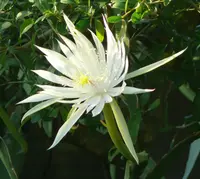
This columnar cactus opens its white, funnel-shaped flowers at night at high elevations in Peru, an adaptation that aligns with the activity patterns of nocturnal pollinators such as moths and possibly bats.
It is native to arid, rocky slopes of the central Peruvian Andes, where it experiences strong sun, large day–night temperature swings, and very low rainfall, shaping its slow, drought-tolerant growth habit.
Mature plants develop tall, blue-green to glaucous (waxy-coated) stems with pronounced ribs and spines; the waxy coating helps reduce water loss and protect tissues from intense high-altitude UV radiation.

In habitat, large individuals can form striking, tree-like columns that dominate exposed slopes, providing perching and nesting structure for birds in otherwise sparsely vegetated Andean desert landscapes.
This columnar cactus is slow to moderate growing. Young plants may add only a few cm per year, then speed up slightly with age. Stable warmth, strong light, and sparse but deep watering support steady growth.
Keep your plants happy and healthy with plant identification, disease detection, and easy care guidance.