
Early structural training
During the first 2–3 years, selectively head back vigorous stems by 2–5 in in late winter to encourage a bushier framework that can carry the plant’s eventual size and fruit load.

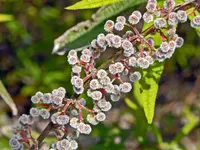
Edible debregeasia (Debregeasia orientalis) is a fast-growing deciduous shrub or small tree from the nettle family, valued for its small edible fruits. It typically forms a multi-stemmed, bushy shape with rough-textured leaves and inconspicuous flowers that develop into orange to red berries.
This species is native to parts of East and Southeast Asia, where it often grows in forest edges and disturbed woodland. Its ability to tolerate a range of soils and moderate neglect makes it relatively straightforward for growers who learn how to care for Edible debregeasia.
It generally prefers bright, indirect light to light shade, evenly moist but well-drained soil, and protection from extreme cold and prolonged drought.

Care Difficulty
Moderate Care

Light Preference
Partial Shade

Water Requirements
Moderate Water

Temperature Preference
Warm Climate

Hardiness Zone
9–11

Soil Texture
Loamy, Silty, Organic-rich

Soil pH
Acidic (5.5–6.5), Slightly acidic (6.5–7.0)

Soil Drainage
Moist but well-drained

Fertilization
Minimal (feed rarely)
Scan your plant to receive care tips personalized for your specific plant
Available on iOS and Android
This shrub prefers bright, indirect light with some direct sun in cooler hours.
Debregeasia orientalis prefers steadily moist but not waterlogged soil.
This species grows best in mild, frost-free to light-frost climates.
This species grows well in moderate humidity and usually adapts to typical indoor levels.
Debregeasia orientalis prefers a loose, moist but well-drained substrate that does not stay waterlogged.
This species can be grown successfully in containers if the pot is chosen to support its spreading root system.
This shrub grows well in average soil, but moderate feeding supports steady growth when growing Edible debregeasia.
Debregeasia orientalis benefits from light, purposeful pruning to maintain structure and plant health.
This species is usually grown in the ground, so care focuses on thoughtful transplanting rather than frequent repotting.
New plants are commonly raised from semi-ripe cuttings or seed under controlled conditions.
This shrub is generally hardy in mild to moderate climates but benefits from basic winter preparation.

Plant Health Check
Not sure what's wrong with your plant? Check your plant's health inside the app.
This species produces small red drupes that are eaten in parts of East Asia, where the sweet-sour fruits are sometimes used fresh or processed, which is the origin of the trade name edible debregeasia.
It naturally occurs as an understory shrub or small tree in warm, humid forests of southern China and nearby regions, where it prefers shaded slopes and streamside habitats and contributes to the mid-story vegetation structure.
The leaves are covered with fine hairs and feel noticeably rough to the touch, a texture that helps reduce herbivory and transpiration by slightly limiting water loss from the leaf surface.
Traditional fiber use has been recorded for this species, with its bark fibers occasionally used locally for coarse cordage or similar utilitarian purposes, reflecting its value beyond food in some rural communities.
The fruits are edible when fully ripe and are sometimes used fresh or processed into local foods. Leaves and young shoots may be used traditionally, but always confirm local guidance before consuming any part of this plant.
Keep your plants happy and healthy with plant identification, disease detection, and easy care guidance.

harlequin glorybower
Clerodendrum trichotomum
Yellow Pomegranate
Rhigozum obovatum
palm lily
Cordyline rubra
-1-200x133.webp)
Egyptian starcluster
Pentas lanceolata

Wintercreeper
Euonymus fortunei var. radicans 'Emerald 'n Gold'
Corsican Hellebore
Helleborus argutifolius
String of Dolphins
× Bacurio delphinatifolius
bitter cherry
Prunus emarginata