Encourage Deep Roots
During the first 2–3 years, give fewer but deeper irrigations and keep a 45–60 cm weed-free mulch ring so roots grow down and out instead of staying shallow near the trunk.

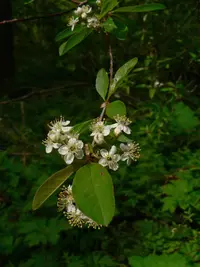
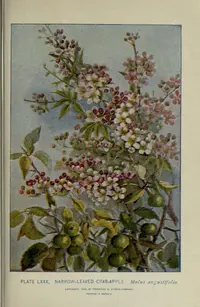
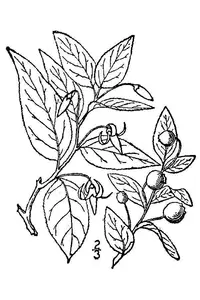
Bitter cherry, Prunus emarginata, is a deciduous shrub or small tree native to western North America, often found along streams, forest edges, and open slopes. It forms a narrow to spreading crown with simple, finely toothed leaves and clusters of small white spring flowers. These are followed by bright red cherries that are very astringent and bitter when raw. The species is relatively adaptable but grows best in full sun to light shade, with moist, well-drained, slightly acidic soil. Once established, it tolerates some drought and cold, which simplifies basic care for bitter cherry in suitable climates.

Care Difficulty
Moderate Care

Light Preference
Full Sun

Water Requirements
Moderate Water

Temperature Preference
Cold Hardy

Hardiness Zone
4–9

Soil Texture
Sandy, Loamy, Rocky

Soil pH
Acidic (5.5–6.5), Slightly acidic (6.5–7.0)

Soil Drainage
Moist but well-drained

Fertilization
Minimal (feed rarely)
Scan your plant to receive care tips personalized for your specific plant
Available on iOS and Android
This species prefers open, bright sites where it can receive strong light for most of the day.
This species prefers consistently moist but not saturated soil, especially while establishing.
This hardy tree is adapted to cool to mild climates with distinct winters.
Humidity is not a major concern for Prunus emarginata, which naturally tolerates a wide range of outdoor conditions.
Prunus emarginata prefers moderately fertile, well-structured mineral soil with reliable drainage.
This species can be grown in containers for several years, but only when given a large, stable setup suited to its eventual tree size.
Prunus emarginata usually needs minimal feeding on reasonably fertile soil, but light supplementation can support establishment and fruiting.
Prunus emarginata responds well to light, targeted pruning that maintains structure and health.
This species is usually grown in the ground, so focus on correct transplanting of young trees rather than long-term container culture.
Prunus emarginata is typically propagated from seed, with some use of cuttings where specific traits are desired.
This species is naturally cold hardy in much of its native range and usually needs little winter attention once established.

Plant Health Check
Not sure what's wrong with your plant? Check your plant's health inside the app.
This species is native to western North America, especially the Pacific Northwest, where it naturally occupies streambanks, moist slopes, and open forest edges from lowlands up into montane zones.
The small, bitter cherries are heavily used by birds, small mammals, and even bears, which disperse the seeds and help maintain genetic diversity in wild populations.
Depending on site conditions, it can grow as a multi-stemmed shrub or as a small tree, showing notable plasticity in height and branching when exposed to different light, moisture, and soil regimes.

This species often acts as a natural rootstock for other native cherries in mixed stands, allowing graft-compatible Prunus species to share disease-resistant and drought-tolerant root systems in disturbed or challenging habitats.
All parts, especially wilted leaves and seeds, contain cyanogenic compounds that can release cyanide. Ingestion by pets or livestock may cause drooling, weakness, breathing difficulty, or worse. Prevent chewing access and contact a veterinarian if ingestion is suspected.
Keep your plants happy and healthy with plant identification, disease detection, and easy care guidance.