Snow load management
In regions with heavy, wet snowfall, gently brush accumulated snow off the flexible branches with a broom to prevent splaying and breakage, especially on young plants.

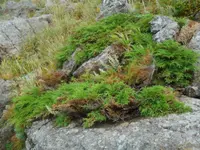
Siberian cypress (Microbiota decussata) is a low, spreading coniferous shrub grown mainly for its soft, feathery foliage and dense groundcover habit. It stays relatively low but can form wide, carpet-like mats over time.
In nature it occurs on rocky mountain slopes in eastern Siberia, where it endures cold, wind, and poor soils. This background makes it quite hardy in cultivation, though it dislikes extreme heat and drought.
It grows best in cool climates with partial sun, consistent moisture, and well-drained soil. Once the site is suitable, it is generally uncomplicated to care for Siberian Cypress.

Care Difficulty
Easy Care

Light Preference
Partial Shade

Water Requirements
Moderate Water

Temperature Preference
Cold Hardy

Hardiness Zone
3–7

Soil Texture
Sandy, Loamy, Rocky

Soil pH
Acidic (5.5–6.5), Slightly acidic (6.5–7.0)

Soil Drainage
Well-drained

Fertilization
Minimal (feed rarely)
Scan your plant to receive care tips personalized for your specific plant
Available on iOS and Android
This low, spreading conifer prefers cool sun exposure with some daily shade.
This species prefers evenly moist but never waterlogged soil once established.
This cold-hardy conifer thrives in cool to moderate outdoor climates.
Humidity is not a major factor for Microbiota decussata, which adapts well to typical outdoor air conditions.
Microbiota decussata prefers well-aerated, free-draining soil that stays evenly moist but never waterlogged.
This species can be grown in containers outdoors if the pot is prepared to manage moisture and root spread.
This conifer grows slowly and usually needs only light feeding in average garden soil.
Microbiota decussata needs only minimal pruning to maintain a tidy, low-spreading form.
This shrub is typically grown in the ground, so focus on careful transplanting rather than frequent repotting.
New plants of Microbiota decussata are most often produced from cuttings or simple layering.
This cold-hardy conifer generally needs modest winter care in most temperate climates.

Plant Health Check
Not sure what's wrong with your plant? Check your plant's health inside the app.
This species is native to cold, rocky slopes of eastern Siberia and the Russian Far East, where it forms low mats among stones and thin soils near the timberline.
Its tiny scale-like leaves are arranged in a precise decussate pattern, meaning each opposite pair of leaves is rotated 90° from the pair below, giving the sprays a distinctive, flattened, fernlike look.
In cold climates the foliage often shifts from green to bronze or coppery brown in winter, an adaptation that helps protect tissues from low temperatures and intense winter sun.

Genetic and morphological studies indicate that this species is the only member of its genus, making it a monotypic lineage within the cypress family Cupressaceae.
Browning usually results from winter windburn, dry soil, or compacted, poorly drained ground. Check moisture around the root zone, improve drainage, and consider a windbreak or mulch layer to reduce stress and future foliage damage.
Keep your plants happy and healthy with plant identification, disease detection, and easy care guidance.