fernleaf biscuitroot Care (Lomatium dissectum)

Also known as: fernleaf desertparsley, Fern-leaved Desert-parsley
fernleaf biscuitroot

About fernleaf biscuitroot

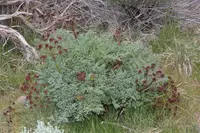
Fernleaf biscuitroot, Lomatium dissectum, is a long-lived perennial in the carrot family, native to dry, open slopes and foothills of western North America. It forms a clumping, somewhat shrubby mound of finely divided, fern-like foliage that dies back after flowering in many climates.

Tall flowering stalks carry flat-topped clusters of yellow to purplish umbels, giving it a distinct wildflower look. The plant is adapted to lean, rocky, well-drained soils and a dry summer rest, which can make it challenging in typical garden beds.

Lomatium dissectum suits low-water, naturalistic plantings where it can remain undisturbed; understanding these dryland adaptations is key to how to care for fernleaf biscuitroot.

Main Plant Requirements

Care Difficulty

Moderate Care

Light Preference

Full Sun

Water Requirements

Low Water

Temperature Preference

Cold Hardy

Hardiness Zone

5–9

Soil Texture

Sandy, Loamy, Rocky

Soil pH

Slightly acidic (6.5–7.0), Neutral (7.0)

Soil Drainage

Well-drained

Fertilization

Minimal (feed rarely)

Get Personalized Care Plan

Scan your plant to receive care tips personalized for your specific plant

Available on iOS and Android

How to Care for the fernleaf biscuitroot

This western North American perennial prefers strong light that mimics open, dry habitats.

  • Provide 6–8 hours of direct sun daily, ideally with morning sun and light afternoon shade in hotter regions to protect foliage from scorching.
  • Tolerates bright, open partial shade, but flowering and vigor decline if it receives less than about 4–5 hours of direct sun per day.
  • In summer, watch for leaf curl or crisping on fernleaf biscuitroot as a sign of excessive heat and sun, and use neighboring plants or light shade cloth if needed.

This deep-rooted perennial prefers dry to moderately dry conditions rather than frequent surface watering.

  • In well-drained, sandy or rocky soil, allow the top 5–8 cm to dry completely before watering, then soak deeply so moisture reaches the taproot zone.
  • Reduce or stop supplemental water in late summer dormancy; resume cautious deep watering in fall and spring if natural rainfall is low.
  • Signs of excess water include yellowing, limp foliage and soft, dark roots, while Lomatium dissectum shows underwatering as crisp, prematurely browning leaves on otherwise firm stems.

This species is adapted to continental climates with cold winters and warm, dry summers.

  • Active growth is best at 55–75°F (13–24°C), with cool nights improving overall vigor and root development.
  • The plant tolerates winter lows near 0°F (−18°C) once established, surviving subfreezing periods if soil drains well and does not stay saturated.
  • During summer heat, it withstands 85–95°F (29–35°C) but may enter partial dormancy; prolonged extremes above 100°F (38°C) increase stress, especially without airflow and dry conditions.

This species is adapted to arid Western habitats, so humidity management is usually unnecessary when caring for fernleaf biscuitroot.

This deep-rooted perennial needs very well-drained, lean soil that mimics its native rocky slopes.

  • Use sandy or gravelly loam with low organic matter, favoring a loose, open structure around the taproot.
  • Aim for slightly acidic to neutral pH, roughly 6.0–7.5, which suits Lomatium dissectum in most garden settings.
  • Blend coarse sand, small gravel, and a small amount of compost to improve drainage while preventing complete nutrient depletion.
  • Avoid heavy clay, compacted sites, or spots where water lingers after rain, as chronic wetness promotes root and crown rot.

This species is generally unsuitable for long-term container growing due to its deep taproot and sensitivity to restricted root space.

This western native wildflower, also known as fernleaf biscuitroot, generally needs little or no fertilizer in typical garden soils.

Lomatium dissectum needs only light, corrective pruning to keep plants tidy and healthy.

  • Cut back spent flowering stems at ground level in late spring or early summer once seeds have dropped.
  • Remove dead, diseased, or storm-damaged foliage with clean, sharp hand pruners to reduce disease risk.
  • Avoid heavy cutting into crowns or roots, which can weaken this long-lived taprooted perennial.

This deep taprooted perennial is best established directly in the ground and dislikes frequent transplanting.

  • Transplant only young plants before the taproot becomes long and brittle; older plants often fail when moved.
  • Plan moves for early spring or fall, when soil is cool and moisture is more consistent.
  • Dig deeply and widely to keep as much of the taproot intact as possible, disturbing roots minimally.
  • Water gently after transplanting and maintain evenly moist, not saturated, soil until new growth resumes.

Lomatium dissectum is most reliably propagated from seed, but germination can be slow and irregular.

  • Sow fresh seed in fall outdoors so natural winter cold stratification breaks dormancy.
  • Use a deep tray or pot with well-drained, gritty mix to accommodate early taproot development.
  • Keep soil just slightly moist; avoid waterlogging, which causes damping-off and root rot.
  • Transplant seedlings to final positions while small, handling roots very carefully to prevent damage.

This species is cold hardy through freezing winters and generally needs minimal winter care once established.

  • Tolerates substantial frost in well-drained soils without extra covering in the ground.
  • Apply a thin, loose mulch layer in late fall on exposed sites to limit freeze–thaw heaving.
  • For container plants, move pots to a sheltered, unheated but frost-exposed area to prevent waterlogging and root rot.

Care Tips

Deep taproot space

When planting, use a deep, unglazed container or raised bed at least 30–40 cm deep so the strong taproot can grow straight down without hitting a hard barrier, which reduces stress and transplant shock.

Minimal disturbance

Mark the planting spot clearly and avoid cultivating, digging, or pulling weeds close to the crown, since root disturbance can set the plant back for several seasons or even kill established clumps.

Seed cold stratification

For reliable germination, seal cleaned seeds in a slightly moist, sterile medium like vermiculite or sand in a labeled plastic bag and cold-stratify in a refrigerator at 34–41°F for 8–12 weeks before sowing outdoors.

Naturalistic mulching

Use a thin, open mulch such as coarse gravel or small rocks around but not touching the crown to mimic its native rocky habitat, suppress weeds, and improve drainage rather than using dense organic mulches that hold excess moisture.

Low-competition planting

Place plants in a bed with other drought-tolerant, low-fertility species and avoid rich, competitive groundcovers or turf nearby so the foliage can access enough light and air, which supports long-term success when growing fernleaf biscuitroot.

Common Pests and Diseases

Aster leafhopper

This pest spreads aster yellows phytoplasma, which can infect Lomatium dissectum in mixed prairie or meadow plantings. Symptoms include yellowing, distorted new growth, and weak, stunted plants.

Solution

Reduce nearby weedy hosts and mow or remove highly susceptible aster-family weeds to lower leafhopper populations. In high-pressure areas, use fine insect netting over young plants during peak leafhopper flights and remove and destroy any plants showing strong aster yellows symptoms, since infected plants do not recover.

Leaf spot

This disease is caused by various fungi that create small tan to brown lesions on the finely divided leaves, sometimes with yellow halos. Symptoms include premature leaf yellowing and reduced vigor in humid or poorly ventilated sites.

Solution

Remove and discard affected foliage to reduce fungal spores, and avoid overhead watering so that leaves dry quickly. Improve spacing and airflow around plants; in repeatedly wet seasons, a copper or chlorothalonil-based fungicide labeled for ornamental umbellifers can be used preventively according to label directions.

Powdery mildew

This disease appears as a white or gray powdery coating on the leaves and stems, usually during warm days and cool nights. Symptoms include dull, distorted foliage and reduced plant vigor late in the season.

Solution

Increase sun exposure and airflow, and water at the soil level rather than on foliage. Remove heavily infected leaves and, if needed in high-value plantings, apply a sulfur or potassium bicarbonate product labeled for powdery mildew at the first sign of infection.

Aphids

These insects may cluster on young stems and flower stalks, sucking sap and excreting sticky honeydew that can attract sooty mold. This pest can cause curling or distortion of new growth and reduced flowering under heavy infestations.

Solution

Dislodge colonies with a firm stream of water and encourage natural predators such as lady beetles by avoiding broad-spectrum insecticides. For persistent colonies, use insecticidal soap or a light horticultural oil, coating the insects thoroughly while avoiding applications during high heat above about 85°F.

Rodent root feeding

Symptoms include sudden wilting, poor emergence in spring, or entire plants collapsing where gophers, voles, or ground squirrels feed on the thick taproots. This damage is more common in naturalistic or wildland-edge plantings where burrowing rodents are established.

Solution

Use underground wire baskets or hardware cloth cages when planting in rodent-prone areas to physically protect the taproot. In larger sites, combine habitat modification, trapping, and exclusion fencing to reduce rodent pressure around important stands of Lomatium dissectum.

Interesting Facts

Deep taproot strategy

This species forms a very large, carrot-like taproot that can reach deep soil layers, allowing it to survive in dry, rocky habitats of western North America where surface moisture is limited.

Highly dissected foliage

Its leaves are finely divided into many narrow segments, giving a fernlike appearance that increases leaf surface area while reducing wind resistance and water loss in exposed sites.

Early spring bloomer

Plants often send up tall umbels of yellow to purple flowers in early spring, taking advantage of cool, moist conditions and high light levels before surrounding shrubs and trees fully leaf out.

Botan icon

Did you know?

Indigenous peoples of western North America historically recognized and named distinct color forms and local variants of this species, reflecting close observation of its variation in flower color, leaf shape, and growth habit across different mountain and plateau regions.

FAQs about fernleaf biscuitroot

Yes, this species is usually started from seed. It needs a cold, moist period (cold stratification) to break dormancy. Sow outdoors in fall or pre-chill seeds, then be patient, as germination can be slow and irregular.

Grow Healthy Plants with Botan Care

Keep your plants happy and healthy with plant identification, disease detection, and easy care guidance.

Botan plant care app — identify plants on mobile

Explore More Plants