Matte Bolete Care (Xerocomellus pruinatus)

Matte Bolete

About Matte Bolete

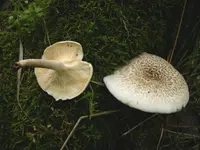
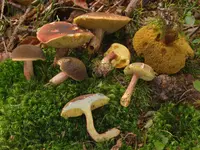
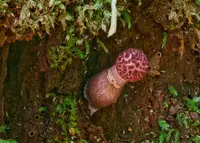
Matte bolete, Xerocomellus pruinatus, is a wild mushroom-forming fungus rather than a traditional houseplant. It grows from soil, not from a stem-and-leaf structure. Caps are typically velvety, dull brown to reddish, with yellow pores underneath, and the stout stems often show fine color mottling.

This species is native to Europe and often occurs in mixed woodlands, especially with broadleaf trees. It forms mycorrhiza, a nutrient-exchange partnership with tree roots, which makes it difficult to cultivate in ordinary garden or indoor conditions.

Because of this close tree association, attempts to care for Matte Bolete in pots or typical beds are rarely successful. It prefers undisturbed woodland soils with consistent moisture and good leaf litter cover.

Main Plant Requirements

Care Difficulty

Moderate Care

Light Preference

Partial Shade

Water Requirements

Keep Soil Moist

Temperature Preference

Cool Climate

Hardiness Zone

Unknown

Soil Texture

Loamy, Silty, Organic-rich

Soil pH

Strongly acidic (4.5–5.5), Acidic (5.5–6.5)

Soil Drainage

Moist but well-drained

Fertilization

Minimal (feed rarely)

Get Personalized Care Plan

Scan your plant to receive care tips personalized for your specific plant

Available on iOS and Android

How to Care for the Matte Bolete

This ectomycorrhizal fungus prefers woodland light conditions rather than open, exposed sites.

  • Provide bright dappled shade under deciduous trees, with 2–4 hours of weak, filtered morning sun and protection from harsh midday and afternoon sun.
  • Ensure leaf-litter or low vegetation creates a broken light pattern; consistent full shade under dense conifers can reduce fruiting of Matte Bolete.
  • Avoid open, unshaded areas where caps can scorch and substrate dries quickly, especially in late summer when sun intensity peaks.

This woodland fungus thrives in consistently moist, not waterlogged, soil around its host trees.

  • Aim for evenly moist upper soil, allowing the top 2–3 cm to start drying between rains or irrigations, then re-moisten thoroughly.
  • Use well-drained, humus-rich soil so excess water percolates away; standing water or compacted clay promotes rot and suppresses Xerocomellus pruinatus fruiting.
  • In hot, dry periods, watch for shrinking, cracking caps and very dry leaf litter as cues to add water; reduce supplemental moisture in cool, rainy seasons.

This species is adapted to temperate woodland climates with cool to mild growing seasons.

  • Optimal fruiting usually occurs around 55–68°F (13–20°C), often from late summer into autumn when days are mild and nights start to cool.
  • The fungus tolerates cool conditions down to about 40°F (4°C) in soil, but hard frost at 32°F (0°C) or below can damage or halt existing fruiting bodies.
  • Prolonged heat above 80°F (27°C), especially combined with dry soil, shortens cap lifespan; provide shade and soil moisture buffering during heat waves.

Humidity is not a major factor for Xerocomellus pruinatus, which naturally fruits in variable forest air conditions.

Xerocomellus pruinatus relies on specific outdoor soil conditions and cannot be managed like a typical garden plant.

  • Fruits appear in moist, well-drained forest soils with a loose, crumbly structure rich in leaf litter and other organic debris.
  • Soil is usually mildly acidic, around pH 5.0–6.5, often in association with roots of broadleaf or conifer trees.
  • Avoid compacted, waterlogged, or heavily disturbed soils, which disrupt the fine root–fungus contact this species needs to form mycorrhiza (mutual partnership with roots).
  • Do not amend soil with large amounts of fertilizer or manure, as high nutrient loads can suppress fruiting bodies.

This species is not suitable for container growing, as it requires a stable mycorrhizal partnership with living trees in natural ground.

Xerocomellus pruinatus forms a mycorrhizal partnership with tree roots and usually does not need direct fertilization.

Xerocomellus pruinatus is a wild mycorrhizal fungus and is not managed through pruning in typical cultivation.

This fungus is best maintained by supporting its host trees rather than repotting or transplanting the organism itself.

  • Avoid disturbing soil where fruiting bodies appear, since the main fungal network lives as fine threads around tree roots.
  • If a host tree is moved while young, keep as much native soil around the root ball as possible to preserve fungal associations.
  • Choose planting sites with similar soil type, drainage, and light to the original location to support existing mycorrhizal partners.
  • Water moved trees carefully after transplanting to reduce root stress and help the fungal relationship re-establish.

Caring for Matte Bolete focuses on conserving existing mycelium rather than active propagation, which is technically complex and unreliable for home growers.

This species is naturally cold hardy in temperate forests and typically needs no special winter care.

Care Tips

Host tree selection

Establish the fungus near compatible ectomycorrhizal hosts such as oaks, beeches, or pines, and keep turfgrass and dense groundcovers away from the root zone so fine roots and fungal mycelium can develop undisturbed.

Minimal soil disturbance

Avoid rototilling, deep digging, or frequent edging where the fungus is established, since breaking up the mycelial network can drastically reduce fruiting for several seasons.

Leaf litter management

Leave a light layer of deciduous leaf litter over the rooting zone, then gently rake it aside only in fruiting season to locate mushrooms, as this mimics natural forest conditions and maintains moisture and organic inputs.

Targeted irrigation pattern

If supplemental water is needed, wet the soil under the dripline of host trees rather than the trunk flare, using infrequent but deep irrigation to encourage fine root and mycorrhizal development instead of shallow surface rooting.

Fruiting body hygiene

Harvest mushrooms cleanly by cutting at the base and remove any rotten or heavily insect-damaged fruiting bodies, which helps limit buildup of fungus gnats and other pests in areas dedicated to growing Matte Bolete.

Common Pests and Diseases

Mycelial fly larvae

This pest targets developing fruiting bodies and mycelium, tunneling through caps and stems. Symptoms include distorted or collapsing mushrooms with soft, discolored galleries inside.

Solution

Remove and discard infested fruiting bodies at the first signs of tunneling, and maintain clean, debris-free surroundings to reduce egg‑laying sites. In outdoor settings, use fine mesh or netting over known fruiting areas and limit exposed fresh organic waste that attracts adult flies.

Springtails

These insects live in damp litter and can graze on young mycelium and very small primordia, slightly reducing fruit set in tightly controlled cultivation beds. Symptoms include poor or uneven mushroom formation in very moist, organic‑rich substrates.

Solution

Allow the surface of the substrate or bed to dry very slightly between soakings while keeping deeper layers moist, and improve drainage so water does not stagnate. Reduce decaying plant debris on the surface and, if needed, use physical barriers such as raised mesh benches or clean edging to separate colonized areas from surrounding wet leaf litter.

Slug and snail grazing

This pest feeds directly on young and mature fruiting bodies, leaving ragged edges, holes, and slime trails on caps and stems. Symptoms include partially eaten mushrooms and rapid loss of small primordia overnight.

Solution

Hand‑remove slugs and snails during damp evenings or early mornings and reduce hiding spots such as thick mulch, boards, or stones close to fruiting areas. Copper tape barriers or ring‑shaped coarse grit around beds can physically deter movement without contaminating the habitat.

Parasitic bolete mould

This disease is caused by specialized fungi that colonize boletes, leading to deformed, discolored, or fuzzy fruiting bodies that fail to mature. Symptoms include abnormal cap shapes, off‑colored patches, or dense mould growth on affected mushrooms.

Solution

Promptly remove and discard all deformed or mouldy fruiting bodies to reduce spore load near the mycelium. Avoid overhead watering or persistent surface wetness, and encourage good air movement so caps dry quickly after rain or irrigation, which helps limit further infections and supports stable Xerocomellus pruinatus care.

Interesting Facts

Variable cap coloration

The cap of this bolete often shows a mix of dull red, brown, and olive shades that can fade or crack with age, revealing paler flesh beneath, which helps distinguish it from more uniformly colored lookalike boletes.

Bluing reaction in flesh

When the pores or cut surface are bruised, the yellowish flesh typically turns blue, a chemical oxidation reaction that is helpful for field identification but does not indicate toxicity on its own.

Mycorrhizal forest partner

This species forms ectomycorrhizal associations with broadleaf trees such as beech and oak in temperate Europe, exchanging mineral nutrients from the soil for sugars produced by the host tree.

Botan icon

Did you know?

Some mycologists consider Xerocomellus pruinatus part of a complex of closely related red-cracked boletes, and molecular studies using DNA sequencing have been important in separating it from similar species that were historically grouped under broader names like Boletus chrysenteron.

FAQs about Matte Bolete

This bolete is generally considered edible when correctly identified and cooked, but quality is modest. Misidentification with similar species is a real risk, so foragers should only consume it after expert confirmation.

Grow Healthy Plants with Botan Care

Keep your plants happy and healthy with plant identification, disease detection, and easy care guidance.

Botan plant care app — identify plants on mobile

Explore More Plants