Shaggy Bracket Care (Inonotus hispidus)

Shaggy Bracket

About Shaggy Bracket

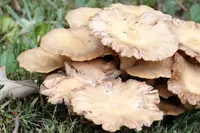
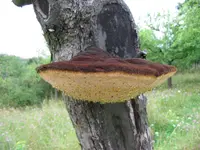
Shaggy bracket, Inonotus hispidus, is a wood-decay fungus rather than a leafy plant. It forms large, layered brackets with a shaggy, hairy surface and warm orange-brown tones. These brackets appear on trunks and branches of living or dead broadleaf trees, especially ash and apple. It is native to Europe and parts of Asia but can also be found in other temperate regions.

This fungus relies on host trees instead of soil and roots, so it is not suited to normal indoor pot culture. It is considered challenging for those who want to care for Shaggy Bracket, because it needs the right host wood, temperature, and humidity to form fruiting bodies.

Main Plant Requirements

Care Difficulty

Moderate Care

Light Preference

Partial Shade

Water Requirements

Keep Soil Moist

Temperature Preference

Cool Climate

Hardiness Zone

4–9

Soil Texture

Loamy, Clay, Organic-rich

Soil pH

Slightly acidic (6.5–7.0), Neutral (7.0)

Soil Drainage

Moist but well-drained

Fertilization

Minimal (feed rarely)

Get Personalized Care Plan

Scan your plant to receive care tips personalized for your specific plant

Available on iOS and Android

How to Care for the Shaggy Bracket

This wood-decaying fungus prefers bright, open conditions but tolerates some shade on host trees.

  • Provide 3–6 hours of direct sun or bright open sky exposure, with morning sun and dappled afternoon light ideal for stable fruiting bodies.
  • Allow partial shade under a broken canopy; Shaggy Bracket can form on trunks receiving filtered light for much of the day, especially in summer.
  • Avoid deep shade, which reduces fruiting, and harsh, all-day afternoon sun that can dry and crack brackets, especially during hot, dry spells.

As a trunk-decaying fungus, its water needs relate to wood moisture rather than soil irrigation.

  • Focus on maintaining a host tree environment with consistent natural moisture; avoid practices that cause extreme trunk drying, such as heavy bark stripping or excessive sun exposure at the base.
  • Inonotus hispidus fruits more reliably when seasonal rainfall keeps wood moderately moist; prolonged drought leads to smaller, tougher brackets that age and fade quickly.
  • Excess waterlogged conditions around roots can weaken host trees further, but very dry sites limit fungal activity, so aim for balanced site moisture rather than direct watering.

This species develops most actively in mild to warm conditions on living or recently dead wood.

  • Optimal fruiting occurs around 60–77°F (16–25°C), common in late spring to early autumn in many temperate climates.
  • The fungus survives winter cold down to about 23°F (-5°C) within wood, but exposed brackets may be damaged or lost after repeated hard frosts.
  • Sustained heat above 86°F (30°C), especially combined with low humidity, tends to dry and crack brackets, so they often appear or persist better in cooler, moist seasons.

Humidity is not a key factor for Inonotus hispidus, which naturally develops on exposed trunks in outdoor conditions.

This wood-decay fungus does not grow in conventional potting soil and instead colonizes dead or stressed hardwood.

  • Target intact or recently dead hardwood logs or large branches, especially apple or other fruit trees, rather than any loose substrate.
  • Ensure the wood remains firm yet slightly moist inside, avoiding waterlogged conditions that exclude oxygen and inhibit fungal activity.
  • Keep pH roughly neutral to slightly acidic by using untreated, unpainted wood without preservatives or surface sealants.
  • Avoid soil, compost mixes, bark-only substrates, or heavily decayed, crumbly wood, which do not support structured colonization by Inonotus hispidus.

This species is generally unsuitable for container growing because it requires colonizable hardwood rather than a soil-based medium.

Inonotus hispidus is a wood-decaying fungus on trees and typically does not require fertilization in managed landscapes.

Pruning for Inonotus hispidus focuses on managing the infected host tree rather than shaping the fungus itself.

  • Best timing is late winter to early spring, before vigorous sap flow and new leaf growth on the host tree.
  • Use clean, sharp pruning saws or loppers to remove branches bearing fruiting bodies and visibly decayed wood.
  • Cut back to sound wood with a clean collar cut to reduce structural risk and improve tree safety.
  • Disinfect tools between cuts with alcohol or a 10% bleach solution to limit spread of fungal spores.

This bracket fungus is not grown in containers, so care focuses on host tree management rather than repotting.

  • Transplanting concerns the tree: consider moving or replacing young, lightly infected trees if decay risk is high.
  • Best timing for any tree transplant is late fall or early spring, when the tree is dormant and stress is lower.
  • Signs that a tree may need replacement rather than transplanting include extensive trunk decay or repeated limb failure.
  • Reduce root stress by watering deeply after transplanting, maintaining mulch at 5–8 cm depth, and avoiding soil compaction.

Propagation of Inonotus hispidus is generally avoided in gardens and landscapes because it is a wood-decay pathogen.

This fungus and its host trees are typically cold hardy in temperate climates and need minimal specific winter care.

  • Maintain a 5–8 cm organic mulch layer around the tree root zone to buffer soil temperature and moisture.
  • Avoid piling mulch against the trunk, which can increase moisture and favor further decay at the base.
  • Inspect trees in late winter for cracks, dieback, or large brackets, and schedule arborist assessment if structural risk is suspected.

Care Tips

Select Host Trees

Choose stressed or declining hardwoods such as apple or ash as hosts, since this bracket fungus colonizes dead or weakened wood rather than healthy, vigorous trees.

Use Fresh Inoculum

When introducing the fungus intentionally, use fresh spore-infused dowels or plugs and drill into recently cut, unweathered wood to maximize colonization success.

Control Moisture Levels

Place inoculated logs or sections of trunk where they receive natural rainfall but are shielded from direct drying winds, using mulch or leaf litter around the base to slow moisture loss.

Monitor Structural Safety

Inspect host trees regularly and remove or reduce limbs with advanced decay near paths, parked cars, or buildings, since this wood-rotting species can gradually weaken major branches.

Plan Seasonal Harvest

Harvest brackets when they are young, firm, and brightly colored, checking hosts every 1–2 weeks in the main fruiting season so caring for Shaggy Bracket does not conflict with timely spore production or structural assessments of the host tree.

Common Pests and Diseases

sap beetle feeding

This pest visits fruiting bodies and tunnels or chews into the spongy tissue, leaving pits, frass, and rapid decay. Symptoms include soft, collapsing brackets and small dark beetles visible in crevices.

Solution

Physically remove heavily damaged brackets and dispose of them away from trees to reduce breeding sites. Where valuable survey or cultivation is involved, protect young fruiting bodies with fine mesh covers, avoid leaving fermenting fruit or sap nearby, and keep the host tree as unstressed as possible so it resists secondary decay.

fungus gnat larvae

This pest lives in and around moist brackets, burrowing through the flesh and accelerating breakdown. Symptoms include small maggots inside the fruiting body and faster than normal collapse and discoloration.

Solution

Cut away and discard badly infested brackets to break the life cycle. To reduce attraction, avoid persistent standing water on or around host trunks, remove decaying organic piles nearby, and if rearing or studying the fungus under cover, use sticky traps for adult gnats and increase air movement to keep surfaces slightly drier.

bacterial soft rot

This disease takes advantage of wet, damaged brackets, turning tissue soft, water-soaked, and foul-smelling. Symptoms include rapid liquefaction of the fruiting body and strong odor, often following insect or mechanical damage.

Solution

Remove and discard all affected brackets promptly, using clean tools, and avoid smearing decayed material onto other surfaces. Improve airflow around the host tree, minimize trunk wounding, and prevent irrigation or water features from constantly wetting the fruiting area to reduce recurrence.

secondary wood decay fungi

This disease complex involves other decay fungi entering through the same trunk wounds colonized by Shaggy Bracket, accelerating internal wood breakdown. Symptoms include extended areas of white or brown rot in the host tree, additional fungal fruiting bodies, and progressive structural weakness.

Solution

Have a certified arborist assess the host tree for structural stability and extent of decay. Management usually focuses on careful pruning, reduction of mechanical load, and sometimes phased removal of high-risk trees, rather than direct treatment of the bracket fungus itself.

Interesting Facts

Distinctive shaggy cap

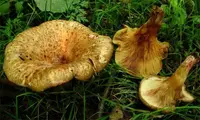
The fruiting body develops a thick, semicircular bracket with a densely hairy, shaggy upper surface that often turns from orange-brown to darker brown as it ages, making it unusually rough compared to many other polypores. The pore surface beneath is yellow to ochre and bruises or darkens with age.

Host-specific parasite

This fungus is a plant pathogen that primarily infects broadleaf trees such as apple, ash, and plane, causing a white rot that selectively breaks down lignin and leaves the wood pale and fibrous. In orchards it is known as a cause of trunk decay and branch failure in older or stressed fruit trees.

Seasonal exudate droplets

Fresh brackets often exude amber to dark brown droplets on their surface, especially in humid or warm conditions, a process called guttation where excess fluid and metabolites are pushed out of the fruiting body. These droplets can dry into shiny resin-like spots that remain visible on older brackets.

Botan icon

Did you know?

Genetic and microscopic studies place this species firmly in the Hymenochaetaceae, and its setae (thick-walled, brown bristle-like cells) are a key diagnostic feature, helping mycologists distinguish it from superficially similar orange polypores in other fungal families.

FAQs about Shaggy Bracket

Growth is relatively slow to moderate. New brackets usually appear annually on the same infected area, enlarging over several seasons. Rate depends on host tree vigor, moisture availability, and temperature, typically adding a few centimeters in thickness each year.

Grow Healthy Plants with Botan Care

Keep your plants happy and healthy with plant identification, disease detection, and easy care guidance.

Botan plant care app — identify plants on mobile

Explore More Plants