Aechmea lueddemanniana Care

Aechmea lueddemanniana

About Aechmea lueddemanniana

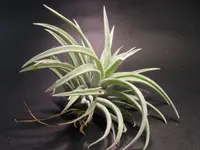
Aechmea lueddemanniana is a tropical bromeliad grown mainly as an ornamental foliage and flowering plant. It forms a tight rosette of arching, strap-like leaves that can be plain green or attractively banded, with a tall, colorful flower spike rising from the center. Native to Central America, it typically grows as an epiphyte, attaching to trees rather than rooting deeply in soil. This background makes it relatively adaptable indoors, as long as it receives bright, filtered light and moderate, steady moisture. Many growers find it straightforward to care for Aechmea lueddemanniana once its preference for good air movement and free-draining substrate is understood.

Main Plant Requirements

Care Difficulty

Moderate Care

Light Preference

Bright Indirect Light

Water Requirements

Moderate Water

Temperature Preference

Tropical / Frost Sensitive

Hardiness Zone

10–11

Soil Texture

Sandy, Loamy, Organic-rich

Soil pH

Acidic (5.5–6.5)

Soil Drainage

Well-drained

Fertilization

Light (every 4–6 weeks)

Get Personalized Care Plan

Scan your plant to receive care tips personalized for your specific plant

Available on iOS and Android

How to Care for the Aechmea lueddemanniana

This bromeliad prefers bright, filtered light that mimics dappled tropical shade.

  • Provide 4–6 hours of bright, indirect light each day, such as near an east-facing window or under light tree cover outdoors.
  • Tolerates partial shade, but if leaves turn dark green and flowering slows, move slightly brighter; if tips bleach or scorch, reduce direct sun, especially midday.
  • Morning sun with afternoon shade suits Aechmea lueddemanniana best; increase light slightly in winter when natural light levels drop.

Watering focuses on both the central cup and the surrounding soil without keeping either stagnant or bone dry.

  • Keep the central cup 1/2–3/4 full with fresh water, flushing it every 1–2 weeks to prevent salt and debris buildup.
  • Allow the top 2–3 cm of soil to dry before watering the potting mix; roots like moisture but need fast drainage to avoid rot.
  • In cooler months reduce watering frequency; signs of overwatering include mushy base and sour smell, while underwatering shows curling, crispy leaf tips.

Stable warm conditions support healthy growth and flowering for this bromeliad.

  • Aim for 65–80°F (18–27°C) for active growth, with slightly cooler nights improving overall vigor.
  • Short exposures down to about 50°F (10°C) are usually tolerated, but foliage damage and decline occur if temperatures drop near 40°F (4°C) or frost.
  • Heat up to 90°F (32°C) is manageable if humidity and airflow are good; provide shade and extra water in the cup during hot, dry periods.

This bromeliad prefers moderately humid air but adapts to typical indoor levels if not too dry.

  • Aim for 50–70% humidity to support long-lasting foliage and bract color in Aechmea lueddemanniana.
  • Brown leaf tips, crispy margins, and sluggish central cup refilling indicate humidity stress.
  • Increase humidity with a nearby humidifier, clustered plants, and keeping the central cup filled without misting the flowers.

Use a loose, airy mix that drains quickly yet holds moderate moisture around the roots.

  • Choose a coarse, organic-rich mix such as 40% fine orchid bark, 30% peat or coco coir, and 30% perlite or pumice for Aechmea lueddemanniana.
  • Ensure fast drainage and high aeration; water should flow through within seconds and not leave the mix soggy.
  • Keep pH slightly acidic, roughly 5.5–6.5, which supports nutrient availability and root health.
  • Avoid dense garden soil, clay-heavy mixes, or peat-only substrates that compact and suffocate the root zone.

This species is well suited to container growing for both indoor and sheltered outdoor settings.

  • Select a squat, heavy pot to counterbalance the tall rosette and prevent tipping as the flower spike develops.
  • Leave some space between the plant base and rim so offsets can form and sit above the pot edge without rotting.
  • Use a container only 2–4 cm wider than the root base to keep the mix drying at a similar rate as the central cup.

Moderate feeding supports steady growth and flowering in Aechmea lueddemanniana without overloading its roots.

  • Use a balanced liquid fertilizer (around 10-10-10 or 20-20-20) diluted to 1/4–1/2 strength, suitable for bromeliads.
  • Feed every 4–6 weeks in spring and summer, applying to the soil and lightly to the central cup, then flush with plain water occasionally.
  • Avoid heavy organic compost in pots; instead, use a slow-release bromeliad or general houseplant granule mixed sparingly into the medium.
  • Stop or reduce feeding to 1 light application in late fall, and do not fertilize in deep winter when growth is minimal.

Pruning Aechmea lueddemanniana is mainly about hygiene and managing space rather than shaping like a shrub.

  • In any season, remove dead, dried, or damaged leaves at the base with clean, sharp scissors or pruning shears.
  • After flowering, cut the spent flower stalk close to the base to keep the rosette tidy and focus energy on offsets.
  • Thin out very crowded offsets if airflow is poor, which reduces risk of rot and keeps the clump more compact.
  • Disinfect tools before and after use to lower the chance of spreading fungal or bacterial problems between plants.

This bromeliad prefers slightly snug conditions, so repotting Aechmea lueddemanniana is infrequent but sometimes necessary.

  • Repot every 3–4 years or when roots circle the pot, growth slows, or offsets overflow the container.
  • Choose late spring or early summer, when active growth helps the plant recover more quickly from disturbance.
  • Move into a pot only 2–5 cm wider with very free-draining mix, supporting the base without burying the rosette.
  • Water lightly after repotting, keep in bright indirect light, and avoid heavy feeding for 2–3 weeks to limit root stress.

New plants of Aechmea lueddemanniana are most reliably produced from offsets, also called pups, rather than seeds.

  • Divide pups in late spring or early summer when they reach about 1/3–1/2 the height of the mother plant.
  • Gently remove the entire clump from the pot, then separate pups with a clean knife, keeping some roots attached.
  • Plant each pup in a small pot with airy bromeliad mix, stabilizing it upright so the rosette does not wobble.
  • Maintain bright, indirect light, high humidity, and lightly moist mix; keep the central cup only slightly filled until roots establish.

Outdoor Aechmea lueddemanniana in cooler climates needs winter protection, while indoor plants mainly require stable conditions.

  • Treat it as frost-sensitive; aim to keep temperatures above 50°F, ideally 60–75°F during winter months.
  • In regions with frost, grow in containers and move plants indoors or into a greenhouse before nights drop below 50°F.
  • Indoors, provide bright indirect light, reduce watering so the mix dries slightly between waterings, and keep the cup only lightly filled.
  • For mild climates, use a light mulch around outdoor root zones to buffer brief cool spells without smothering the crown.

Care Tips

Tank water management

Flush the central tank with room-temperature water every 2–4 weeks and immediately refill it to prevent salt buildup and mosquito larvae, then keep leaf axils dry on cool days to reduce rot risk.

Offset division timing

Wait until pups reach about one-third to one-half the height of the mother plant and have several roots before cutting them off with a sterilized blade, then pot them slightly deeper to stabilize the rosette.

Flower spike handling

After the inflorescence fades and discolors, remove the spent spike at the base with clean pruners to direct the plant’s limited energy into pup development rather than maintaining dead tissue.

Salt-sensitive watering

Use rainwater, distilled, or reverse-osmosis water if tap water is hard or heavily chlorinated, as excessive dissolved salts and chemicals can scorch leaf tips and damage the plant’s central tank tissue.

Container stability setup

Choose a wide, heavy pot or add a top layer of coarse gravel to keep the relatively shallow-rooted rosette from tipping over as the tall flower spike and multiple pups develop when caring for Aechmea lueddemanniana.

Common Pests and Diseases

Scale insects

These insects attach to leaves and leaf axils, sucking sap and leaving small brown or tan bumps that may be sticky with honeydew. Symptoms include yellowing patches on leaves and reduced vigor, especially on mature rosettes and flower stalks.

Solution

Remove affected leaves or heavily infested sections if possible, then gently scrub remaining scale with a cotton swab dipped in isopropyl alcohol or insecticidal soap, taking care around the central cup. Improve air movement and avoid excess nitrogen fertilization, which can encourage soft growth that is more susceptible to scale when growing Aechmea lueddemanniana.

Mealybugs

This pest forms white, cottony clusters in leaf bases, along the inflorescence, and around roots, often causing distortion of new growth and sticky honeydew deposits. Symptoms include slow growth, leaf tip dieback, and sooty mold developing on honeydew.

Solution

Isolate the plant and rinse leaf axils and the central cup with a gentle stream of lukewarm water to dislodge insects, then treat remaining clusters with insecticidal soap or a systemic product labeled safe for bromeliads. Repeat treatments weekly until no new mealybugs appear, and inspect any nearby bromeliads regularly.

Bromeliad rust

This disease causes small yellow spots on the upper leaf surface that develop orange to brown pustules on the underside, often starting on older leaves. Symptoms include gradual leaf yellowing and premature leaf drop under warm, humid, and still air conditions.

Solution

Remove and discard affected leaves promptly, avoiding contact with healthy foliage, and improve air circulation around the plant by spacing and using a fan if indoors. Keep leaves dry when possible, water early in the day, and in persistent cases use a fungicide labeled for rust on ornamentals, following directions carefully.

Leaf spot

This disease produces water-soaked, tan to dark brown spots that may have a yellow halo, often starting where water sits on the leaf. Symptoms include coalescing lesions that can weaken leaves and spoil the ornamental appearance of the rosette.

Solution

Trim off badly spotted leaves with sterilized tools and avoid overhead watering that leaves foliage wet for long periods. Ensure the plant sits in a bright, ventilated position, and if spots spread, apply a copper-based or other ornamental-safe fungicide according to label directions, focusing on new growth.

Heart or crown rot

This disease affects the central cup and inner leaves, which become soft, brown, and foul-smelling, often collapsing suddenly from the center outward. Symptoms include a mushy core while outer leaves may remain green for some time.

Solution

At early stages, carefully remove all soft, decayed tissue from the center and drain any standing, stagnant water from the cup, then allow the core to dry slightly before refilling with fresh, clean water. Improve drainage, avoid keeping the cup constantly full in cool or low-light conditions, and maintain good air circulation; severely rotted plants are often best discarded to protect nearby bromeliads.

Interesting Facts

Tank-forming coastal bromeliad

This species naturally forms water-holding rosettes and is native to lowland coastal forests from Mexico to Panama, where it often grows as an epiphyte on trees near humid, sea-influenced habitats.

Twilight-colored inflorescences

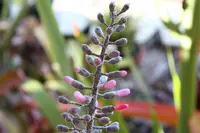
Its flowering spike produces pink bracts with tubular flowers whose petals shift from violet to bluish tones as they age, a color change that helps signal to pollinators which flowers are still rewarding.

Long-lasting yet monocarpic rosettes

Each leaf rosette lives for several years and can hold its colorful inflorescence for months, but after flowering that rosette slowly dies while offsets at the base take over.

Botan icon

Did you know?

In some parts of its native range, this bromeliad can form dense colonies in mangrove margins and coastal woodland edges, where its water-filled leaf tanks create small aquatic habitats that support insect larvae, tiny crustaceans, and even amphibian eggs.

FAQs about Aechmea lueddemanniana

This species usually needs to reach maturity, then experiences a short cool period and stable bright light to trigger flowering. Crowded roots help. Avoid repotting or heavy fertilizing just before bloom, as this can delay flowers.

Grow Healthy Plants with Botan Care

Keep your plants happy and healthy with plant identification, disease detection, and easy care guidance.

Botan plant care app — identify plants on mobile

Explore More Plants