Blushing Bromeliad Care (Nidularium fulgens)

Blushing Bromeliad

About Blushing Bromeliad

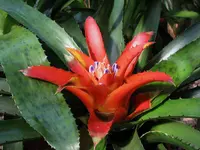
Blushing bromeliad, Nidularium fulgens, is a compact tropical bromeliad valued for its rosette of glossy green leaves and striking red center cup. It usually grows as an epiphyte, anchoring on trees rather than rooting deeply in soil.

This species comes from the Atlantic rainforests of Brazil, where it experiences warm temperatures, bright filtered light, and high air humidity. Its slow, tidy growth habit makes it suitable for indoor display.

Nidularium fulgens is generally considered manageable for beginners, as long as its central cup stays lightly moist and drainage is good. Learning how to care for Blushing Bromeliad mainly involves providing stable warmth, indirect light, and avoiding waterlogged potting mix.

Main Plant Requirements

Care Difficulty

Moderate Care

Light Preference

Bright Indirect Light

Water Requirements

Moderate Water

Temperature Preference

Tropical / Frost Sensitive

Hardiness Zone

11–12

Soil Texture

Loamy, Peaty, Organic-rich

Soil pH

Acidic (5.5–6.5), Slightly acidic (6.5–7.0)

Soil Drainage

Moist but well-drained

Fertilization

Light (every 4–6 weeks)

Get Personalized Care Plan

Scan your plant to receive care tips personalized for your specific plant

Available on iOS and Android

How to Care for the Blushing Bromeliad

This bromeliad prefers bright, filtered light that mimics dappled forest shade.

  • Provide 6–8 hours of bright, indirect light daily, such as under a sheer curtain or beneath light tree canopy, which helps the center cup of Blushing Bromeliad color up without leaf burn.
  • Allow gentle early morning sun in cooler climates, but protect from strong midday and afternoon sun that can cause brown, crispy patches on the leaves.
  • In deeper shade the rosette stretches and colors fade; move the plant gradually to a brighter spot, especially in winter when day length and light intensity drop.

This species stores water in its central cup and prefers lightly moist, fast-draining roots.

  • Keep the central cup 1/2–3/4 full with fresh water, flushing it every 1–2 weeks to prevent stagnation, and let excess drain away rather than sit around the pot or root zone.
  • Water the soil only when the top 2–3 cm feel dry, then water thoroughly so excess drains out; the mix should feel barely moist, not soggy.
  • In cooler months reduce soil watering and rely more on the cup, watching for limp, curling leaves as a sign of thirst and pale, soft, or base-rot leaves as a sign of overwatering.

This bromeliad prefers warm, stable conditions with no frost exposure.

  • Aim for 65–80°F (18–27°C) for active growth, which matches its tropical origin and supports healthy leaf color and cup formation.
  • Protect from temperatures below 55°F (13°C); brief dips to 45–50°F (7–10°C) may be tolerated but can slow growth and increase risk of rot.
  • In hot spells above 90°F (32°C), provide shade, good air movement, and slightly higher humidity to prevent heat stress and leaf scorch, especially outdoors in full sun areas.

This species prefers consistently moist air to maintain healthy foliage and color.

  • Aim for 50–70% humidity; Blushing Bromeliad tolerates brief dips lower but foliage may lose vibrancy.
  • In dry air, leaf tips brown, curl slightly, and the central rosette may dry at the edges.
  • Increase humidity with a pebble tray under the pot, grouping plants, or a room humidifier rather than misting heavily.

Nidularium fulgens grows best in a light, airy, fast-draining mix that still holds some moisture.

  • Use a bromeliad or orchid-type mix based on fine bark, with added perlite and a small amount of peat or coco coir for moisture retention.
  • Aim for slightly acidic conditions around pH 5.5–6.5, which support nutrient uptake and reduce the risk of leaf chlorosis.
  • Ensure the mix is loose and chunky so water drains in seconds, preventing the root zone and central cup from staying waterlogged.
  • Avoid dense garden soil, high-clay mixes, or any medium that compacts, since low aeration promotes root and base rot.

This species is well suited to container growing due to its compact root system and rosette form.

  • Choose a pot only slightly wider than the rosette so the shallow roots anchor well without leaving large volumes of unused, wet mix.
  • Select a stable, heavier container material if the rosette becomes top-heavy, to prevent tipping when the central cup holds water.
  • Use a container shape that allows the rosette to sit above the rim so water does not collect around the base and cause rot.

Nidularium fulgens benefits from light, consistent feeding rather than heavy fertilization.

  • Use a balanced liquid fertilizer (around 10-10-10) diluted to 1/4–1/2 strength for caring for Blushing Bromeliad.
  • Feed every 4–6 weeks during spring and summer, focusing on the central cup and lightly on the potting mix.
  • Stop or reduce feeding to 1 light application in fall and none in winter when growth slows.
  • Avoid strong granular products; use a fine spray or well-diluted solution to prevent leaf burn.

Nidularium fulgens needs minimal pruning, mainly to keep the rosette tidy and healthy.

  • Best time for pruning is late winter to early spring, before active growth resumes.
  • Remove dead, damaged, or badly spotted leaves at the base using clean, sharp scissors or pruners.
  • Cut back the faded flowering rosette after it declines, leaving healthy offsets around it.
  • Selective removal of old foliage improves air movement, appearance, and light for new pups.

This bromeliad prefers to stay slightly root-bound and only needs infrequent repotting.

  • Check for roots circling the pot, bulging sides, or slow growth as signs it needs a larger container.
  • Plan repotting for spring, about every 2–3 years, when offsets have formed and growth restarts.
  • Use a shallow, slightly wider pot with a very airy mix, such as orchid bark with some peat or coco coir.
  • Handle roots gently, keep the central cup upright, water lightly after potting, and keep in bright, indirect light for 1–2 weeks.

Propagation of Nidularium fulgens is most reliable by removing and rooting offsets, also called pups.

  • Separate pups in spring or early summer once they reach about 1/3–1/2 the size of the mother plant.
  • Use a clean knife to cut the pup with a small piece of basal stem and attached roots if present.
  • Plant pups in a fast-draining bromeliad or orchid mix and keep slightly moist, never waterlogged.
  • Provide bright, indirect light, 70–80°F warmth, and high humidity to encourage steady rooting and establishment.

This tropical bromeliad is frost-sensitive and needs protection in regions with cold winters.

  • Keep plants above 50°F; ideal winter temperatures are around 60–70°F indoors.
  • Move container plants indoors before the first frost and place in bright, indirect light.
  • Avoid cold drafts and keep foliage away from freezing window glass or exterior doors.
  • Water sparingly but do not let the rosette dry out completely; empty standing water if room is below 60°F.

Care Tips

Tank water management

Periodically flush the central cup with clean, room-temperature water every 2–4 weeks, then refill it, to prevent salt buildup and mosquito larvae in this species’ water-holding rosette.

Pup removal timing

Wait to separate offsets until they reach at least one-third to one-half the size of the mother plant and have visible roots, then cut them off with a sterilized knife and pot individually to maintain strong clump vigor.

Stable rosette support

When repotting, seat the base of the rosette slightly above the substrate and gently top-dress with coarse bark or stones so the plant does not wobble, which helps new roots anchor more quickly.

Light acclimation routine

If moving from indoor to brighter outdoor shade for summer, increase light levels gradually over 7–10 days to avoid bleaching of the leaves and loss of the characteristic central blush.

Color-boosting placement

For stronger red coloration in the central cup, position the plant where it receives bright, indirect light for most of the day but no direct midday sun, which is a key detail when caring for Blushing Bromeliad.

Common Pests and Diseases

Mealybugs

This pest commonly hides in leaf axils and around the central cup, sucking sap and causing yellowing, stunted growth, and sticky honeydew deposits. Symptoms include cottony white clusters on leaf bases and in tight rosette layers.

Solution

Isolate the plant, then wipe visible insects and cottony masses with cotton pads dipped in 70% isopropyl alcohol, taking care to reach into leaf axils and the cup. Rinse the foliage and cup with lukewarm water, improve air circulation, and repeat alcohol swabs weekly; for heavier infestations, apply a labeled systemic or contact insecticide suitable for bromeliads at reduced strength.

Scale insects

These insects form hard or soft shell-like bumps on leaves and at the base of the rosette, slowly weakening the plant as they feed on sap. Symptoms include yellow spotting, dull foliage, and sticky honeydew that can lead to sooty mold.

Solution

Manually scrape or wipe off scale with a soft cloth or toothbrush dipped in 70% isopropyl alcohol, focusing on the leaf bases and undersides. Follow with a thorough rinse, then apply a horticultural oil or insecticidal soap labeled for ornamental foliage, repeating every 7–10 days until no new scale appears and monitoring any nearby bromeliads to prevent reinfestation.

Bromeliad leaf spot

This disease is often caused by fungal or bacterial pathogens that thrive in the plant’s central tank and on constantly wet foliage, especially in low airflow. Symptoms include small water-soaked spots that turn brown or tan with possible yellow halos and may merge into larger lesions along the leaves.

Solution

Remove and discard severely spotted leaves, then keep the central cup water fresh by flushing it regularly and avoid wetting leaves in the evening. Improve airflow, reduce crowding, and if fungal leaf spot is suspected, apply a copper-based or other ornamental fungicide according to label directions, making sure the plant is not exposed to strong sun during treatment.

Central cup rot

This disease develops when the water-holding cup remains stagnant and contaminated, allowing fungi or bacteria to break down the tissue at the rosette center. Symptoms include a foul odor, mushy central leaves that pull out easily, and collapse of the plant core while outer leaves may initially stay green.

Solution

Discard severely rotted plants, as recovery is unlikely, and inspect any attached pups for early signs before saving them. To prevent this issue during Nidularium fulgens plant care, keep the cup water shallow and refreshed every few days, avoid overfertilizing into the tank, and maintain good air movement and moderate, not constantly saturated, moisture in the potting mix.

Spider mites

These insects are tiny sap-feeding arachnids that proliferate in warm, dry indoor air and can be hard to see without close inspection. Symptoms include fine webbing in leaf axils, speckled or silvery leaves, and general loss of color intensity, especially on older foliage.

Solution

Rinse the plant thoroughly under a gentle shower, paying attention to the undersides of leaves and the central rosette, then increase ambient humidity while still maintaining airflow. Apply insecticidal soap or a horticultural oil suitable for bromeliads every 5–7 days for several cycles, rotating products if necessary, and keep the plant away from hot, dry drafts to reduce future outbreaks.

Interesting Facts

Central nest coloration

This species develops its intense red center as the rosette matures, with the inner leaves flushing bright crimson to attract pollinators to the water-holding central cup rather than to large showy petals.

Rainforest tank habit

In its native Atlantic rainforest of Brazil, this bromeliad often grows as an epiphyte on tree trunks, forming a small water reservoir that supports insects and other invertebrates in the canopy.

Bromeliad family outlier

Although related to pineapples, it produces small, inconspicuous flowers sunk deep in the rosette tank, while the main visual display comes from colorful foliage rather than from the blooms themselves.

Botan icon

Did you know?

This species is part of the biodiversity of Brazil’s highly threatened Atlantic Forest, a hotspot where habitat loss has made many bromeliads important subjects in conservation and ex situ collections in botanical gardens.

FAQs about Blushing Bromeliad

Blooming occurs once the rosette is mature and has sufficient energy. Lack of flowers is usually due to immaturity, insufficient light, or low overall vigor. Ethylene from ripe fruit nearby can sometimes stimulate flowering in healthy, mature plants.

Grow Healthy Plants with Botan Care

Keep your plants happy and healthy with plant identification, disease detection, and easy care guidance.

Botan plant care app — identify plants on mobile

Explore More Plants