


Encourage Deep Roots
In early growth, hoe lightly around young plants to break any surface crust, then water deeply but infrequently so roots anchor firmly and tolerate summer drought when growing Tumble thistle.

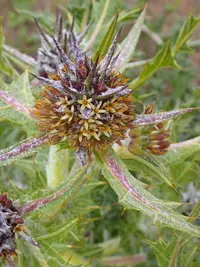
Tumble thistle, Gundelia tournefortii, is a spiny, herbaceous perennial from arid and semi-arid regions of the Middle East and parts of Central Asia. It forms dense, rounded clumps with rigid, deeply lobed leaves and thistle-like flower heads that dry into a tumbleweed structure. In nature it grows on rocky, well-drained slopes and open fields, adapted to strong sun, poor soils, and low rainfall. These traits make it drought-tolerant but less suitable for small, high-traffic gardens. It suits experienced gardeners who want to care for Tumble thistle in dry, low-maintenance landscapes with full sun and sharply drained soil.

Care Difficulty
Moderate Care

Light Preference
Full Sun

Water Requirements
Low Water

Temperature Preference
Warm Climate

Hardiness Zone
7–10

Soil Texture
Sandy, Loamy, Rocky

Soil pH
Slightly alkaline (7.0–7.5), Alkaline (7.5–8.5)

Soil Drainage
Well-drained

Fertilization
Minimal (feed rarely)
Scan your plant to receive care tips personalized for your specific plant
Available on iOS and Android
Gundelia tournefortii thrives in bright, open sites typical of dry, sunny hillsides.
This species is adapted to dry, rocky habitats and prefers infrequent, deep watering.
This plant is well adapted to continental climates with cool winters and hot, dry summers.
Humidity is not a major factor for Gundelia tournefortii, which is adapted to dry climates.
This species prefers lean, mineral-rich, sharply drained soil that mimics rocky, semi-arid habitats.
This species can be grown in containers if the pot is configured to mimic dry, stony ground and prevent water retention.
This drought-adapted thistle-like species needs only modest nutrition in garden settings.
Pruning Gundelia tournefortii is mainly about tidiness and removing damaged material rather than reshaping the plant.
This deep-rooted wild species is best established once and moved as little as possible.
Propagation of Gundelia tournefortii is usually done from seed rather than vegetative methods.
Mature Gundelia tournefortii plants are generally cold hardy in regions with mild to moderate winters and need limited attention.

Plant Health Check
Not sure what's wrong with your plant? Check your plant's health inside the app.
After flowering, the dry, spiny flower head of this species can detach and be blown by wind across open steppe, scattering seeds as it tumbles, a classic tumbleweed-like dispersal strategy.
Gundelia tournefortii is a key host for the thistle longhorn bee, a specialist pollinator that relies on thistle-type flowers in semi-arid regions and is frequently recorded visiting this species.
In parts of the Middle East, especially in traditional rural communities, the young shoots and flower heads of this plant have long been collected as a seasonal wild vegetable and sold in local markets.

Some researchers have proposed that dried, spiny heads of this plant might match the type of thorny material that could have formed the crown placed on Jesus in historical Jerusalem, making it a subject of ongoing botanical and archaeological discussion.
Young flower heads, stems, and leaf bases are traditionally eaten cooked in parts of the Middle East. Only harvest from uncontaminated areas, remove spines carefully, and cook thoroughly. People with allergies to other Asteraceae should be cautious.
Keep your plants happy and healthy with plant identification, disease detection, and easy care guidance.

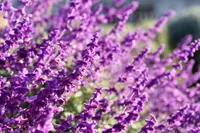
English lavender
Lavandula angustifolia
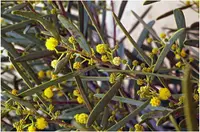
acacia
Acacia ligulata

sweet potato
Ipomoea batatas
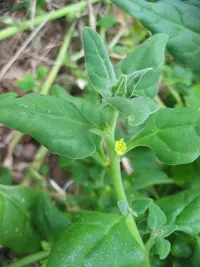
New Zealand Spinach
Tetragonia tetragonoides
green buckwheat
Fagopyrum tataricum
Brassica oleracea var. acephala
Brassica oleracea var. acephala
Common Buckwheat
Fagopyrum esculentum
Brassica napus × rapa
Brassica napus × rapa