Use clean substrate
Prepare a cultivation bed with freshly sterilized hardwood sawdust or chips rather than reusing old substrate to lower the risk of competing fungi and bacteria when growing Red-stemmed Gymnopus.

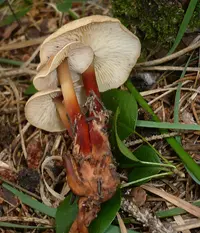
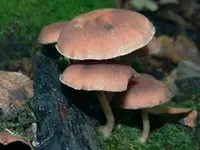
Red-stemmed Gymnopus (Gymnopus erythropus) is a small woodland mushroom, not a leafy houseplant, typically found on leaf litter or decaying wood. It forms clusters of thin, reddish-brown stems topped with modest, tan to brown caps.
This species occurs mainly in temperate forests of Europe and parts of North America, appearing from late spring to autumn when conditions are moist. It relies on decomposing organic material, so it does not grow in regular potting situations like common houseplants.
Some foragers consider it an edible lookalike to other fungi, but identification is challenging and mistakes can be dangerous. For most home growers, it is simpler to enjoy it in nature than to care for Red-stemmed Gymnopus indoors.

Care Difficulty
Moderate Care

Light Preference
Shade

Water Requirements
Keep Soil Moist

Temperature Preference
Cool Climate

Hardiness Zone
Unknown

Soil Texture
Loamy, Silty, Organic-rich

Soil pH
Strongly acidic (4.5–5.5), Acidic (5.5–6.5)

Soil Drainage
Moist but well-drained

Fertilization
Minimal (feed rarely)
Scan your plant to receive care tips personalized for your specific plant
Available on iOS and Android
This woodland fungus prefers soft, indirect light similar to a shaded forest floor.
This saprophytic fungus needs consistently moist, but not waterlogged, substrate to fruit well.
This species fruits best in cool to mild conditions that mimic temperate woodland climates.
This fungus prefers moderately moist, forest-like air but adapts to a broad humidity range outdoors.
Gymnopus erythropus grows best in loose, organic-rich substrate that mimics decomposing forest litter.
This species is moderately suitable for container growing when the pot mimics a stable, cool forest floor.
This woodland fungus gains most nutrients from decaying organic matter and usually needs no deliberate feeding in gardens.
Gymnopus erythropus requires no true pruning, but fruiting bodies can be tidied for hygiene and appearance.
This species is typically grown in natural woodland beds or outdoor culture, so focus on careful transplanting of colonized substrate rather than classic repotting.
In cultivation, Gymnopus erythropus is best propagated by spreading colonized substrate rather than by spores or complex laboratory culture.
Outdoor colonies in temperate climates are generally hardy and need minimal winter care once established in the soil or woody debris.

Plant Health Check
Not sure what's wrong with your plant? Check your plant's health inside the app.
This species is easily recognized by its distinctly red to reddish-brown stipe (stem), which contrasts strongly with the pale brown cap and is a key field character used by mycologists to separate it from similar Gymnopus species.
It functions as a saprotroph, meaning it feeds on dead organic matter, and plays an important role in breaking down hardwood leaf litter in mixed and deciduous forests across Europe and parts of North America.
The species epithet erythropus comes from Greek roots meaning red-foot, directly referring to the mushroom’s characteristic red stipe that inspired its scientific name and helps in Gymnopus erythropus care identification guides.
This woodland mushroom grows best outdoors in shaded, moist, organic-rich ground, typically among leaf litter in temperate forests. It does not adapt well to typical household indoor conditions, so Red-stemmed Gymnopus indoor care is rarely successful long term.
Keep your plants happy and healthy with plant identification, disease detection, and easy care guidance.