Moss Bell Care (Galerina hypnorum)

Moss Bell

About Moss Bell

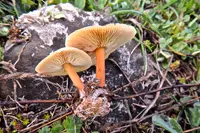
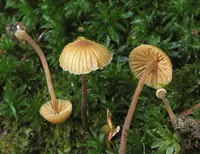
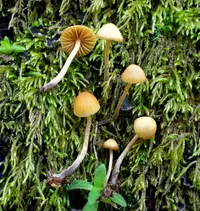
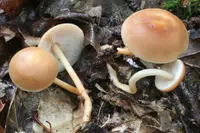
Moss Bell, Galerina hypnorum, is a small moss-like fungus that forms tiny bell-shaped caps on slender stems among mosses and decaying wood. It is not a true moss but a mushroom that visually blends into mossy carpets. In nature it occurs across cool, damp forests of the Northern Hemisphere, especially in coniferous woodlands and peat-rich areas. The species prefers moist, shaded conditions and organic-rich, constantly damp substrates. It is not suited to typical indoor or ornamental cultivation, and attempts to care for Moss Bell at home are generally unreliable and discouraged.

Main Plant Requirements

Care Difficulty

Moderate Care

Light Preference

Partial Shade

Water Requirements

Keep Soil Moist

Temperature Preference

Cool Climate

Hardiness Zone

Unknown

Soil Texture

Loamy, Peaty, Organic-rich

Soil pH

Acidic (5.5–6.5)

Soil Drainage

Moist but well-drained

Fertilization

Minimal (feed rarely)

Get Personalized Care Plan

Scan your plant to receive care tips personalized for your specific plant

Available on iOS and Android

How to Care for the Moss Bell

Galerina hypnorum thrives in low, forest-like light that mimics its natural mossy habitat.

  • Provide bright shade or dappled forest light, with no more than 1–2 hours of gentle early morning sun and full protection from harsh midday and afternoon sun.
  • Allow only filtered light through tree canopy, shade cloth, or similar cover; direct sun on bare caps for more than 2–3 hours can scorch tissue and dry the substrate too fast.
  • In summer, increase shade as days lengthen; in autumn, slightly more open light is acceptable as long as the substrate stays cool and never bakes.

This fungus depends on consistently moist, cool substrate rather than a fixed watering schedule.

  • Keep the moss or forest-floor substrate evenly moist, never soggy; surface should feel damp to the touch but not have standing water or spongy puddling.
  • Water when the top 0.5–1 cm of the substrate starts to lose its sheen and feels just barely less damp, using gentle, low-pressure watering to avoid disturbing the delicate structures.
  • In warm, windy, or low-humidity weather, check moisture daily; dimming color, dry moss tips, and shrinking fruiting bodies suggest underwatering, while sour odor and slimy patches indicate excess water.

This species prefers cool, moist conditions that resemble shaded forest floors.

  • Aim for 50–65°F (10–18°C) for steady development; short periods up to 70°F (21°C) are usually tolerated if humidity and shade remain high.
  • Avoid temperatures below 32°F (0°C); hard frost can damage fruiting bodies and delay or reduce subsequent flushes even if the underground mycelium survives.
  • Prolonged heat above 75°F (24°C), especially with dry air or sun exposure, can cause rapid drying, deformation, and aborting of caps, so increase shade and moisture during hot spells.

This species prefers consistently moist, cool air, so humidity is a meaningful factor for Moss Bell care.

  • Aim for 60–80% humidity, mimicking damp forest or bog conditions rather than dry indoor air.
  • In prolonged dry air, moss cushions shrink, brown at the tips, and feel crisp instead of springy.
  • Increase humidity by placing containers over a shallow water tray with pebbles, or grouping plants in a cool, sheltered, humid microclimate.

This fungus-like moss partner thrives in consistently moist, loose, organic-rich substrates.

  • Use a fine-textured mix based on peat or coco coir with added leaf mold or compost to mimic forest litter.
  • Ensure slow but steady drainage; the surface should not crust, yet water should not pool for more than a few minutes.
  • A slightly acidic pH around 5.0–6.5 suits Galerina hypnorum, which commonly colonizes acidic moss carpets.
  • Improve aeration by blending in fine sand or a small amount of perlite, and avoid compacted, heavy clay or bark chunks.

This species is not well suited to conventional container growing and is best maintained only in specialized, shallow experimental setups.

Galerina hypnorum is typically a wild, substrate-dependent fungus and does not benefit from conventional houseplant feeding, so supplemental fertilizer is not recommended for Moss Bell.

Pruning is not a standard practice for Galerina hypnorum, which completes its life cycle quickly as a small woodland fungus.

As a saprophytic fungus that fruits on decaying mossy substrates, Galerina hypnorum is not managed through conventional repotting or transplanting like a houseplant.

  • Container culture is uncommon; the fungus relies on specific decaying moss and wood conditions that are difficult to recreate in pots.
  • In cultivation experiments, focus on renewing the mossy substrate rather than disturbing or moving fruiting bodies.
  • If substrate is exhausted, start a fresh culture on new, appropriately moist and clean moss or wood instead of shifting existing clumps.
  • Minimize handling of the mycelium to reduce stress, contamination risk, and disruption of its delicate growth.

Propagation of Galerina hypnorum is generally not attempted by home growers and is technically complex.

No dedicated winter care is used for Galerina hypnorum, which behaves as a small, short-lived woodland fungus rather than a garden perennial or houseplant.

Care Tips

Use Clean Substrate

When culturing this moss-like fungus on wood or bark pieces, always use well-soaked, freshly sterilized substrate (such as pressure-cooked hardwood chips) to minimize competing molds and ensure more reliable, even fruiting.

Control Air Exchange

In enclosed terrariums or culture boxes, briefly open the lid 1–2 times a day once fruiting bodies appear to refresh the air and reduce carbon dioxide buildup, which helps maintain compact, well-formed caps instead of elongated, weak stems.

Targeted Misting Only

Mist the surrounding substrate lightly rather than spraying the caps directly, since standing water on the delicate fruiting bodies shortens their lifespan and encourages bacterial spotting.

Rotate Culture Trays

Rotate trays or containers every few days if light comes from one side, which keeps the fruiting bodies more evenly oriented and reduces leaning or toppling in dense clusters.

Seasonal Rest Period

After a flush of mushrooms finishes, allow the substrate to dry slightly cooler and less humid for 2–3 weeks before rehydrating, which mimics a natural rest phase and can improve the consistency of future flushes when growing Moss Bell.

Common Pests and Diseases

Fungal parasitism

This disease occurs when other competitive wood-decay or soil fungi overrun the delicate mycelium and fruiting bodies, causing malformed or aborted caps. Symptoms include patchy, distorted mushrooms, off-color mycelium, and rapid collapse of developing fruiting bodies.

Solution

Remove heavily colonized or contaminated wood or substrate and replace it with fresh, clean material of the same type the fungus prefers. Maintain moderate, stable moisture and good air exchange so surfaces dry slightly between waterings, which favors existing Galerina hypnorum mycelium over more aggressive contaminants.

Mite infestation

These insects are microscopic arthropods that feed on fungal mycelium and young fruiting bodies, leaving pitted, roughened surfaces and poor cap development. Symptoms include slow growth, small deformed mushrooms, and fine dust-like movement on the substrate surface under magnification.

Solution

Discard heavily infested blocks or trays and restart from clean culture or spawn, and keep the growing area cleaner and drier between cycles to reduce habitat for mites. Use fine-mesh barriers, careful sanitation, and removal of old, spent substrates to interrupt mite life cycles and support stable Moss Bell indoor care.

Bacterial blotch

This disease is caused by bacteria that thrive on persistently wet mushroom surfaces, leading to greasy-looking, water-soaked spots that may turn yellow-brown. Symptoms include soft, slimy lesions on caps and a sour or unpleasant odor in the growing area.

Solution

Reduce overhead misting and waterlogging of caps by shifting to indirect humidity control, and increase gentle air movement so mushroom surfaces dry quickly after misting. Remove and discard affected fruiting bodies, wipe down non-organic surfaces with a mild disinfectant, and avoid splashing contaminated water onto healthy mushrooms.

Interesting Facts

Specialized moss partner

This fungus is strongly associated with pleurocarpous mosses on decaying wood, often fruiting directly from dense moss cushions that retain moisture and provide a stable microhabitat.

Tiny but lethal

Although the mushrooms are small and often overlooked, they contain amatoxins, the same group of cyclic peptides responsible for severe, potentially fatal liver damage in some deadly Amanita species.

Difficult field identification

Its small size, brownish colors, and mossy habitat make it easily confused with harmless moss-loving mushrooms, so reliable identification usually requires close microscopic study of spores and tissue structures.

FAQs about Moss Bell

This small brown mushroom is not edible and should be treated as potentially poisonous. Identification within the Galerina group is difficult, and several related species contain deadly toxins. Avoid tasting or using it as food under any circumstances.

Grow Healthy Plants with Botan Care

Keep your plants happy and healthy with plant identification, disease detection, and easy care guidance.

Botan plant care app — identify plants on mobile

Explore More Plants