ribbed bell Care (Galerina clavata)

ribbed bell

About ribbed bell

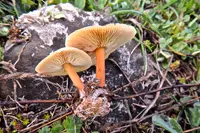
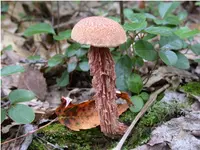
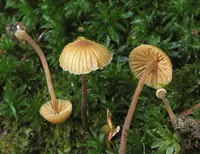
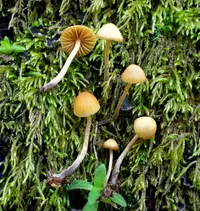
Ribbed bell (Galerina clavata) is a small, wood-inhabiting mushroom, not a typical houseplant. It forms slender stems topped with pale brown, bell-shaped caps. The caps often show fine ribs, especially near the edge, which gives the species its common name.

This fungus usually grows on decaying wood or plant debris in moist forests and gardens in temperate regions. It is not recommended for home cultivation, as identification is difficult and confusion with other toxic mushrooms is a serious risk.

For those studying how to care for ribbed bell in controlled conditions, it prefers cool, shaded, consistently moist environments with abundant decomposing organic material rather than standard potting soil.

Main Plant Requirements

Care Difficulty

Moderate Care

Light Preference

Partial Shade

Water Requirements

Regular Water

Temperature Preference

Cool Climate

Hardiness Zone

Unknown

Soil Texture

Loamy, Silty, Organic-rich

Soil pH

Acidic (5.5–6.5), Slightly acidic (6.5–7.0)

Soil Drainage

Moist but well-drained

Fertilization

Minimal (feed rarely)

Get Personalized Care Plan

Scan your plant to receive care tips personalized for your specific plant

Available on iOS and Android

How to Care for the ribbed bell

Galerina clavata prefers low, forest-like light that mimics a shaded woodland floor.

  • Provide dappled or filtered light under shrubs or trees, with 1–3 hours of weak morning sun and no harsh midday or afternoon sun on the fruiting area.
  • Choose a north or east-facing exposure outdoors; ribbed bell structures develop best where direct light is blocked by canopy or leaf litter.
  • Avoid full sun, which dries the substrate rapidly and can halt fruiting; in brighter seasons, add leaf mulch or shade cloth to cut light intensity.

Galerina clavata develops on consistently moist, not flooded, organic material.

  • Maintain evenly moist substrate by watering when the top 1–2 cm of woody debris or soil surface feels just starting to dry, never allowing it to become dusty or crusted.
  • Use well-drained, humus-rich or rotting wood substrate so excess water runs off; standing water or sour, swampy smells suggest harmful waterlogging.
  • In warm, windy periods, increase moisture checks, watching for shrinking, brittle fruiting bodies as a sign of dryness and soft, collapsing caps as a sign of overwatering.

This fungus fruits best in cool to mild conditions typical of shaded woodlands.

  • Aim for an active fruiting range around 50–68°F (10–20°C), where moisture is more stable and decay of wood or litter supports growth.
  • Protect colonies from frost, as temperatures near or below 32°F (0°C) can damage delicate fruiting bodies and slow fungal activity in the substrate.
  • Avoid hot, exposed sites; sustained heat above 77–82°F (25–28°C) with dry air often stops fruiting, so deeper shade and thicker mulch help moderate summer temperature swings.

This species does not have specialized humidity needs and tolerates typical outdoor ranges when grown in appropriate habitat.

Galerina clavata develops best in consistently damp, organic-rich substrates rather than standard mineral garden soil.

  • Use a loose, humus-rich mix based on decaying wood, leaf litter, or well-rotted bark to mimic forest-floor conditions.
  • Ensure constant moisture with very slow drainage; the substrate should stay evenly damp but not waterlogged or submerged.
  • Maintain slightly acidic conditions, around pH 5.0–6.5, by incorporating pine needles, peat, or other acid-forming organic matter.
  • Avoid compacted, clay-heavy, or sterile potting mixes that restrict air flow and lack decomposing organic material for the fungus to colonize.

This species is not well suited to decorative container growing and is usually maintained only in specialized culture setups.

Galerina clavata is typically not fertilized in cultivation, as it is a wild saprophytic fungus relying on decaying organic matter.

Galerina clavata does not benefit from horticultural pruning, as its fruiting bodies are short-lived fungal structures, not woody shoots or foliage.

In managed culture, focus on renewing substrate for Galerina clavata rather than traditional repotting or transplanting.

  • Treat nutrient depletion, contamination, or dense matting of mycelium as signs to start a fresh sterile substrate batch.
  • Schedule transfers at the start of active growth, moving small mycelium sections to new, moist, well-aerated organic medium.
  • Handle mycelium gently, using sterile tools and containers to limit mechanical damage and pathogen introduction.
  • Maintain stable moisture, airflow, and temperature after transfer to reduce stress and allow the colony to re-establish.

Propagation of Galerina clavata is a specialized mycological task, not a standard home-plant activity.

Ribbed bell, identified as Galerina clavata, is not treated as a garden ornamental, so no structured winter care routine is recommended.

Care Tips

Sterile culture setup

Prepare and maintain a dedicated, easy-to-disinfect workspace (smooth bench, alcohol spray, flame source) so handling spores, grain, and tools stays as aseptic as possible and contamination rates remain low when growing ribbed bell.

Use test plates

Before inoculating main substrate, germinate spores or culture fragments on several small agar plates and observe them for 5–7 days to confirm clean, fast, and uniform mycelial growth.

Controlled air exchange

Provide limited, filtered air exchange (for example with micropore tape or synthetic filter patches) to prevent CO2 buildup while still protecting the culture from competing molds and bacteria.

Staggered inoculation batches

Inoculate multiple small containers on different days instead of one large batch so any contamination event is isolated and later steps can still proceed with clean material.

Cool-chain storage

Store spore prints or culture slants in well-sealed containers at 35–45°F with clear labeling and dates, and allow them to warm gradually to room temperature before use to reduce condensation and thermal shock.

Common Pests and Diseases

Fungal parasitism

This disease affects fruiting bodies that grow on already decaying, fungus-colonized wood, where aggressive competitor fungi overrun or deform the mushrooms. Symptoms include misshapen caps, uneven gill development, or rapid collapse of developing fruiting bodies.

Solution

Remove and discard any distorted or fast-collapsing mushrooms and their underlying substrate, then refresh with clean, well-seasoned hardwood or appropriate sterile substrate if cultivating indoors. Maintain good air exchange and moderate humidity to discourage overgrowth by competitor fungi and consider rotating growing sites to fresh, uncontaminated woody material when growing ribbed bell outdoors.

Mucor mold

This disease develops on very moist substrates and appears as fast‑growing, fluffy white to grey mold that quickly covers pins and young fruiting bodies. Symptoms include stalled mushroom development and a cottony growth spreading across the substrate surface.

Solution

Physically remove and discard heavily colonized substrate sections and fruiting bodies, then increase ventilation and slightly reduce humidity to slow mold growth. Use only pasteurized or sterilized substrate for cultivation, avoid overcrowding, and promptly cull any new patches at first appearance to keep the culture viable.

Fungus gnat larvae

These insects lay eggs in damp substrate and the larvae tunnel through developing mushrooms and mycelium. Symptoms include small holes in caps and stems, softening tissue, and visible tiny larvae in or on the substrate.

Solution

Improve air movement and avoid excessively wet substrate to make conditions less favorable for egg laying. Use fine mesh around growing containers, apply yellow sticky traps to reduce adult populations, and remove heavily damaged clusters to prevent further larval buildup.

Springtail infestation

These insects thrive in constantly moist conditions and can aggregate in large numbers on the substrate and around mushroom bases. Symptoms include small jumping insects on the surface and superficial nibbling damage on very young fruiting bodies or primordia.

Solution

Allow the surface of the substrate to dry slightly between mistings while keeping internal moisture adequate, and improve air circulation around the culture. Gently flush surfaces with clean water to dislodge high numbers, remove debris that shelters them, and if needed relocate the culture to a better‑drained, less congested area.

Interesting Facts

Small brown agaric

This species produces small, brown, bell-shaped caps typically less than 2 cm across that often show faint radial striations when moist, reflecting its thin, hygrophanous cap tissue that changes appearance as it dries.

Wood‑decaying saprobe

It is a saprobic fungus that decomposes dead wood and plant litter, helping recycle nutrients in forest ecosystems and frequently appearing on rotting sticks, woody debris, or very decayed conifer wood.

Microscopic identification needed

Galerina clavata is considered challenging to identify in the field, and mycologists rely on microscopic features such as spore size, ornamentation, and cystidia characters to separate it from closely related brown-spored species.

FAQs about ribbed bell

This species is considered highly poisonous and must never be eaten. It contains toxins similar to deadly amanitas that can cause severe liver and kidney damage. For safety, avoid handling it around food or children.

Grow Healthy Plants with Botan Care

Keep your plants happy and healthy with plant identification, disease detection, and easy care guidance.

Botan plant care app — identify plants on mobile

Explore More Plants