

Minimize Disturbance
Mark the colony area and avoid walking, raking, or digging nearby, since soil disturbance and compaction can prevent new fruiting bodies from emerging in future seasons.

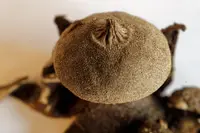
Field earthstar, Geastrum campestre, is a small earthstar fungus, not a leafy houseplant. It belongs to the group of decomposers that break down organic matter in soil. The fruiting body opens into star-like rays around a central spore sac, giving it a distinct, sculptural look.
This species is usually found in fields, grasslands, and sandy soils across parts of Europe and North America, often in nutrient-poor, open ground. It is not commonly cultivated indoors, and attempts to care for Field Earthstar focus on recreating its natural, well-drained, low-nutrient habitat. It generally prefers open light, dry to moderately moist conditions, and undisturbed soil with plenty of natural organic debris.

Care Difficulty
Moderate Care

Light Preference
Partial Shade

Water Requirements
Moderate Water

Temperature Preference
Cool Climate

Hardiness Zone
4–9

Soil Texture
Sandy, Loamy, Organic-rich

Soil pH
Slightly acidic (6.5–7.0), Neutral (7.0)

Soil Drainage
Well-drained

Fertilization
Minimal (feed rarely)
Scan your plant to receive care tips personalized for your specific plant
Available on iOS and Android
This earthstar fungus prefers open, sun-exposed habitats but copes with some shade in the wild.
This ground-dwelling fungus relies on naturally moist but free-draining soil rather than frequent targeted watering.
This species is adapted to temperate climates with cool to warm seasons and distinct cold periods.
Humidity is not a major factor for Geastrum campestre, which naturally tolerates open, dry habitats.
Geastrum campestre grows best in open, mineral, well-drained soil with little competing vegetation.
This species is not well suited to container growing, as it depends on complex soil fungi interactions in the ground.
This soil-dwelling fungus naturally thrives in low-nutrient conditions, so Field Earthstar usually needs no added fertilizer in gardens or containers.
Pruning needs for Geastrum campestre are minimal, as the fruiting bodies are short-lived and do not respond to shaping like foliage plants.
Transplanting Geastrum campestre is rarely practical, as it depends on complex soil fungi relationships at the original site.
Propagation of Geastrum campestre is challenging and usually left to natural spore dispersal in suitable habitats.
This earthstar is cold hardy in temperate climates and generally needs no special winter care once established outdoors.

Plant Health Check
Not sure what's wrong with your plant? Check your plant's health inside the app.
This species often appears in compacted, disturbed soils such as farm tracks and field margins, where its expanding rays can physically crack and lift the soil surface as the fruit body opens.
The central spore sac sits on short stalks above the rays, and its pore opens upward so that raindrops and wind currents efficiently disperse the dry, powdery spores into the air.
Unlike many earthstars that favor woodland litter, this species is strongly associated with open habitats such as grasslands and arable fields, making it a typical fungus of agricultural landscapes in parts of Europe.

Geastrum campestre is considered a good indicator species for long-established, unimproved grasslands in some European monitoring schemes, and its presence can signal continuity of traditional low-intensity land use.
This fungus does best outdoors in natural soil, where it can form mycorrhizal or decomposer relationships. Indoors it is extremely difficult to maintain because it needs complex soil biology and seasonal changes that are hard to replicate.
Keep your plants happy and healthy with plant identification, disease detection, and easy care guidance.

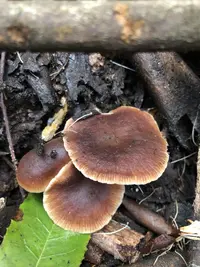
Cabbage Parachute
Gymnopus brassicolens
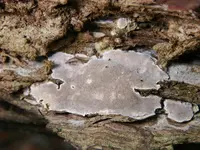
Cinereomyces lindbladii
Cinereomyces lindbladii
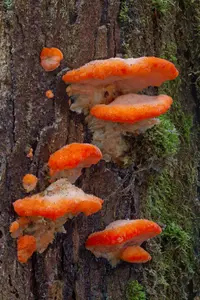
Strawberry Bracket
Aurantiporus pulcherrimus
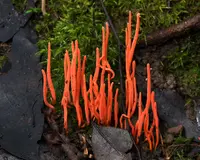
Clavulinopsis corallinorosacea
Clavulinopsis corallinorosacea
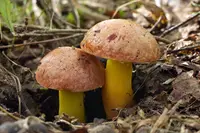
Gilded Bolete
Aureoboletus gentilis
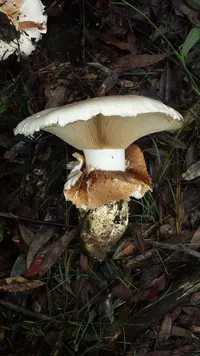
skirt webcap
Austrocortinarius australiensis
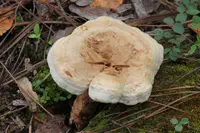
Drab Tooth
Bankera fuligineoalba
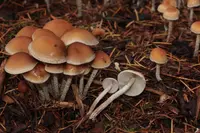
Hypholoma dispersum
Hypholoma dispersum