

Substrate rotation
Rotate and renew small patches of the organic substrate every 3–4 months rather than disturbing the whole tray at once, which keeps the fungal network supplied with fresh food while preserving established mycelium.

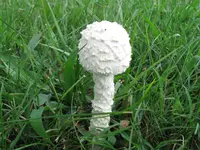
Thiers' lepidella (Saproamanita thiersii) is a saprotrophic mushroom, not a leafy houseplant. It breaks down organic matter in soil and mulch, helping recycle nutrients. Caps are usually white to pale cream, with a smooth to slightly fibrous surface and a ring on the upper stem.
This species often appears in lawns, landscaped beds, and disturbed soils in warm, humid regions of the central and southern United States. It tends to fruit in clusters after rain, especially in irrigated turf. Because it depends on complex soil conditions and organic debris, it is not straightforward to cultivate deliberately, and attempts to care for Thiers' lepidella indoors are rarely successful.

Care Difficulty
Moderate Care

Light Preference
Partial Shade

Water Requirements
Keep Soil Moist

Temperature Preference
Warm Climate

Hardiness Zone
Unknown

Soil Texture
Loamy, Organic-rich

Soil pH
Slightly acidic (6.5–7.0)

Soil Drainage
Moist but well-drained

Fertilization
Minimal (feed rarely)
Scan your plant to receive care tips personalized for your specific plant
Available on iOS and Android
This saprobic fungus prefers consistent light conditions that mimic open lawn or pasture edges.
This species depends on consistently moist, but not saturated, soil or turf to fruit well.
This lawn-associated fungus develops best in moderately warm, stable temperatures.
This saprotrophic fungus does not require managed humidity in typical outdoor conditions.
This species fruits best in loose, organic-rich substrates rather than compacted mineral soil.
This fungus is generally unsuitable for decorative container culture, as it relies on broad soil contact and decomposing turf-like organic layers.
This saprotrophic fungus usually obtains all needed nutrients from decaying organic matter and does not benefit from targeted fertilization in cultivation.
Pruning is not an appropriate practice for Saproamanita thiersii, since the visible mushroom is only the temporary fruiting body of an underground fungus.
Transplanting or repotting this saprobic fungus is rarely successful because its underground mycelium is sensitive to disturbance.
Propagation of this fungus in home or garden settings is unreliable and not recommended for typical plant keepers.
Outdoor populations of this species are generally cold hardy in regions where they naturally occur and need no targeted winter care.

Plant Health Check
Not sure what's wrong with your plant? Check your plant's health inside the app.
This species is one of the most common fairy ring mushrooms in heavily managed lawns and golf courses across the central and southern United States, thriving in compacted, fertilized turf where many other fungi decline.
It typically fruits in late spring through early fall, often after warm rains and in hot, humid weather, which is unusual compared with many temperate lawn fungi that prefer cooler seasons.
The fungus is strongly saprotrophic, meaning it feeds on dead organic matter, and it has become especially successful at decomposing thatch and organic debris in irrigated urban and suburban turf systems.
This species is considered inedible and should not be collected for food. Identification of white amanita-like fungi is difficult, and many related species are dangerously toxic. Foraging is not recommended unless done with expert mycological guidance.
Keep your plants happy and healthy with plant identification, disease detection, and easy care guidance.

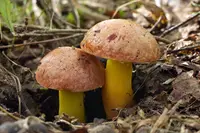
Gilded Bolete
Aureoboletus gentilis
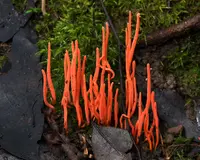
Clavulinopsis corallinorosacea
Clavulinopsis corallinorosacea
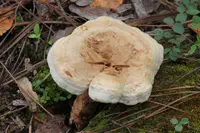
Drab Tooth
Bankera fuligineoalba
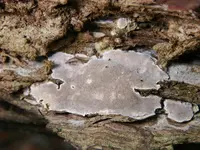
Cinereomyces lindbladii
Cinereomyces lindbladii
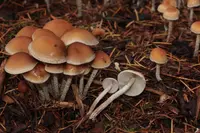
Hypholoma dispersum
Hypholoma dispersum
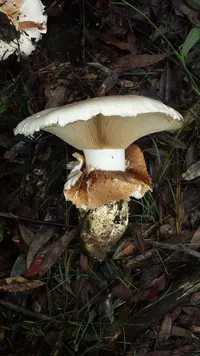
skirt webcap
Austrocortinarius australiensis
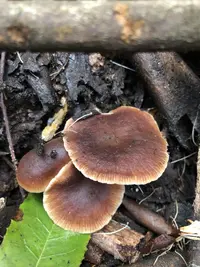
Cabbage Parachute
Gymnopus brassicolens
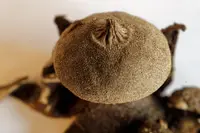
Field Earthstar
Geastrum campestre