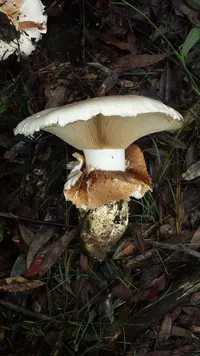
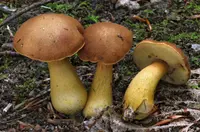
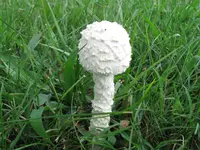
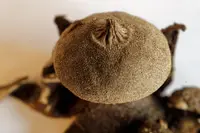
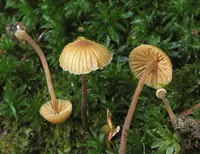
hairy leg bell Care (Galerina vittiformis)

hairy leg bell

About hairy leg bell

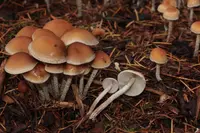
Hairy leg bell, Galerina vittiformis, is a small, delicate mushroom rather than a leafy houseplant. It typically forms thin, fragile stems with tiny bell-shaped caps, often with a slightly fuzzy or fibrous look. This fungus usually grows on decaying wood, moss, or rich forest litter in moist habitats.

It appears in temperate and subtropical regions, especially in damp woodlands and grassy, mossy areas. The species is not suitable for beginners to care for hairy leg bell, as it has specific moisture and substrate needs and is generally studied more by mycologists than grown by home gardeners.

Main Plant Requirements

Care Difficulty

Moderate Care

Light Preference

Partial Shade

Water Requirements

Keep Soil Moist

Temperature Preference

Cool Climate

Hardiness Zone

Unknown

Soil Texture

Loamy, Organic-rich

Soil pH

Acidic (5.5–6.5), Slightly acidic (6.5–7.0)

Soil Drainage

Moist but well-drained

Fertilization

Minimal (feed rarely)

Get Personalized Care Plan

Scan your plant to receive care tips personalized for your specific plant

Available on iOS and Android

How to Care for the hairy leg bell

Galerina vittiformis, commonly called hairy leg bell, prefers low, forest-like light rather than direct sun.

  • Provide dappled or filtered light under trees or shrubs, mimicking a shaded woodland floor with only brief morning sun if any.
  • Aim for 1–3 hours of soft, indirect light; strong midday or afternoon sun can dry the substrate quickly and scorch delicate fruiting bodies.
  • In summer, ensure consistent shade from dense canopy; in late autumn or winter, slightly more open light is acceptable as long as surfaces do not heat or dry out quickly.

This woodland fungus needs evenly moist, not waterlogged, conditions around its substrate.

  • Keep leaf litter or decaying wood slightly damp; allow the top 1–2 cm to start drying before gently re-moistening with fine spray or light watering.
  • Increase moisture during warm, dry spells, watching for shriveling or rapid collapse of caps as a sign the substrate has dried too far.
  • Avoid standing water or soggy soil, which can cause anaerobic conditions and decay of the mycelium in Galerina vittiformis colonies.

This species performs best in cool to mild conditions typical of shaded woodland environments.

  • Ideal fruiting temperatures range around 50–68°F (10–20°C), with stable moisture and shade supporting more consistent development.
  • It tolerates down to about 32°F (0°C) for short periods, but hard frost and repeated freeze–thaw cycles can damage fruiting bodies.
  • Sustained heat above 77–82°F (25–28°C), especially with low humidity, shortens lifespan and may halt fruiting until cooler seasons return.

This saprotrophic mushroom does not require managed humidity in outdoor culture and is usually left to natural conditions.

This fungus fruits best on moist, decomposing organic substrates rather than conventional mineral soil.

  • Use a loose mix dominated by well-rotted wood chips, leaf litter, and peat-free compost to mimic decaying forest floor.
  • Ensure the substrate drains freely yet stays evenly moist; excess standing water suppresses fungal growth and encourages anaerobic conditions.
  • Maintain a slightly acidic reaction around pH 5.5–6.5 if adjusting substrates, as strongly alkaline materials can inhibit Galerina vittiformis.
  • Avoid compacted, clay-heavy, or highly fertilized garden soil, which reduces aeration and disrupts the delicate mycelial network.

This species is not well suited to decorative container growing and is typically not managed as a potted organism.

Galerina vittiformis is a wild, saprophytic fungus that extracts nutrients from decaying organic matter and does not benefit from household fertilization.

Pruning is not part of normal care for Galerina vittiformis, as individual fruiting bodies are short-lived and the organism persists unseen in the substrate.

Transplanting is rarely relevant for this fungus, which lives in soil or decaying wood rather than as a conventional potted plant like the hairy leg bell indoor care houseplants people know.

  • If grown experimentally in a container, consider moving the colonized substrate only when it fully occupies the pot and gas exchange is poor.
  • Transplant in mild conditions, avoiding temperature extremes that could stress the mycelium, the underground fungal network.
  • Shift the entire substrate block gently to a new container or location without breaking it apart, which reduces shock and contamination risk.
  • Maintain similar moisture, temperature, and light exposure in the new site so the mycelium can re-establish and resume fruiting.

Propagation of Galerina vittiformis is specialized and not recommended for casual growers due to toxicity concerns and its role as a wild decomposer species.

Specific winter care is generally unnecessary because this wild fungus completes fruiting cycles as conditions allow and persists mainly as mycelium in the substrate.

Care Tips

Spore hygiene

Collect and discard spent caps and surrounding substrate after spore release to reduce self-contamination and maintain more even fruiting over time.

Substrate rotation

Prepare 2–3 small batches of fresh, pasteurized substrate and rotate them in use so that each batch is used briefly and replaced before contamination and nutrient depletion become limiting.

Contamination checks

Inspect developing clusters daily for off-odors, unusual colors, or fuzzy overgrowth, and promptly remove any suspect material with a clean tool to limit spread of molds or bacteria.

Moisture buffering layer

Apply a thin layer of pasteurized, fine vermiculite or well-wrung coir on top of the main substrate to stabilize surface moisture and support more uniform pin formation.

Tool and surface sanitation

Before handling substrate or fruiting bodies, wipe tools and work surfaces with 70% isopropyl alcohol to lower contamination pressure, which is essential when growing hairy leg bell in small indoor setups.

Common Pests and Diseases

Fungivorous mites

These insects feed on fungal mycelium and developing fruiting bodies, sometimes distorting or stunting mushroom caps and stems. Symptoms include fine pitting, deformed caps, and reduced or patchy fruiting in cultivation trays.

Solution

Remove and discard heavily infested substrate and any distorted mushrooms, then lower humidity slightly and increase fresh air exchange to discourage mite buildup. Use sticky traps around the fruiting area and, if needed in a controlled indoor setup, introduce predatory mites specific to fungivorous mites while avoiding broad-spectrum insecticides that contaminate the substrate.

Sciarid fungus gnats

This pest lays eggs in moist, organic substrates, and the larvae feed on fine mycelium and young pins, leading to poor or aborted fruiting. Adults are small black gnats that hover around damp growing containers or indoor culture setups.

Solution

Allow the surface of the substrate to dry slightly between misting, remove decaying organic debris, and use yellow sticky traps to reduce adult populations. For indoor culture, a layer of clean coarse sand or fine gravel on the substrate surface and targeted use of Bacillus thuringiensis israelensis (BTI) products in the watering regime can reduce larvae without harming the mycelium.

Competitive mold contamination

This disease occurs when fast-growing molds such as Trichoderma or Penicillium colonize the same substrate, outcompeting the mycelium and suppressing fruiting. Symptoms include green, blue-green, or white fluffy patches with a different texture and growth pattern than the mushroom mycelium.

Solution

Promptly remove and discard any substrate showing colored mold patches, as these typically spread quickly and render the culture non-productive. Improve hygiene by sterilizing or pressure-cooking substrates before inoculation, working with clean tools, and ensuring good air circulation so surfaces do not remain constantly wet.

Bacterial blotch

This disease appears on caps and stems as slimy, water-soaked, sometimes yellow-brown lesions, especially under stagnant, high-humidity conditions. Symptoms include softening tissue and an unpleasant odor in affected areas.

Solution

Reduce overhead misting directly onto caps, increase fresh air exchange, and maintain humidity in a stable but not saturated range. Remove and discard affected fruiting bodies, sanitize tools and surfaces, and avoid reusing contaminated substrate in any setup focused on Galerina vittiformis care instructions.

Interesting Facts

Tiny moss companion

This species often fruits among mosses in damp grasslands and lawns, producing very small, delicate mushrooms that can be easily overlooked unless conditions are consistently moist.

Sticky spore print

Its spores form a pale brown spore print and have a surface ornamentation that can appear slightly rough or sticky under a microscope, a feature used by mycologists to separate it from similar lawn mushrooms.

Rapid fruiting cycles

The mushrooms can appear and collapse within a short time after rain, reflecting a strategy where the fungus invests minimally in the fruit body and focuses resources on the hidden mycelium in the soil and moss layer.

FAQs about hairy leg bell

This small brown mushroom is highly poisonous and potentially deadly if eaten by people or animals. It contains amatoxins that cause severe liver damage. It must never be tasted, handled as food, or encouraged where children or pets forage.

Grow Healthy Plants with Botan Care

Keep your plants happy and healthy with plant identification, disease detection, and easy care guidance.

Botan plant care app — identify plants on mobile

Explore More Plants