Early form training
In the first 2–3 years, select 1 strong central leader and 3–4 evenly spaced scaffold branches, removing competing stems gradually to build a stable canopy and reduce future storm damage.

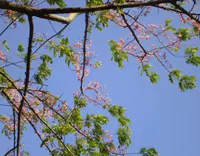
Pink shower, Cassia grandis, is a medium to large deciduous tree known for its heavy clusters of pink flowers that appear on bare branches before new leaves. It forms a broad, spreading crown and can become a striking focal point in warm, frost-free landscapes.
This species is native to tropical regions of Central and South America, where it grows in open, sunny areas. It is moderately fast-growing but needs space, warmth, and consistent moisture when young.
Mature trees tend to be tolerant of brief dry periods and adapt to a range of well-drained soils. Understanding how to care for pink shower starts with providing strong light, room for its roots, and protection from cold.

Care Difficulty
Moderate Care

Light Preference
Full Sun

Water Requirements
Moderate Water

Temperature Preference
Tropical / Frost Sensitive

Hardiness Zone
10–11

Soil Texture
Sandy, Loamy, Organic-rich

Soil pH
Slightly acidic (6.5–7.0), Neutral (7.0)

Soil Drainage
Well-drained

Fertilization
Minimal (feed rarely)
Scan your plant to receive care tips personalized for your specific plant
Available on iOS and Android
Cassia grandis thrives in strong, direct light typical of open tropical or subtropical sites.
Cassia grandis prefers evenly moist, well-drained soil once established in the landscape.
This species is a true tropical tree that needs warm conditions for reliable growth and flowering.
Cassia grandis prefers moderately humid, warm air but generally tolerates typical outdoor ranges.
Cassia grandis performs best in loose, well-structured soil that drains freely yet holds some moisture.
This species can be grown in containers when kept pruned and managed as a small tree or large patio specimen.
Cassia grandis benefits from moderate feeding in cultivation, especially when grown as pink shower in nutrient-poor soils.
Pruning Cassia grandis helps manage size, structure, and safe clearance in landscapes.
This large tree is usually transplanted from nursery containers when young rather than kept long term in pots.
Cassia grandis is most often propagated from seeds, which adapt well to nursery production.
This tropical tree is frost-sensitive and needs thoughtful winter care in regions with cool or freezing conditions.

Plant Health Check
Not sure what's wrong with your plant? Check your plant's health inside the app.
Cassia grandis forms symbiotic relationships with root bacteria that fix atmospheric nitrogen, helping improve soil fertility in disturbed or degraded tropical sites.
In its native range, this species often drops many of its leaves just before flowering, so the branches appear densely covered with pink to salmon-colored blossoms and relatively few leaves.
The flowers produce both nectar and pollen and are visited by large bees that can handle the relatively heavy floral parts, making these insects important pollinators for successful seed production.

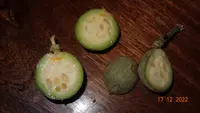
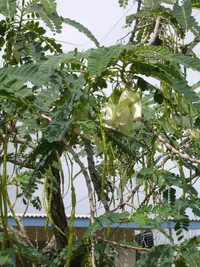
This tree produces long, cylindrical pods that can exceed 50 cm in length; inside, the seeds are embedded in a dark, sticky, sweetish pulp that is eaten by wildlife and occasionally by people in parts of its native range.
This tree often fails to flower when too young, recently transplanted, or pruned heavily. In marginal climates, cool temperatures or lack of a distinct dry rest season also reduce bud formation and delay blooming.
Keep your plants happy and healthy with plant identification, disease detection, and easy care guidance.