


Winter dormancy setup
Provide a cool winter rest at 35–50°F with shorter day length for 3–4 months by moving pots to an unheated but frost-free space, which prevents long-term decline in this temperate hybrid.

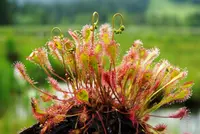
Drosera × obovata is a temperate carnivorous sundew, usually forming low rosettes of spoon-shaped leaves covered in sticky, glistening tentacles. These tentacles trap small insects, which the plant digests to supplement nutrients in poor, acidic bog soils.
This natural hybrid occurs mainly in northern Europe where the ranges of Drosera rotundifolia and Drosera anglica overlap. It prefers cool conditions, strong light, and constantly moist, low-mineral substrates.
For growers, it is moderately easy if its need for pure water, bright light, and a cool winter rest is respected. Understanding these basics makes it simpler to care for Drosera × obovata at home.

Care Difficulty
Hard Care

Light Preference
Full Sun

Water Requirements
Aquatic

Temperature Preference
Cool Climate

Hardiness Zone
3–7

Soil Texture
Sandy, Peaty, Organic-rich

Soil pH
Strongly acidic (4.5–5.5)

Soil Drainage
Waterlogged tolerant

Fertilization
Minimal (feed rarely)
Scan your plant to receive care tips personalized for your specific plant
Available on iOS and Android
This hybrid bog sundew thrives with strong, consistent light to maintain healthy red coloration and sticky traps.
This carnivorous bog plant requires consistently wet, mineral-free conditions to stay healthy.
This temperate sundew prefers cool to mild conditions with a distinct winter rest period.
This hybrid sundew prefers consistently humid air to maintain active dew production on its leaves.
Drosera × obovata needs a consistently wet, nutrient-poor, acidic medium rather than conventional potting soil.
This species is well suited to container culture for precise control of water and substrate conditions.
This hybrid sundew gathers most nutrients from trapped insects, so Drosera × obovata needs no conventional fertilization in normal culture.
Light grooming helps maintain a healthy, efficient trapping surface on Drosera × obovata.
This sundew benefits from occasional repotting into fresh, nutrient-poor substrate to prevent mineral buildup.
This hybrid is typically multiplied by division or leaf cuttings rather than by seed.
This temperate sundew forms a winter resting bud and is reasonably cold hardy when grown in suitable climate zones.

Plant Health Check
Not sure what's wrong with your plant? Check your plant's health inside the app.
This taxon is a natural hybrid between Drosera rotundifolia and Drosera anglica, combining the more compact rosette form of one parent with the elongated leaf traits of the other.
Compared with its parent species, it often shows intermediate but efficient trapping leaves, with dense mucilage glands that allow it to capture a wide range of small flying and crawling insects in nutrient-poor bogs.
It occurs mainly in cool, nutrient-poor wetlands of northern Europe, particularly in Scandinavia and adjacent regions, and is much less widespread globally than either of its parent species.

In parts of its range this hybrid can form stable, long‑lasting populations that reproduce almost entirely by vegetative means, so many local stands consist of extensive clonal colonies descending from just a few original hybridization events.
This hybrid performs best outdoors in cool, sunny, consistently wet conditions that mimic bogs. Indoors, it is difficult without strong artificial light, high humidity, and pure water. Drosera × obovata indoor care suits only experienced carnivorous plant growers.
Keep your plants happy and healthy with plant identification, disease detection, and easy care guidance.

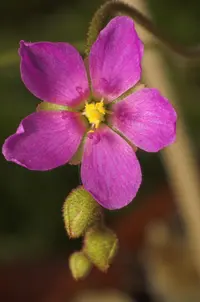
Collins Sundew
Drosera collinsiae
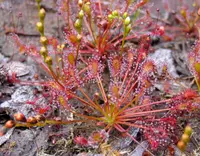
spoonleaf sundew
Drosera intermedia

Agardh's red weed
Agardhiella subulata
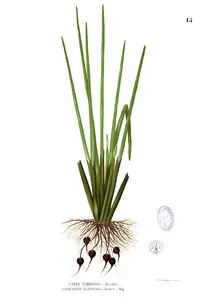
Chinese water chestnut
Eleocharis dulcis
Portuguese sundew
Drosophyllum lusitanicum
parrot pitcherplant
Sarracenia psittacina
Elephant's Ear
Colocasia esculenta 'Mojito'

hiddenfruit bladderwort
Utricularia geminiscapa