Water Table Management
Grow this species in a shallow tray or basin with 1–2 cm of soft, low-mineral water above the substrate so the root zone never dries while the stems and foliage stay just above the constant water line.

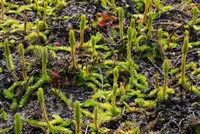
Marsh clubmoss (Lycopodiella inundata) is a small, primitive spore-bearing plant related to ancient fern allies, not a true moss. It forms low, tufted mats of slender, upright shoots with narrow, needle-like leaves, often creating a soft, carpet-like look.
In nature it grows in wet, acidic habitats such as bogs, heaths, and pond margins across cooler regions of North America and Europe. Its need for constant moisture, open light, and low-nutrient, acidic substrate makes it challenging to maintain in typical gardens or homes.
Anyone wanting to learn how to care for Marsh Clubmoss should focus on recreating its cool, wet, sunny bog conditions as closely as possible.

Care Difficulty
Hard Care

Light Preference
Full Sun

Water Requirements
Aquatic

Temperature Preference
Cold Hardy

Hardiness Zone
4–7

Soil Texture
Sandy, Peaty, Organic-rich

Soil pH
Strongly acidic (4.5–5.5)

Soil Drainage
Waterlogged tolerant

Fertilization
Minimal (feed rarely)
Scan your plant to receive care tips personalized for your specific plant
Available on iOS and Android
This wetland species needs consistent light but is sensitive to drying from harsh exposure.
This bog plant requires continuously moist to saturated conditions without drying out.
This species is adapted to cool, temperate conditions and does poorly in strong heat or severe frost.
This species has high humidity needs that are important to meet in cultivation.
This species prefers consistently wet, acidic, low-nutrient substrates that mimic bog conditions.
This species can be grown in containers if the setup replicates shallow, boggy conditions.
This bog-dwelling species is adapted to nutrient-poor conditions and usually grows best with very little added fertilizer.
Lycopodiella inundata needs minimal pruning, mainly for tidiness and to remove unhealthy material.
This species is more often transplanted in bog or pond-edge plantings than repotted as a houseplant.
Lycopodiella inundata is slow and somewhat specialized, so home propagation is limited and often challenging.
In suitable climates this species is cold hardy but sensitive to drying and disturbance over winter.

Plant Health Check
Not sure what's wrong with your plant? Check your plant's health inside the app.
This species is strongly tied to wet, nutrient-poor, sandy or peaty soils that are seasonally flooded and then exposed, which is why it is often used as an indicator of early-successional, open, wet heath or bog margins.
Instead of seeds, it uses microscopic spores produced in cone-like strobili at stem tips, reflecting its lineage among lycophytes, one of the oldest vascular plant groups on Earth.
Populations tend to decline when wetlands become shaded or overgrown, and often rebound only where natural or human disturbance periodically removes taller vegetation and exposes bare, wet substrate.

Genetic and fossil evidence places this plant in a lineage whose ancestors helped form the vast Carboniferous coal forests more than 300 million years ago, making it a living representative of some of the earliest complex land plants.
This species spreads slowly by creeping stems and spores, usually forming small, patchy colonies rather than dense mats. In garden or container settings, spread is modest and controllable, especially when moisture and space are managed carefully.
Keep your plants happy and healthy with plant identification, disease detection, and easy care guidance.