Slope planting angle
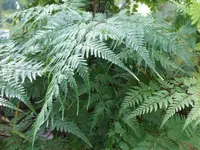
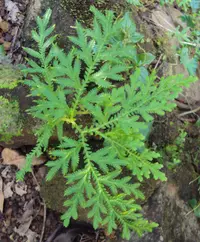
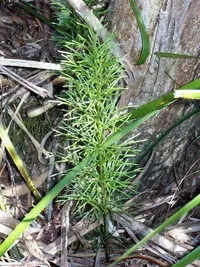
Plant the root ball on a slight slope and orient the existing fans downhill so new fronds can extend and layer naturally, creating a tiered, cascading habit instead of crowding upright in one tight clump.

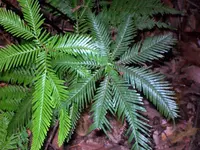
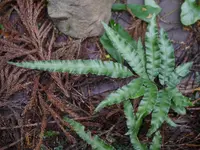
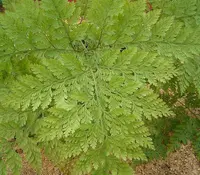
Shiny fan fern (Sticherus flabellatus) is an evergreen fern with delicate, fan-shaped fronds arranged in layered tiers along arching stems. It forms loose, airy clumps that give a fine, textured look rather than a dense bush.
This species is native to moist forests and stream edges in eastern Australia and nearby regions, where it grows in cool, humid, sheltered conditions. It is considered more challenging than common house ferns because it dislikes drying out, temperature swings, and low humidity.
Those who want to care for Shiny fan fern should provide constant moisture, soft light, and free-draining but consistently damp soil to mimic its natural habitat as closely as possible.

Care Difficulty
Hard Care

Light Preference
Shade

Water Requirements
Keep Soil Moist

Temperature Preference
Tropical / Frost Sensitive

Hardiness Zone
9–11

Soil Texture
Loamy, Silty, Organic-rich

Soil pH
Strongly acidic (4.5–5.5), Acidic (5.5–6.5)

Soil Drainage
Moist but well-drained

Fertilization
Minimal (feed rarely)
Scan your plant to receive care tips personalized for your specific plant
Available on iOS and Android
This fern prefers soft woodland light that mimics its natural understory habitat.
This species prefers consistently moist but not waterlogged soil around its fibrous roots.
This fern thrives in mild, frost-free conditions typical of sheltered, moist woodlands.
This fern prefers consistently moist air and reacts quickly to dry indoor conditions.
This species needs a loose, moist, and highly organic substrate that drains freely but never becomes waterlogged.
This fern can be grown in containers if moisture and stability are managed carefully.
This fern prefers lean conditions and usually needs only light feeding when container-grown or stressed.
Pruning Sticherus flabellatus is minimal and focuses on cleanliness and maintaining an open fan shape.
This fern prefers stable conditions, so repot or transplant only when clear signs of crowding or decline appear.
Propagation of Sticherus flabellatus is possible but slow and best treated as an advanced task.
This fern is only moderately frost tolerant and benefits from simple winter protection in cooler climates.

Plant Health Check
Not sure what's wrong with your plant? Check your plant's health inside the app.
This species produces distinctive layered, fan-like fronds that branch repeatedly on a single plane, creating a tiered, umbrella-style structure uncommon among most temperate ferns.
In the wild it is strongly associated with moist, acidic sandstone habitats and sandstone-derived soils, often forming colonies along seeps, creek margins, and shaded rock outcrops in eastern Australia.
Populations typically occur only where humidity and substrate moisture remain consistently high, so their presence is often used by botanists as a field indicator of relatively intact, perennially damp forest microclimates.

In suitable, undisturbed sites this species can form extensive clonal colonies through slowly creeping rhizomes, creating dense, multi-layered fern thickets that can dominate the ground layer beneath open forest or woodland canopies.
This species is evergreen in mild, frost-free climates, keeping its fronds year-round. In colder areas it may partially die back after frost, then reshoot from surviving rhizomes if conditions warm and soil moisture returns.
Keep your plants happy and healthy with plant identification, disease detection, and easy care guidance.