Use Shallow Pots
Grow plants in wide, shallow containers rather than deep ones to match their fibrous, surface‑oriented root system and reduce the risk of waterlogging in the lower soil layers.

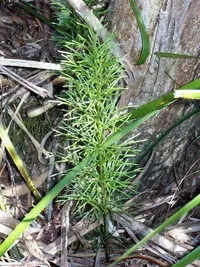
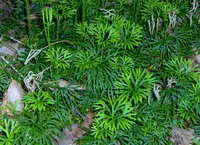
Bushy clubmoss (Lycopodium deuterodensum) is a primitive, fern-like spore plant rather than a true moss. It forms dense, trailing to upright stems covered in small, overlapping scale-like leaves, creating a soft, bushy look.
This species is native to New Zealand and parts of Australia, where it grows on forest floors, banks, and damp, shaded slopes. Its need for consistent moisture, high humidity, and good air movement makes it moderately challenging as a houseplant.
Those learning how to care for Bushy Clubmoss should know it prefers cool to mild temperatures, soft indirect light, and an airy, moisture-retentive substrate that never fully dries out.

Care Difficulty
Hard Care

Light Preference
Partial Shade

Water Requirements
Keep Soil Moist

Temperature Preference
Tropical / Frost Sensitive

Hardiness Zone
10–12

Soil Texture
Peaty, Organic-rich, Loamy

Soil pH
Strongly acidic (4.5–5.5), Acidic (5.5–6.5)

Soil Drainage
Moist but well-drained

Fertilization
Minimal (feed rarely)
Scan your plant to receive care tips personalized for your specific plant
Available on iOS and Android
This species prefers soft, filtered light that mimics a forest understory.
Moist, never saturated soil is critical for this clubmoss.
Stable, mild temperatures support healthy, dense growth in this species.
This species needs consistently high humidity to maintain healthy foliage and growth.
This species prefers loose, moisture-retentive yet well-drained, organic-rich soil.
This species is suitable for container growing when moisture and stability are carefully managed.
This species has modest nutrient needs, so use light, consistent feeding during the active growing season for best results when caring for Bushy Clubmoss.
Pruning Lycopodium deuterodensum is light and mostly cosmetic, aimed at maintaining dense, healthy growth.
Container-grown plants appreciate infrequent but careful repotting to refresh the substrate and maintain healthy root growth.
Propagation of Lycopodium deuterodensum is usually done vegetatively and requires stable, humid conditions.
Winter care focuses on preventing cold damage and maintaining stable moisture and humidity levels.

Plant Health Check
Not sure what's wrong with your plant? Check your plant's health inside the app.
This New Zealand clubmoss is part of an ancient lycophyte lineage that diverged from the ancestors of modern flowering plants hundreds of millions of years ago, retaining simple microphyll leaves with a single, unbranched vein.
It forms upright, densely leafy shoots with evenly spaced branchlets that give a bottlebrush or foxtail appearance, a growth pattern that helps distinguish it from related clubmoss species in the region.
In the wild it is most often found in humid, shaded habitats such as wet forest floors and stream margins in New Zealand, where constant moisture and cool air support its slow, steady growth.

Lycopodium deuterodensum produces its spores in compact, cone-like structures called strobili that are carried at the tips of specialized upright shoots, and these dust-fine spores rely on wind dispersal to colonize new moist, shaded sites over relatively long distances.
This species grows best outdoors in cool, humid, shaded conditions that mimic forest floors. It can be kept indoors if humidity stays high and temperatures moderate, but indoor growth is often slower and more delicate.
Keep your plants happy and healthy with plant identification, disease detection, and easy care guidance.