Pouched Coral Fern Care (Gleichenia dicarpa)

Also known as: tangle fern
Pouched Coral Fern

About Pouched Coral Fern

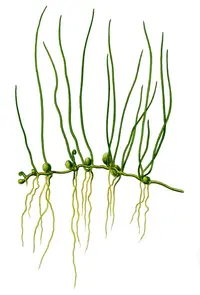
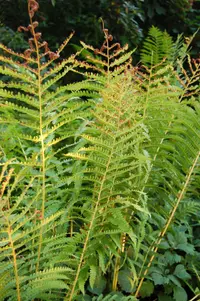
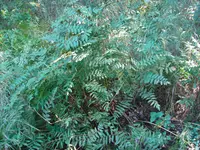
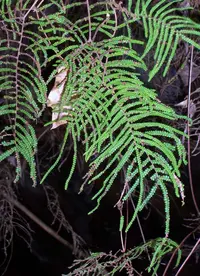
Pouched coral fern (Gleichenia dicarpa) is an evergreen, scrambling fern with many fine, forked fronds that create a dense, layered tangle of foliage. It often forms low, spreading thickets rather than an upright clump.

This species is native to cool, moist habitats in Australia, New Zealand, and nearby regions, where it grows in boggy ground, heathlands, and open forest edges. Its growth habit can make it a bit demanding in cultivation, as it dislikes drying out and needs consistent moisture and humidity.

It prefers cool conditions, soft light, and acidic, freely draining but constantly damp soil. Understanding how to care for Pouched Coral Fern starts with replicating these naturally moist, airy conditions as closely as possible.

Main Plant Requirements

Care Difficulty

Hard Care

Light Preference

Partial Shade

Water Requirements

Keep Soil Moist

Temperature Preference

Cool Climate

Hardiness Zone

8–10

Soil Texture

Loamy, Peaty, Organic-rich

Soil pH

Strongly acidic (4.5–5.5), Acidic (5.5–6.5)

Soil Drainage

Moist but well-drained

Fertilization

Minimal (feed rarely)

Get Personalized Care Plan

Scan your plant to receive care tips personalized for your specific plant

Available on iOS and Android

How to Care for the Pouched Coral Fern

This fern prefers cool, moist, bright conditions without harsh direct sun.

  • Provide dappled or filtered light under trees or shade cloth, with 2–4 hours of soft morning sun and no strong midday or afternoon sun.
  • Allow partial shade to deep shade; Pouched Coral Fern tolerates low light but fronds grow looser and sparser if light is too dim.
  • In hot summers, increase shade to prevent frond scorch, while in winter ensure more open, indirect light so growth does not stall completely.

This species needs consistently moist, never stagnant or bone-dry soil.

  • Keep soil evenly moist by checking the top 2–3 cm; water when it feels just starting to dry, especially in free-draining, organic-rich ground.
  • In cooler months or shade, reduce frequency so the surface can lose excess moisture, helping prevent root rot and sour, anaerobic soil conditions.
  • Watch for signs of stress: crisp, browning tips indicate underwatering, while yellowing, limp fronds and a sour smell suggest overwatering for Gleichenia dicarpa.

This fern is adapted to cool, mild climates with good humidity and shelter from temperature extremes.

  • Aim for active growth around 50–70°F (10–21°C), where fronds form steadily and the plant maintains dense, healthy texture.
  • Tolerates brief dips to about 25°F (-4°C) once mature, but repeated hard frosts below this can damage fronds and young growing tips.
  • In heat above 80°F (27°C), provide extra shade, mulch, and moisture; prolonged >90°F (>32°C) stresses plants and can cause frond scorch and decline.

This fern needs consistently high humidity to maintain healthy fronds and even growth.

  • Aim for 60–80% humidity, as Pouched Coral Fern comes from naturally moist, misty habitats.
  • Tolerates brief dips to 40–50%, but prolonged dry air leads to crisping tips and browning frond edges.
  • Increase humidity with a nearby humidifier, grouped plants, and a pebble tray, rather than frequent misting.

Gleichenia dicarpa prefers consistently moist, airy, organic-rich soil that never dries out completely.

  • Use a loose mix of 50–60% peat or coco coir with fine bark, plus 20–30% perlite or pumice for aeration.
  • Soil should drain freely yet hold moisture, similar to a woodland or bog edge, without forming waterlogged pockets.
  • Aim for slightly acidic conditions, around pH 5.0–6.0, avoiding strongly alkaline or limy substrates.
  • Avoid heavy clay, compacted mixes, or pure sand, which either suffocate roots or dry too quickly.

This species can be grown in containers if moisture and stability are managed carefully.

  • Choose a wide, relatively shallow pot to accommodate its spreading rhizomes and prevent tipping as fronds arch outwards.
  • Use a heavier container material like ceramic to stabilize the plant against wind and uneven frond growth outdoors.
  • Raise the pot slightly on feet or bricks to ensure rapid drainage away from the base and reduce standing water around the drain holes.

This fern grows in nutrient-poor habitats and usually needs only light feeding in cultivation.

  • Apply a balanced, dilute liquid fertilizer at 1/4 strength every 4–6 weeks during spring–summer if growth seems weak.
  • Use a gentle, organic option such as compost extract or fish emulsion rather than high-salt synthetic products.
  • Avoid feeding during fall–winter dormancy to prevent soft, weak fronds.
  • For Pouched Coral Fern in containers, flush the pot occasionally with water to prevent fertilizer salt buildup.

Gleichenia dicarpa benefits from light, periodic pruning to maintain tidy fronds and remove damage.

  • Best time for pruning is late winter to early spring before strong new growth begins.
  • Remove dead, browned, or storm-damaged fronds at the base using clean, sharp scissors or hand pruners.
  • Thin congested or crossing fronds to improve air flow and reduce fungal issues in humid sites.
  • Limit cuts to outer fronds so the plant keeps its natural, layered form and steady growth.

This fern is more often transplanted in the garden than repotted, as it prefers stable, undisturbed conditions.

  • Consider transplanting when clumps outgrow their space, crowd neighbors, or when container roots circle the pot and growth slows.
  • Plan moves for cool, moist weather in early spring or early fall to limit water stress.
  • Lift with a wide root ball, keep the fibrous roots shaded and moist, and plant at the same depth in acidic, well-drained soil.
  • Water thoroughly after transplanting, then keep soil evenly moist and shelter the plant from hot sun and strong wind until established.

Gleichenia dicarpa is usually propagated by division or spores, both requiring stable moisture and patience.

  • Divide established clumps in early spring, keeping several healthy fronds and a good root section for each piece.
  • Replant divisions promptly into acidic, well-drained but constantly moist substrate and shade them from strong sun.
  • For spores, collect mature brown spore capsules, then sow on sterile, fine peat-based mix kept at 65–70°F.
  • Maintain very high humidity and bright, indirect light; germination and development of young ferns can take many months.

This fern is cool tolerant but benefits from some winter care in colder or exposed climates.

  • In-ground plants withstand light frosts once established but may suffer in prolonged freezes below about 20°F.
  • Apply a 5–8 cm mulch of leaf mold or bark around the root zone in late fall, keeping it off the crowns.
  • Move container plants to a frost-free, bright, sheltered spot and avoid waterlogging cold soil.
  • Reduce watering in winter, keeping the medium just slightly moist so roots do not rot.

Care Tips

Stable container moisture

Use a wide, shallow container with many drainage holes and line the base with a thin layer of fine gravel or coarse sand to keep the root zone evenly moist but never stagnant, which is critical for Gleichenia dicarpa plant care.

Cool root protection

If grown in a pot, sleeve the nursery pot inside a slightly larger decorative cachepot or place it in a shaded tray with damp pebbles so the root zone stays cooler and more stable in fluctuating indoor or patio temperatures.

Frond support grid

Install a low, open mesh or wire frame just above the soil surface to support the arching, forked fronds and prevent them from kinking or breaking at the base as they lengthen.

Gradual site shifts

When moving the plant between indoors, greenhouse, and shaded outdoor positions, shift it over 7–10 days by increasing or decreasing the light and airflow incrementally to avoid frond scorch or shock.

Moisture monitoring band

Press a narrow band of plain, uncoated paper towel or cotton tape halfway into the potting mix at the edge; when the exposed part feels only slightly cool and barely damp instead of wet, it indicates a safe time to water without disturbing the roots.

Common Pests and Diseases

Fern scale

This pest forms small, dome-shaped brown or grey bumps on fronds and stems, often leading to yellowing and decline in vigor. These insects feed on plant sap and are favored by still, humid, sheltered conditions.

Solution

Physically scrape or wipe off scales with a soft cloth or cotton swab dipped in diluted alcohol, then rinse fronds with water. For ongoing control, improve air movement around the plant, avoid excess nitrogen fertilizer, and, if needed, use a light horticultural oil spray labeled for ferns, applied in cool conditions to avoid frond burn.

Fern aphids

This pest clusters on tender new fronds and rachises, causing distortion, stunting, and sticky honeydew that can support sooty mold growth. These insects tend to appear when plants are stressed by low light or poor airflow.

Solution

Rinse colonies off with a firm stream of water, repeating every few days until numbers drop. Encourage natural predators outdoors, avoid overfertilizing with high-nitrogen products, and use an insecticidal soap labeled for ferns on both upper and lower frond surfaces if washing alone does not control the problem.

Rhizoctonia blight

This disease causes brown, sunken lesions at the base of fronds and along creeping stems, leading to dieback of affected sections. Symptoms include patchy collapse of fronds, especially in plants grown in warm, wet, stagnant conditions.

Solution

Remove and dispose of all affected fronds and rhizome sections, then allow the planting to dry slightly between waterings while maintaining overall moist but not waterlogged conditions. Improve drainage and airflow, avoid overhead watering where possible, and, in severe cases, treat the substrate with a fungicide labeled for Rhizoctonia on ferns, following product directions carefully.

Pythium damping-off

This disease primarily affects young spores and newly established gametophytes or seedlings, causing sudden collapse, blackened bases, and failure of young plants to establish. Symptoms include thinning patches in propagation trays or naturalized colonies on overly wet substrates.

Solution

Reduce watering frequency so the medium remains evenly moist but not saturated, and ensure excellent drainage in propagation setups. Remove and discard affected batches, sterilize tools and containers, and use fresh, clean substrate; for high-value collections, consider a preventative drench with a Pythium-targeting fungicide labeled for fern propagation.

Interesting Facts

Tangle fern architecture

This species produces repeatedly forked, wire-like fronds that form complex, tangled mats, a growth pattern characteristic of coral ferns that helps it spread across open, wet ground.

Bog and heathland specialist

It is naturally associated with acidic, nutrient-poor habitats such as peat bogs, wet heaths, and stream margins in Australia and New Zealand, showing a strong adaptation to cool, wet, low-fertility environments.

Scale-covered undersides

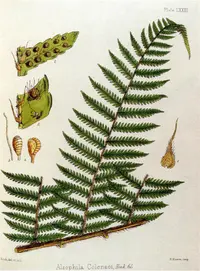
The small, pouch-like leaf segments have dense, pale scales on their undersides, which help reduce water loss and protect the delicate tissues in the harsh, exposed sites where this fern often grows.

Botan icon

Did you know?

In its native range, this fern can form extensive, almost mono-dominant ground layers that influence local hydrology and soil development by trapping organic matter and slowing surface water flow in bog and heath ecosystems.

FAQs about Pouched Coral Fern

Brown tips or fronds usually come from low humidity, hot dry winds, or a build-up of salts from fertilizer. Check for crisp, papery tissue, rinse the soil occasionally, trim damaged fronds, and improve local humidity.

Grow Healthy Plants with Botan Care

Keep your plants happy and healthy with plant identification, disease detection, and easy care guidance.

Botan plant care app — identify plants on mobile

Explore More Plants