Shallow Water Setup
Use a wide, shallow tray or pond zone with 2–5 cm of water above the substrate so the fine roots can anchor easily while fronds stay well oxygenated.

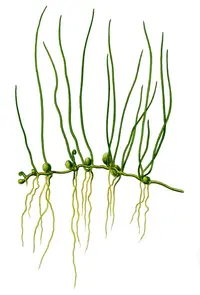
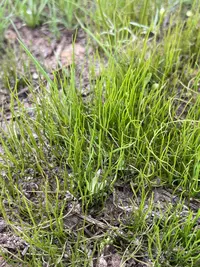
Pillwort, Pilularia globulifera, is a small aquatic fern that forms low, grass-like tufts around pond edges, wetlands, and slow-moving water. Its thin, wiry fronds resemble chives more than a typical fern. The plant creeps slowly by rhizomes, creating a fine, green carpet in shallow water or very wet soil. In suitable conditions it produces tiny round spore cases at the base of its fronds. Pillwort is naturally found in parts of Europe, including the UK, and favors unpolluted, nutrient-poor waters. It can be sensitive to water quality and competition from stronger plants, which makes it a bit challenging to maintain. Understanding how to care for Pillwort focuses on stable moisture, gentle light, and low-nutrient, sandy or gravelly substrates.

Care Difficulty
Hard Care

Light Preference
Partial Sun

Water Requirements
Aquatic

Temperature Preference
Cold Hardy

Hardiness Zone
5–8

Soil Texture
Silty, Peaty, Organic-rich

Soil pH
Acidic (5.5–6.5), Slightly acidic (6.5–7.0)

Soil Drainage
Waterlogged tolerant

Fertilization
Minimal (feed rarely)
Scan your plant to receive care tips personalized for your specific plant
Available on iOS and Android
This semi-aquatic fern prefers bright, gentle light to support compact, healthy growth.
This aquatic marginal plant needs consistently wet conditions rather than intermittent drying.
This hardy aquatic fern tolerates cool conditions but grows best with moderate temperatures.
This marginal aquatic fern prefers consistently high humidity close to saturation.
This species thrives in saturated, fine-textured, low-oxygen substrates rather than typical potting soil.
This species can be grown in containers if they are managed as mini-bog or shallow aquatic setups.
This aquatic fern grows in nutrient-poor habitats and usually needs minimal feeding in ponds or bog gardens.
Pruning needs for Pilularia globulifera are low and mainly relate to tidying and maintaining healthy growth.
Management focuses more on transplanting clumps in wet soil or shallow water than on traditional pot repotting.
Pilularia globulifera plant care often includes routine propagation by division to renew and expand patches.
This hardy aquatic fern tolerates typical temperate winters with minimal intervention when established in ponds or bogs.

Plant Health Check
Not sure what's wrong with your plant? Check your plant's health inside the app.
This species is a fern ally with extremely reduced fronds that look like thin grass-like threads rather than typical fern leaves, making it easy to overlook in the wild.
Instead of flowers or seeds, it produces small, hard, spherical sporocarps at the base of its shoots; these structures protect the spores and can remain viable after drying and rewetting.
It naturally grows on the margins of nutrient-poor ponds, lakes, and slow ditches in shallow water or seasonally wet mud, often forming sparse, low carpets where competition from taller plants is limited.

In much of its native European range this species has declined so strongly due to wetland drainage and water quality changes that it is now considered rare or threatened in several countries and has become a conservation priority in specialized pond-restoration projects.
This species spreads slowly to moderately by creeping rhizomes. It usually forms small, low mats rather than taking over. In lined ponds or containers, growth is easy to limit by lifting and thinning sections as needed.
Keep your plants happy and healthy with plant identification, disease detection, and easy care guidance.