American pillwort Care (Pilularia americana)

American pillwort

About American pillwort

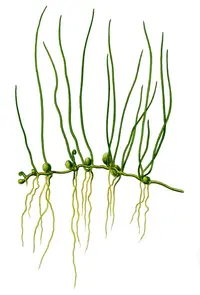
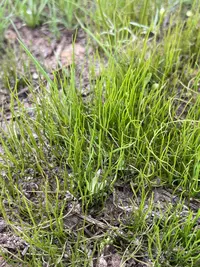
American pillwort (Pilularia americana) is a small, grass-like aquatic fern that creeps along mud or shallow water edges. It forms fine, threadlike fronds emerging from slender, spreading rhizomes. In nature it occurs in seasonally wet shores, pond margins, and shallow pools across parts of North America. Its compact size and tolerance of periodic flooding make it interesting for naturalistic ponds and specialized aquariums. However, it can be sensitive to drying out and to poor water quality, so stability is important. Light, evenly moist conditions and low competition from taller plants usually support healthier growth. These traits shape how to care for American pillwort in home water gardens or controlled setups.

Main Plant Requirements

Care Difficulty

Hard Care

Light Preference

Full Sun

Water Requirements

Aquatic

Temperature Preference

Cool Climate

Hardiness Zone

5–9

Soil Texture

Sandy, Loamy, Organic-rich

Soil pH

Acidic (5.5–6.5), Slightly acidic (6.5–7.0)

Soil Drainage

Waterlogged tolerant

Fertilization

Minimal (feed rarely)

Get Personalized Care Plan

Scan your plant to receive care tips personalized for your specific plant

Available on iOS and Android

How to Care for the American pillwort

This aquatic fern thrives in bright, open conditions but is sensitive to intense drying sun.

  • Provide 4–8 hours of sun, ideally morning or late-afternoon light, with light shade at midday in hot climates.
  • Tolerates partial shade, but dense shade slows growth and produces sparse, weak fronds in American pillwort.
  • Avoid full, harsh afternoon sun in shallow water, which can overheat the substrate and scorch emerging foliage, especially in midsummer.

This species is adapted to consistently wet to shallowly flooded conditions rather than periodically dry soil.

  • Maintain saturated soil or 2–8 cm of standing water; do not allow the substrate surface to dry out or crack.
  • In garden ponds or bog beds, watch for receding water levels in summer; browning, crisp tips signal underwatering, while foul smell or slimy rhizomes suggest stagnation and low oxygen.
  • Pilularia americana grows best in fine, silty or sandy substrate that stays wet but allows some water movement to prevent anaerobic, rotting conditions.

This hardy aquatic fern tolerates a broad temperature range but grows most actively in mild conditions.

  • Optimal growth occurs around 60–75°F (16–24°C), especially in spring and early summer when water temperatures rise gradually.
  • Established plants often survive down to about 20–25°F (-6 to -4°C) if rhizomes remain submerged and do not freeze solid.
  • Tolerates short heat spells up to about 90°F (32°C) when water depth is adequate; in extreme heat, maintain water movement and some shade to prevent overheating.

This semi-aquatic fern prefers constantly moist conditions with very high humidity.

  • Aim for 70–100% humidity by growing in shallow water or saturated substrate at all times.
  • It does not tolerate prolonged dry air or drying of the soil surface, which quickly leads to browning and dieback.
  • Curling, crisping fronds and pale new growth indicate humidity stress; raise trays, group water dishes, or use a bog-style planter when caring for American pillwort.

This species needs permanently wet, fine-textured substrate that mimics a shallow pond margin or bog.

  • Use a heavy mix of 60–80% clay or loam garden soil with 20–40% fine sand to stay submerged and stable under water.
  • Keep drainage minimal; grow in a lined bog container, aquatic basket, or tray where water can remain 2–5 cm above the soil surface.
  • Maintain slightly acidic to neutral conditions (pH 6.0–7.0) by avoiding lime-rich gravel, concrete edging, or alkaline tap water when possible.
  • Avoid peat-free barky mixes, perlite, or coarse gravel that dry too fast or float, and top-dress with sand to reduce soil disturbance and improve frond anchoring for Pilularia americana.

This species is well suited to container culture as a bog or shallow-aquatic plant.

  • Choose a broad, shallow tub or aquatic basket at least 20–30 cm wide so spreading rhizomes can form a dense mat.
  • Select a rigid, non-porous container (plastic or glazed ceramic) to slow evaporation and keep water levels stable around the crown.
  • Place the pot inside a larger watertight outer container so water depth over the soil can be controlled precisely and topped up easily.

Nutrient needs are modest, but light feeding supports steady growth in American pillwort grown in containers or nutrient-poor media.

  • Use a dilute balanced liquid fertilizer (around 10-10-10) at 1/4–1/2 strength during active growth in spring–summer.
  • Apply every 4–6 weeks only if growth appears pale or weak, especially in inert substrates like sand or gravel.
  • Avoid heavy feeding; excess nutrients can encourage algae and stress fine roots in shallow aquatic setups.
  • Stop fertilizing in fall–winter when growth slows, resuming light applications once new fronds appear.

Pruning needs for Pilularia americana are minimal and mainly focus on sanitation and maintaining a neat mat.

  • Trim dead, yellowed, or decaying fronds whenever seen, using clean scissors to prevent pathogen spread.
  • In late spring or early summer, lightly thin crowded patches to improve water circulation and light penetration.
  • Remove any damaged or smothered sections after algae blooms or debris buildup to encourage fresh growth.
  • Avoid cutting back to bare rhizomes; always leave healthy green fronds to sustain photosynthesis and recovery.

Transplanting Pilularia americana focuses on refreshing shallow substrates and managing spreading clumps rather than frequent repotting.

  • Look for dense mats lifting from the substrate, roots exposed, or slowed spread as signs that transplanting is useful.
  • Plan moves in spring or early summer, when water temperatures rise and the plant resumes active growth.
  • Every 2–3 years, lift sections gently, trim damaged roots, and reset into fresh sand, fine gravel, or loamy aquatic soil.
  • Keep roots constantly moist during handling, shade the area for a few days, and avoid major disturbance during extreme heat or cold.

Pilularia americana is commonly propagated by division of established mats, with seeds used mainly for restoration or specialist projects.

  • Divide clumps in spring–early summer, when new fronds are emerging and recovery is fastest.
  • Lift a section, gently tease or cut it into small pieces, each with healthy rhizomes and roots attached.
  • Replant divisions into shallow, consistently wet substrate, then keep water levels stable and light moderate until growth resumes.
  • For seed, provide consistently moist conditions, cool-to-mild temperatures, and patience, as germination can be slow and uneven.

Pilularia americana is generally cold hardy in much of its native range and often needs little special winter care once established outdoors.

  • In zones with severe freezes, maintain at least a shallow, ice-free water layer over crowns where possible.
  • For marginal plantings, add a thin mulch over surrounding soil to buffer rapid freeze–thaw cycles.
  • Move container-grown mats into a cold but frost-free area or deeper water to prevent the root zone from freezing solid.

Care Tips

Shallow Water Setup

Use a wide, shallow tray or pond basket filled with sand or fine aquatic substrate and keep only 1–5 cm of water above the crowns to prevent the plant from floating or rotting.

Edge Containment Mesh

Line pond baskets or marginal zones with fine plastic mesh before adding substrate so the thin roots and runners stay contained and do not wash out in moving or fluctuating water.

Controlled Spread Division

Every 1–2 years, lift and gently tear apart dense mats into several sections, then replant them at slight spacing to refresh vigor and maintain an even carpet without choking older centers.

Algae Competition Management

Limit excess nutrients and provide some water movement or partial shading so filamentous algae do not overgrow the fine foliage and block light at the substrate surface.

Cold Dormancy Protection

In colder regions, overwinter containers in a frost-free but cool place such as an unheated garage, keeping the substrate just covered with water so the crowns do not dry out or freeze solid while growing American pillwort in pots.

Common Pests and Diseases

Algal overgrowth

This problem appears as dense green or brown algae coating the water surface, plant tufts, or substrate, limiting light and gas exchange around the fern. Symptoms include slowed growth, thinning tufts, and eventual dieback of submerged foliage.

Solution

Reduce excess nutrients by cutting back fish feeding, increasing partial water changes, and removing detritus from the substrate. Manually siphon or brush off algae from the plant and hardscape, shorten light duration to 8–10 hours, and increase gentle water movement to keep surfaces cleaner while maintaining stable water chemistry for growing American pillwort.

Filamentous cyanobacteria

This pest forms slimy, often dark green to blue-green sheets or strands on the substrate and among the grass-like fronds, sometimes trapping gas bubbles. This growth can smother new shoots and create foul odors in low-flow zones of ponds or aquaria.

Solution

Manually remove as much cyanobacterial mass as possible, then correct underlying causes by improving circulation, reducing organic waste, and maintaining stable nutrient levels. In aquaria, blackout treatments of 2–3 days with good aeration often help, while in outdoor settings, shading and limiting nutrient-rich runoff into the water body are key parts of Pilularia americana care instructions.

Aquatic snail grazing

These insects are not involved; instead, small aquatic snails feed directly on tender fronds and new croziers, causing ragged edges and missing tips. Symptoms include slow thinning of patches despite adequate light and water quality.

Solution

Physically remove visible snails by hand or with vegetable bait traps, and rinse newly added plants or decor before introducing them to the tank or pond. If populations are high, consider adding natural predators appropriate to the setup (such as certain fish in aquaria) and reduce overfeeding so fewer food resources support large snail numbers.

Leaf tip dieback

This disease presents as browning and decay starting at the tips of the thin fronds, often in response to poor water quality, rapid temperature swings, or strong chemical treatments. Symptoms include brown, mushy tips that progress toward the base if conditions do not improve.

Solution

Trim off severely damaged fronds close to the substrate, then stabilize conditions by maintaining consistent temperature, moderate light, and low levels of ammonia and nitrite. Avoid overuse of algaecides or copper-based treatments, perform small but regular water changes, and ensure the substrate remains shallow and not compacted so rhizomes receive enough oxygen.

Interesting Facts

Unusual fern morphology

Although a true fern, this species lacks typical fronds and instead produces thin, grass‑like, jointed stems that function as its photosynthetic organs, which often leads to confusion with grasses or rushes in the field.

Amphibious growth habit

It is adapted to fluctuating water levels, forming submerged or semi‑submerged mats in shallow ponds and seasonal pools, and can survive periods of exposure when water recedes by relying on its creeping rhizomes.

Sporocarps in the mud

Its reproductive structures are hard, pea‑sized sporocarps that develop on short stalks near the base of the plant and become buried in mud, where they protect the spores during dry periods until suitable flooding returns.

Botan icon

Did you know?

Genetic and morphological studies indicate that this species is part of the Marsileaceae, a small and evolutionarily distinctive fern family specialized for aquatic or semi‑aquatic habitats, making it quite distant from the image most people have of typical leafy ferns.

FAQs about American pillwort

This species spreads slowly to moderately by short creeping rhizomes and spores. It can form small patches over time but is not typically aggressive. Regular trimming of runners helps keep it within a defined area.

Grow Healthy Plants with Botan Care

Keep your plants happy and healthy with plant identification, disease detection, and easy care guidance.

Botan plant care app — identify plants on mobile

Explore More Plants