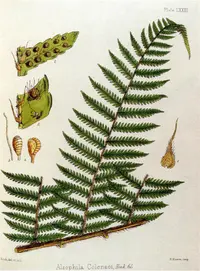
American Royal Fern Care (Osmunda spectabilis)

American Royal Fern

About American Royal Fern

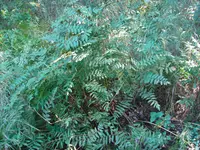
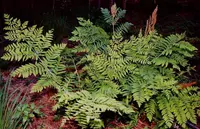
American royal fern, Osmunda spectabilis, is a hardy deciduous fern native to moist woodlands, stream banks, and wetlands in eastern North America. It forms upright clumps of tall, arching fronds that give a soft, airy look to shaded gardens.

This species has sterile green fronds and separate fertile fronds with bead-like spore clusters near the tips, adding a distinct texture. It spreads slowly from a crown, creating a natural, informal appearance rather than a tight formal border.

It prefers consistently moist, humus-rich soil and dappled light, which reflects its natural habitat. Once its moisture needs are understood, it is relatively straightforward to care for American Royal Fern in cool to mild climates.


Main Plant Requirements

Care Difficulty

Moderate Care

Light Preference

Partial Shade

Water Requirements

Keep Soil Moist

Temperature Preference

Cold Hardy

Hardiness Zone

3–9

Soil Texture

Loamy, Silty, Organic-rich

Soil pH

Acidic (5.5–6.5), Slightly acidic (6.5–7.0)

Soil Drainage

Waterlogged tolerant

Fertilization

Minimal (feed rarely)

Get Personalized Care Plan

Scan your plant to receive care tips personalized for your specific plant

Available on iOS and Android

How to Care for the American Royal Fern

This moisture-loving fern thrives in bright, filtered light under tree canopies or beside shaded water edges.

  • Provide dappled light or light shade with 2–4 hours of gentle morning sun; avoid intense midday and afternoon sun to prevent frond scorch.
  • Plant American Royal Fern where it receives high, indirect light or broken shade, such as north or east sides of buildings or under deciduous trees.
  • In hot summers, increase shade from June–August, while in early spring and late fall slightly more open light promotes sturdy, upright fronds.

This fern is adapted to consistently moist to wet soils and does not tolerate prolonged drying.

  • Aim for soil that feels consistently moist to the touch; in garden beds, do not let the top 2–3 cm dry out for more than a day or two.
  • Increase watering during hot, dry periods so the root zone never fully dries; slow growth, crisping tips, and drooping fronds signal underwatering.
  • Ensure soil is rich and humusy yet not stagnant; foul odor, yellowing fronds, and blackened roots indicate waterlogging and poor drainage around Osmunda spectabilis.

This hardy fern is adapted to cool to mild climates with distinct winters and does best in moderate temperatures.

  • Active growth is strongest at 60–75°F (16–24°C); consistent moisture and shade help it stay lush in this range.
  • Dormant crowns typically survive down to about -20°F (-29°C) under mulch or snow cover, though fronds are killed by the first hard frost.
  • In heat above 85°F (29°C), provide extra shade and moisture; hot, dry wind combined with sun quickly browns fronds, though roots usually endure and re-sprout next season.

This fern requires consistently high humidity to mimic its naturally boggy habitat.

  • Aim for 60–80% humidity; it tolerates only brief dips into drier air before fronds brown at the tips.
  • Dry indoor air causes crisping frond edges and slow unfurling of new growth in American Royal Fern.
  • Increase humidity with a wide pebble tray kept wet, grouped moisture-loving plants, or a cool-mist humidifier placed nearby.

Osmunda spectabilis prefers deep, consistently moist, organic-rich soil similar to a woodland bog edge.

  • Use a mix of roughly 60% peat or coco coir, 30% composted leaf mold, and 10% sand to hold moisture yet prevent stagnation.
  • Soil should be loamy, high in humus, and stay evenly damp, never drying out completely between waterings.
  • Maintain slightly acidic conditions, around pH 5.0–6.5, avoiding lime or alkaline amendments that can limit nutrient uptake.
  • For heavy native soils, incorporate coarse sand and fine bark to improve aeration while still retaining ample water.

This species can grow in large outdoor containers when moisture is managed carefully.

  • Choose a deep, heavy container to anchor the tall, expanding crown and prevent tipping in wind or heavy rain.
  • Select thick-walled, non-porous pots like glazed ceramic to slow moisture loss and support the fern’s constant water demand.
  • Line the bottom with a shallow layer of coarse gravel above the drainage holes to prevent mix washout while still allowing free outflow.

Osmunda spectabilis is a woodland fern that needs only light feeding in rich, moist soil.

  • Use a thin layer of compost or leaf mold in spring as the primary nutrient source.
  • In poorer soils, apply a balanced, diluted liquid NPK fertilizer at 1/4–1/2 strength every 4–6 weeks in the growing season.
  • Skip synthetic feeding in winter dormancy and rely on organic mulch breakdown.
  • Avoid heavy fertilizer, which can scorch fronds and disrupt natural growth of the American Royal Fern.

Pruning needs for Osmunda spectabilis focus on hygiene rather than shaping.

  • Cut back completely brown or dead fronds at the base in late fall or very early spring.
  • Remove damaged or diseased fronds promptly during the season using clean, sharp pruners.
  • Thin only badly crowded, crossing fronds to improve air flow without altering the natural vase shape.
  • Disinfect tools before and after use to limit fungal spread in damp shade conditions.

This fern is usually grown in the ground, so care centers on careful transplanting rather than frequent repotting.

  • Transplant in early spring or early fall when growth is slow and soil is cool and moist.
  • Move clumps only when crowded or when fronds decline despite good moisture, typically every several years.
  • Dig a wide hole, lifting the root mass with as much surrounding soil as possible to limit root stress.
  • Water deeply after transplanting, then keep soil evenly moist and shaded until new fronds emerge strongly.

Osmunda spectabilis is most practically propagated by division, with spore growing reserved for advanced growers.

  • Divide mature clumps in early spring just as new fiddleheads emerge.
  • Lift the plant carefully, then separate the rhizome into sections with several buds and healthy roots each.
  • Replant divisions at the same depth in humus-rich, consistently moist, shaded soil.
  • Keep new divisions evenly moist and sheltered from strong sun until firmly re-established.

This fern is cold hardy in much of its range and usually needs minimal winter care.

  • Tolerates freezing temperatures once established, with fronds naturally dying back after hard frost.
  • Leave fallen fronds or add 5–8 cm of leaf mulch to insulate the crown and root zone.
  • For container plants, move pots into a sheltered, unheated but frost-free area or bury the container outdoors for insulation.

Care Tips

Manage spring runoff

In late winter to early spring, create shallow channels or use edging to direct snowmelt and heavy rain through the planting area so emerging fronds benefit from moving moisture without sitting in stagnant puddles that encourage crown rot.

Mulch with leaf mold

Apply a 5–8 cm layer of partially decayed hardwood leaves around the root zone each fall to imitate natural woodland duff, moderate soil temperature, and provide a slow, gentle nutrient release suited to Osmunda spectabilis plant care.

Protect fiddleheads

Install low, open mesh fencing or use coarse twiggy branches as a light barrier around emerging fiddleheads in early spring to reduce damage from pets, foot traffic, or grazing wildlife until fronds fully harden.

Stabilize stream banks

When planting near ponds or streams, stagger plants in a zigzag pattern and lightly backfill with a mix of native soil and coarse organic matter to help anchor the root systems and reduce erosion over time.

Divide for rejuvenation

Every 5–7 years, lift and divide overgrown crowns in early spring before fronds unfurl, replanting only the firm, healthy sections at the same depth to maintain vigor and manage clump size when growing American Royal Fern.

Common Pests and Diseases

Fern aphids

This pest feeds in clusters on tender frond bases and undersides, sucking sap and causing fronds to curl, yellow, or distort. Symptoms include sticky honeydew on stems or nearby foliage, sometimes followed by sooty mold growth.

Solution

Rinse colonies off with a firm stream of water, focusing on the frond bases and undersides. For persistent infestations, treat with insecticidal soap or a light horticultural oil, repeating every 7–10 days while monitoring new growth for signs of returning aphids.

Scale insects

These insects attach along stems and frond midribs as small, dome‑shaped bumps, drawing out sap and leading to gradual yellowing and loss of vigor. Symptoms include sticky residue and occasional sooty mold on nearby surfaces.

Solution

Physically remove scales by gently scraping or wiping with a cotton pad dipped in isopropyl alcohol, then rinse the plant thoroughly. For larger infestations, apply a horticultural oil labeled for ferns during cool parts of the day and repeat as needed, checking sheltered stem areas closely.

Rhizoctonia crown rot

This disease affects the crown at or just below soil level, causing blackened, sunken tissue and collapse of emerging fronds, especially in poorly drained or compacted wet soils. Symptoms include foul‑smelling, mushy crown tissue and failure of new fronds to unfurl properly.

Solution

Remove and destroy affected crowns and surrounding debris, then improve drainage by loosening soil, raising planting beds, or adjusting watering so the crown does not sit in standing water. In high‑value plantings, a fungicide labeled for Rhizoctonia on ornamentals may be used preventively on nearby healthy plants, combined with careful moisture management.

Pythium seedling blight

This disease primarily damages young sporelings and divisions in propagation, causing damping‑off, water‑soaked stems, and rapid collapse in overly wet media. Symptoms include brown, constricted areas at the base of young shoots and a general failure of small plants to establish.

Solution

Discard affected trays or pots and use fresh, sterile growing media with good drainage for new sowings or divisions. Reduce watering frequency, provide gentle air movement, and, in nursery settings, use a Pythium‑targeted fungicide on healthy young plants according to label directions.

Interesting Facts

North American royal lineage

Osmunda spectabilis is the only royal fern species native to eastern North America, once grouped with Eurasian Osmunda regalis until detailed morphological and genetic studies separated them as distinct species.

Floodplain habitat specialist

This fern is strongly associated with saturated, acidic soils along stream banks, swamps, and seeps, and often serves as an indicator of relatively undisturbed wetland and riparian habitats in its native range.

Seasonal sterile and fertile fronds

The plant produces large, spreading sterile fronds for photosynthesis and separate, much shorter fertile fronds whose upper pinnae turn brown and spore-bearing, creating a clear visual contrast within the same clump.

Botan icon

Did you know?

The genus name Osmunda is often linked by botanists and historians to an old name for the Norse god Odin, reflecting the ancient recognition and cultural prominence of royal ferns long before modern taxonomy distinguished Osmunda spectabilis as its own species.

FAQs about American Royal Fern

Leaf browning usually comes from low humidity, dry or compacted soil, or excess direct sun on fronds. Check soil moisture, improve drainage, increase local humidity, and remove dead tissue so new fronds can develop normally.

Grow Healthy Plants with Botan Care

Keep your plants happy and healthy with plant identification, disease detection, and easy care guidance.

Botan plant care app — identify plants on mobile

Explore More Plants