Mexican Giant Horsetail Care (Equisetum myriochaetum)

Mexican Giant Horsetail

About Mexican Giant Horsetail

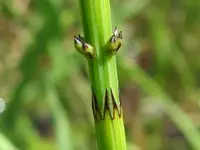
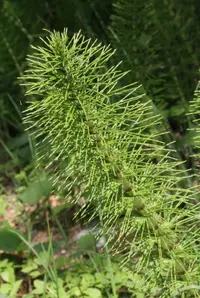
Mexican giant horsetail (Equisetum myriochaetum) is a tall, reed-like fern ally with jointed, hollow green stems and fine whorls of reduced leaves. It forms dense clumps that spread strongly by rhizomes, giving a bold, architectural look near water features or in large containers.

In nature, it grows along streams, wetlands, and damp slopes in Mexico and Central America, where soils stay consistently moist. Its vigorous growth and need for constant moisture make it easy to keep alive but harder to contain in small spaces. Understanding how to care for Mexican Giant Horsetail starts with recognizing its preference for bright light, wet soil, and plenty of root space.

Main Plant Requirements

Care Difficulty

Moderate Care

Light Preference

Partial Sun

Water Requirements

Aquatic

Temperature Preference

Tropical / Frost Sensitive

Hardiness Zone

10–12

Soil Texture

Loamy, Silty, Organic-rich

Soil pH

Acidic (5.5–6.5), Slightly acidic (6.5–7.0)

Soil Drainage

Waterlogged tolerant

Fertilization

Minimal (feed rarely)

Get Personalized Care Plan

Scan your plant to receive care tips personalized for your specific plant

Available on iOS and Android

How to Care for the Mexican Giant Horsetail

This species thrives in consistently bright, moist locations that mimic stream or pond edges.

  • Provide 4–6 hours of morning sun with light shade or filtered light in the afternoon to prevent scorching of the stems.
  • Plant in a site that receives partial shade, especially in hot climates, as intense afternoon sun can cause yellowing and drying of Mexican Giant Horsetail shoots.
  • In summer, ensure no deep shade from trees or structures; in cooler seasons, slightly increased direct sun helps maintain dense, upright growth.

This semi-aquatic plant prefers constantly wet conditions and does not tolerate drying out.

  • Maintain soil that is saturated or very soggy, such as at the edge of ponds, ditches, or boggy beds; standing water up to several cm is acceptable.
  • If grown in ordinary soil, irrigate whenever the surface begins to look less glossy or spongy, before any cracking or shrinking appears.
  • Watch for underwatering signs like browning, brittle stems, and slowed spread; true overwatering is rare unless water is stagnant and foul-smelling, which can indicate root rot.

This horsetail favors warm, frost-free climates and grows best where cold is minimal.

  • Aim for active growth in temperatures around 70–86°F (21–30°C), which supports rapid shoot production and spreading rhizomes.
  • Protect from frost; damage often appears when temperatures drop near 32°F (0°C), and prolonged exposure below 28°F (-2°C) can kill young shoots.
  • In hot areas, plants tolerate 95–100°F (35–38°C) if roots stay wet and the base is shaded, but combined heat and dryness quickly lead to stem dieback.

This species thrives in very humid, marsh-like conditions and reacts poorly to dry air.

  • Aim for 70–100% humidity, similar to a bog edge or pond margin.
  • Dry indoor air below 50% causes browning tips, pale stems, and slowed shoot growth.
  • To raise humidity outdoors, position near water features or in a water-filled saucer; indoors, group plants and use a humidifier rather than light misting.

This species prefers saturated, nutrient-rich, oxygen-poor substrates rather than conventional potting soils.

  • Use a heavy, organic-rich mix such as 60–70% garden loam or clay, 20–30% compost, and minimal coarse sand to slow drainage.
  • Maintain soil that stays constantly wet to waterlogged, mimicking stream banks or ditches, rather than free-draining garden beds.
  • A slightly acidic to neutral pH around 6.0–7.0 supports nutrient uptake for Equisetum myriochaetum.
  • Avoid peat-heavy, very airy, or cactus-style mixes; if existing soil drains too fast, line the planting area or container to reduce outflow and retain water.

This species can be grown in containers when the setup allows permanently wet, stable conditions.

  • Choose a tall, heavy container to counteract the plant’s upright, reed-like stems that can make lighter pots tip in wind.
  • Use a pot without standard drainage or stand a draining pot inside a cachepot or tray that stays filled to just below rim level.
  • Place the container where runoff is acceptable, since intentional overfilling to keep waterlogged conditions can stain or erode nearby surfaces.

Equisetum myriochaetum has modest nutrient needs but responds to light feeding in poor or soilless substrates.

  • Use a diluted balanced liquid fertilizer (around 10-10-10 NPK at 1/4–1/2 strength) if growth appears weak in containers.
  • Feed every 4–6 weeks during the main growing season when plants are actively producing new shoots.
  • Avoid feeding in winter or any dormant period to prevent soft, weak growth and salt buildup.
  • In outdoor bogs or ponds, organic compost nearby is usually enough for caring for Mexican Giant Horsetail.

Equisetum myriochaetum benefits from light, targeted pruning to keep stands tidy and vigorous.

  • Cut dead, brown, or storm-damaged stems at the base at any time to maintain a clean appearance.
  • In late winter or early spring, thin out older, crowded stems to encourage stronger new shoots.
  • Use clean, sharp pruning shears or scissors to reduce crushing and lower the risk of disease entry.
  • Leave healthy green stems intact, as excessive cutting can weaken the rhizomes and reduce overall vigor.

Transplanting or containing Equisetum myriochaetum focuses on managing its vigorous rhizomes and stand spread.

  • Check for dense, circling rhizomes, crowded shoots, or declining vigor as signs a container plant needs a larger space.
  • Plan any transplanting or division for early spring, just before strong new growth starts, to support fast re-establishment.
  • Expect division or container up-sizing every 2–3 years where growth is very dense or pushing against pot walls.
  • Lift clumps with as much root and soil as possible, keep rhizomes moist, replant quickly, and water thoroughly to reduce stress.

Multiplying Equisetum myriochaetum is usually done by division of rhizomes rather than by seed.

  • In early spring, dig up a section of the colony and locate firm, healthy rhizomes with attached shoots or buds.
  • Cut rhizomes into segments using a clean, sharp knife, ensuring each piece has at least one viable growth point.
  • Plant divisions just below the surface in consistently wet soil or shallow water, then keep them fully moist.
  • Provide bright light and stable moisture until new shoots extend, which confirms successful establishment.

Equisetum myriochaetum prefers mild, frost-free climates, so winter care matters in colder regions.

  • In areas with light frost, apply a 5–8 cm mulch layer over the root zone to buffer temperature swings.
  • Allow above-ground stems to die back naturally, then remove soggy, collapsed growth to limit rot and disease.
  • In cold climates, grow in large containers that can be moved to a cool, bright, frost-free location for winter.

Care Tips

Container seepage control

Grow this plant in a watertight outer cachepot or lined trough so the constantly wet substrate does not stain floors, patios, or nearby structures with mineral-rich runoff.

Rhizome root barrier

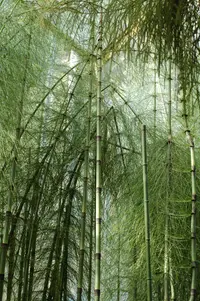
When grown outdoors in the ground, install a vertical root barrier 30–40 cm deep around the planting area to keep the creeping rhizomes from invading nearby beds or lawn.

Stalk thinning rotation

Every 1–2 years, remove the oldest, dullest culms at the base to maintain airflow, reduce fungal issues, and encourage a steady supply of young, vigorous shoots.

Algae and moss management

If algae or moss overtake the soil or water surface in very wet containers, gently skim or scrape them off and top up with a thin layer of clean, inert gravel to keep the crown clear and reduce gnats.

Wind and load support

In exposed sites, group plants in clusters or provide discreet stakes and soft ties so the tall, jointed stems do not snap under wind or the weight of rain, especially when growing Mexican Giant Horsetail near water features.

Common Pests and Diseases

Rust fungus

This disease causes orange to brown powdery pustules on stems and fertile shoots, sometimes leading to yellowing and premature dieback of affected segments.

Solution

Remove and destroy heavily infected stems, avoid overhead watering, and increase spacing or thinning of dense clumps to improve air movement; in severe, recurring cases, a sulfur or copper-based fungicide labeled for ornamental outdoor use can be applied according to label directions.

Stem blight

This disease leads to black or dark brown streaks and sunken lesions on the hollow stems, which may turn brittle and collapse in sections.

Solution

Cut out and dispose of blighted stems down to healthy tissue, keep debris around the base cleared, avoid water stress and sudden drying of containers, and if the problem persists, use a broad-spectrum fungicide suitable for ornamental wetland plants while also reducing overcrowding.

Aphids

These insects cluster on tender shoots and joints, sucking sap and causing distorted segments, sticky honeydew, and sometimes sooty mold growth on the stems.

Solution

Rinse colonies off stems with a firm stream of water, encourage natural predators such as lady beetles in outdoor plantings, and for persistent infestations use insecticidal soap or a light horticultural oil, making sure to coat all stem surfaces and repeat as needed.

Spider mites

This pest appears in hot, dry conditions and causes fine stippling, dulling of the green stems, and in heavier infestations fine webbing between segments.

Solution

Raise humidity around the plant, hose down stems thoroughly on all sides, and apply insecticidal soap or a low-rate horticultural oil at intervals until new growth appears clean, which is especially helpful for Mexican Giant Horsetail indoor care in dry homes.

Interesting Facts

Ancient horsetail lineage

This Mexican giant horsetail belongs to one of the most ancient vascular plant lineages, with close relatives known from fossils over 300 million years old, yet it survives today along tropical and subtropical American waterways.

Impressive stem height

In favorable, permanently moist sites in Mexico and Central America, its jointed, hollow stems can reach well over 3 m tall, forming dense, cane-like stands along streams and ravines.

Silica-rich stem walls

Like other horsetails, it deposits significant silica in its stem tissues, making the green, photosynthetic shoots rough to the touch and structurally stiff compared with many surrounding wetland herbs.

FAQs about Mexican Giant Horsetail

This species spreads vigorously through underground rhizomes and can quickly form dense thickets in wet soil. Use root barriers or containers if space is limited, and regularly remove unwanted shoots to prevent it from overtaking nearby areas.

Grow Healthy Plants with Botan Care

Keep your plants happy and healthy with plant identification, disease detection, and easy care guidance.

Botan plant care app — identify plants on mobile

Explore More Plants