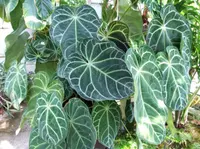
lacy tree fern Care (Sphaeropteris cooperi)

Also known as: scaly tree fern, Cooper's tree fern
lacy tree fern

About lacy tree fern

The lacy tree fern, Sphaeropteris cooperi, is a fast-growing evergreen fern that develops a slender trunk topped with a broad crown of arching fronds. Its finely divided, feathery foliage gives a soft, tropical look that works well in shaded gardens or sheltered courtyards.

This species is native to eastern Australia, where it grows in moist forests and along shaded waterways. It can become a small tree in mild climates, so it needs space to spread its fronds.

Gardeners care for lacy tree fern best by providing consistent moisture, protection from strong wind, and dappled or filtered light, along with rich, well-drained soil.

Main Plant Requirements

Care Difficulty

Moderate Care

Light Preference

Partial Shade

Water Requirements

Keep Soil Moist

Temperature Preference

Tropical / Frost Sensitive

Hardiness Zone

9–11

Soil Texture

Loamy, Peaty, Organic-rich

Soil pH

Acidic (5.5–6.5), Slightly acidic (6.5–7.0)

Soil Drainage

Moist but well-drained

Fertilization

Light (every 4–6 weeks)

Get Personalized Care Plan

Scan your plant to receive care tips personalized for your specific plant

Available on iOS and Android

How to Care for the lacy tree fern

This fern prefers bright, soft light that mimics a sheltered forest canopy.

  • Provide 2–4 hours of gentle morning sun with dappled or filtered light for the rest of the day; avoid harsh midday and afternoon sun that can scorch fronds.
  • Site lacy tree fern in partial shade under taller plants, trees, or shade cloth that reduces direct sun by about 40–60%.
  • In summer, increase shade during heatwaves; in winter, allow a bit more direct morning light if frost risk is low.

This species needs consistently moist but not waterlogged soil to thrive.

  • Water when the top 2–3 cm of soil feels slightly dry, aiming to keep the root zone evenly damp, especially during active growth in spring and summer.
  • Use deep, slow watering so moisture reaches the full root depth, and ensure soil drains freely to prevent puddling and sour smells that suggest waterlogging.
  • If Sphaeropteris cooperi fronds droop, crisp at the tips, or curl, increase watering; yellowing, soft bases or a musty odor suggest overwatering and poor drainage.

This fern grows best in mild, frost-free conditions.

  • Aim for 60–80°F (16–27°C) for strong growth; brief peaks to 85°F (29°C) are tolerated if humidity and soil moisture stay high.
  • Protect from temperatures below 35°F (2°C); light frost can burn young fronds, and hard freezes can kill the crown, especially in exposed sites.
  • During hot, dry spells above 80–85°F (27–29°C), increase shade and watering; in cooler seasons, growth slows but remains stable above about 45°F (7°C).

This fern needs consistently high humidity to maintain healthy fronds and steady growth.

  • Aim for 60–80% humidity; it declines in appearance quickly in centrally heated or air-conditioned homes.
  • Dry air causes crisping tips, brown edges, and rapid frond drop, especially on young lacy tree fern plants.
  • Increase humidity with grouped plants, large pebble trays under pots, and room humidifiers rather than frequent misting.

This species prefers deep, moisture-retentive but well-drained, organic-rich soil that mimics a forest floor.

  • Use a loose mix of 50–60% composted bark or leaf mold, 20–30% peat-free compost, and 10–20% perlite for structure and drainage.
  • Target slightly acidic to neutral pH around 6.0–7.0, which supports nutrient uptake and root activity in Sphaeropteris cooperi.
  • Incorporate coarse materials such as bark chips or pumice to keep pore spaces open and prevent compaction around the fibrous roots.
  • Avoid heavy clay, poorly drained sites, and mixes with a high sand content that dry out rapidly and damage new root growth.

This fern can be grown in containers if the pot supports its fast growth and substantial top weight.

  • Choose a deep, heavy container that resists tipping as the trunk elongates and the crown becomes broader and heavier.
  • Select pot materials like thick ceramic or cement that moderate moisture loss and stabilize the tall frond canopy in wind.
  • Ensure a wide, weighted base or low center of gravity so the container remains stable during storms or when fronds are wet.

Sphaeropteris cooperi benefits from light, consistent feeding during active growth to support lush fronds.

  • Use a balanced liquid fertilizer (for example 10-10-10) at 1/4–1/2 strength every 4–6 weeks in spring and summer.
  • Alternatively, apply a slow-release, balanced granule at the start of the growing season, following label rates.
  • Supplement with a thin layer of compost over the root zone once a year to improve soil structure and nutrients.
  • Stop feeding in fall and winter when growth slows, as the lacy tree fern rests and excess salts may build up.

Pruning Sphaeropteris cooperi is mainly about hygiene and maintaining a clear trunk rather than shaping.

  • Best time is late winter to early spring, before strong new growth begins.
  • Remove dead, yellowing, storm-damaged, or pest-infested fronds at the base using clean, sharp pruners or a pruning saw.
  • Cut crowded lower fronds to open airflow around the crown and highlight the tree-like form.
  • Avoid cutting into the central crown, since this growth point is essential for future fronds.

Transplanting or up-potting this fast-growing tree fern reduces root stress and supports steady canopy development.

  • Look for roots circling the pot, pushing through drainage holes, or for slowed top growth as signals to move up a size.
  • Plan repotting or transplanting in spring, allowing a full warm season for root recovery.
  • In containers, shift to a pot 2–5 cm wider every 2–3 years, using a rich, moisture-retentive but well-drained mix.
  • Keep the root ball just slightly disturbed, water thoroughly, then shade and shelter the plant for 1–2 weeks to reduce transplant shock.

Sphaeropteris cooperi is usually raised from spores, which is slow and requires controlled conditions.

  • Collect mature brown spore clusters from the underside of fronds in late summer and dry them on paper.
  • Sow spores thinly on sterile, moist, peat-based mix, then cover with clear plastic or glass to maintain near-100% humidity.
  • Keep at 70–77°F in bright, indirect light; avoid direct sun and do not let the surface dry out.
  • Once tiny fernlets develop true fronds, separate gently and pot into small containers, maintaining high humidity until established.

This tree fern has limited frost tolerance and needs protection in climates with freezing winters.

  • Sphaeropteris cooperi is typically hardy only where temperatures remain above about 25°F, especially with shelter from cold wind.
  • Apply a 5–10 cm mulch layer around the root zone in late fall, keeping it slightly away from the trunk.
  • Wrap the crown and upper trunk with breathable frost cloth or burlap during forecast freezes, then remove in mild spells.
  • In cold regions, grow Sphaeropteris cooperi in large containers and move indoors or to a frost-free greenhouse for winter.

Care Tips

Protect Tender Trunk

Wrap the developing trunk with breathable horticultural fleece or shade cloth during the first 1–2 summers to prevent sunscald and reduce moisture loss while the crown establishes.


Stage Gradual Pot Upsizing

When container-grown, move the plant into a pot only 5–8 cm wider each time to encourage a dense, stable root system and reduce the risk of waterlogged, sour mix around unused root zone.

Manage Wind Exposure

Install windbreak netting or plant near a solid fence to deflect strong winds, which helps prevent snapped fronds and reduces mechanical stress on the soft crown.

Maintain Clean Crown

Regularly remove dead fronds by cutting them close to the trunk and clear debris from the crown so new fronds can unfurl freely and fungal rot is less likely to develop at the growing point.

Plan For Future Size

When growing lacy tree fern in the ground, position it where a 3–6 m tall trunk and wide frond spread will not interfere with paths, windows, or overhead lines to avoid future removal or severe cutting.

Common Pests and Diseases

Scale insects

This pest commonly settles along the midribs and undersides of fronds, sucking sap and causing yellowing and weakened growth. Symptoms include sticky honeydew and sooty mold on the foliage and surrounding surfaces.

Solution

Prune and discard heavily infested fronds, then wipe remaining fronds and stems with a cloth dipped in insecticidal soap or a dilute alcohol solution, testing a small area first. For ongoing Sphaeropteris cooperi care instructions, repeat treatments every 7–10 days until new growth appears clean and increase airflow and light to discourage reinfestation.

Mealybugs

These insects hide in the croziers (unfurling fronds) and at the base of fronds, where they form white cottony clusters and cause stunting and distorted new growth. Honeydew buildup can attract sooty mold and ants.

Solution

Isolate the plant, then use a soft brush or cotton swab dipped in isopropyl alcohol to remove visible insects, focusing on crown and leaflet bases. Follow with a thorough spray of insecticidal soap, repeating weekly until no new mealybugs appear and keeping humidity stable but avoiding crowding with other plants.

Soft scale sooty mold

This disease is a secondary fungal growth that develops on honeydew excreted by sap-sucking insects, coating fronds with a black, soot-like film. Symptoms include dull, dirty-looking foliage and reduced photosynthesis over time.

Solution

Address the underlying scale or mealybug infestation first, then gently wash fronds with lukewarm water and a mild soap solution to remove mold. Improve light and air movement around the fern and avoid overhead watering late in the day so fronds dry more quickly.

Fern rust

This disease produces orange to brown pustules or patches on the undersides of fronds, which may lead to yellowing and premature frond drop. In humid, crowded plantings the infection can spread along the lower canopy and trunk base.

Solution

Remove and dispose of infected fronds, cutting back to clean tissue and keeping debris out of compost piles. Improve spacing and airflow, avoid wetting foliage, and in severe or recurring cases apply a labeled copper or systemic fungicide according to directions, targeting emerging fronds.

Aphids

These insects colonize soft new fronds and fiddleheads, sucking sap and causing curling, distortion, and sticky honeydew deposits. Heavy infestations can slow growth, especially on young or container-grown tree ferns.

Solution

Rinse aphids from fronds with a firm but gentle stream of water, paying attention to the undersides of leaflets and the crown. Follow with insecticidal soap or neem oil spray applied in the early morning or evening, and encourage natural predators outdoors by avoiding broad-spectrum insecticides nearby.

Interesting Facts

Rapid frond production

This Australian tree fern can push new fronds at a striking pace under ideal warmth and moisture, sometimes producing multiple flushes of foliage within a single growing season, which helps it quickly rebuild canopy after damage.

Sensitive to frost

Native to mild, frost-free forests in eastern Australia, this species lacks strong cold-hardening mechanisms and its soft fronds are easily damaged by even light frost, which limits its reliable outdoor range to mild coastal and subtropical climates.

Trunk formed from roots

The tall, fibrous trunk is built from a dense mass of old leaf bases and adventitious roots, rather than true woody tissue, which keeps the stem relatively light yet strong enough to support a large crown in humid forests.

Botan icon

Did you know?

In parts of Australia and several other mild-climate regions, this species has escaped cultivation and become invasive in some moist forest habitats, where its fast growth and dense shade can outcompete native understory plants and alter local plant communities.

FAQs about lacy tree fern

Brown fronds usually result from low humidity, underwatering, hot dry wind, or salt buildup from fertilizer. Trim dead fronds, flush the soil occasionally, and increase moisture in the surrounding air to prevent further damage.

Grow Healthy Plants with Botan Care

Keep your plants happy and healthy with plant identification, disease detection, and easy care guidance.

Botan plant care app — identify plants on mobile

Explore More Plants