giant horsetail Care (Equisetum giganteum)

Also known as: Southern Giant Horsetail
giant horsetail

About giant horsetail

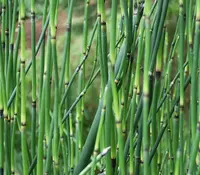
Giant horsetail, Equisetum giganteum, is a primitive, reed-like perennial that spreads by rhizomes and forms tall, jointed green stems. It has a bold, architectural look and often creates dense vertical clumps.

This species naturally occurs in wet habitats such as riverbanks, marsh edges, and saturated lowlands in parts of Central and South America. It thrives in consistently moist to wet conditions and tolerates poor, heavy, or shallow soils.

For those learning how to care for giant horsetail, it is generally robust but can spread aggressively if not contained, so site choice and root barriers are important considerations.

Main Plant Requirements

Care Difficulty

Moderate Care

Light Preference

Partial Sun

Water Requirements

Aquatic

Temperature Preference

Warm Climate

Hardiness Zone

9–11

Soil Texture

Loamy, Silty, Organic-rich

Soil pH

Acidic (5.5–6.5), Slightly acidic (6.5–7.0)

Soil Drainage

Waterlogged tolerant

Fertilization

Minimal (feed rarely)

Get Personalized Care Plan

Scan your plant to receive care tips personalized for your specific plant

Available on iOS and Android

How to Care for the giant horsetail

This semi-aquatic species prefers bright, soft light rather than intense, drying sun.

  • Provide 3–6 hours of sun daily, favoring morning or late-afternoon light with light shade at midday, especially in hotter regions.
  • Tolerates partial shade (dappled or filtered light under taller plants) but stems may grow more open and less sturdy with very low light.
  • Avoid harsh, all-day summer sun, which can scorch stems; in winter, allow more direct light by thinning overhead cover to support healthy giant horsetail growth.

This moisture-loving plant naturally grows along streams and marsh edges and expects nearly constant moisture.

  • Maintain soil that is consistently saturated or very wet; in ground, a site beside a pond or slow-draining low spot usually supplies enough water.
  • If rainfall is low, irrigate whenever the surface starts to lose its sheen of moisture, never allowing more than the top 1–2 cm to dry.
  • Watch for underwatering signs such as paling, crisping stems, and slow spread; stagnant, foul-smelling soil and collapsing stems indicate poor drainage or chronic overwatering without oxygen.

This species is adapted to mild, frost-free to light-frost climates with steady moisture.

  • Best growth occurs around 60–80°F (16–27°C), with constant moisture helping it tolerate the upper end of this range without heat stress.
  • Mature plants usually survive brief drops to about 25°F (−4°C), but repeated hard freezes can damage or kill above-ground shoots.
  • In hot summers above 90°F (32°C), provide water-cooled conditions near ponds or in saturated soil and some midday shade to prevent stress and stem browning.

This species prefers consistently high humidity similar to marshy conditions.

  • Aim for 60–90% humidity, as giant horsetail naturally grows along wet riverbanks and boggy edges.
  • In dry air below 40%, stems may brown at the tips, segment joints may shrivel, and growth slows.
  • Increase humidity by grouping pots near water trays, using shallow pebble trays with water, or positioning near an outdoor water feature.

This semi-aquatic species thrives in constantly moist, heavy, organic-rich soil.

  • Use a dense mix such as 2 parts loam, 1 part compost, and 1 part coarse sand to mimic slow-draining riverbank soils.
  • Allow very slow drainage or even shallow standing water; avoid fully free-draining, fast-drying mixes that leave roots exposed to air.
  • Aim for slightly acidic to neutral pH around 6.0–7.0, as Equisetum giganteum often occurs in similar conditions in nature.
  • Improve structure with organic matter rather than perlite, which makes the mix too light and reduces the water-retentive conditions this plant prefers.

This species is suitable for container growing where its spread needs control, provided moisture is carefully managed.

  • Choose a deep, heavy container to anchor tall, reed-like stems and prevent tipping in wind.
  • Select a pot material that slows evaporation, such as glazed ceramic, to help maintain the constantly wet soil it prefers.
  • Place the container inside a larger watertight cachepot or basin so water can pool around drainage holes and keep the root zone saturated.

This plant has low nutrient needs, but light feeding supports dense, healthy canes when growing giant horsetail in containers or constrained beds.

  • Use a balanced, diluted liquid fertilizer (such as 10-10-10 at 1/4–1/2 strength) for potted or confined plants.
  • Feed every 4–6 weeks during the active growing season if growth appears weak or pale.
  • For in-ground stands, a thin layer of compost in spring is usually sufficient.
  • Stop feeding in late fall and avoid fertilizing during winter dormancy to prevent weak, tender growth.

Pruning Equisetum giganteum is mainly for tidiness, containment, and removing weak stems.

  • Best time is late winter to early spring, before strong new shoots emerge.
  • Cut dead, broken, or discolored canes at ground level with clean, sharp shears.
  • Thin crowded or leaning stems to improve light penetration and airflow through the clump.
  • Mow or cut back large invasive patches carefully to manage spread, then remove all debris.

Transplanting or dividing Equisetum giganteum focuses on controlling spread and refreshing crowded clumps.

  • Look for signs like dense, congested rhizomes, waterlogging, or slow, weak new shoots around older growth.
  • Plan transplanting or division for early spring or early fall, when temperatures are mild and soil stays evenly moist.
  • Every 2–4 years, lift sections, trim damaged roots, and replant pieces with healthy rhizomes at the same depth.
  • Keep soil constantly moist after moving plants, shade lightly for 1–2 weeks, and avoid heavy foot traffic to limit root stress.

Propagation of Equisetum giganteum is most reliable through division of its creeping rhizomes.

  • Divide established clumps in early spring, when new shoots just start to emerge.
  • Use a sharp spade or knife to separate sections with several buds and healthy, pale rhizomes.
  • Plant divisions into permanently moist, organic-rich soil, firming well to remove air pockets.
  • Maintain even moisture and light shade until strong new canes appear, then gradually increase light exposure.

In mild climates, Equisetum giganteum is largely cold tolerant and typically requires minimal winter care.

  • In regions with light frost, allow tops to die back naturally, then cut down dead stems in late winter.
  • Apply a 5–8 cm layer of mulch around the root zone in colder areas to buffer freeze–thaw cycles.
  • Move container-grown plants into a sheltered, frost-free spot and keep soil just moist, never dry.

Care Tips

Contain Rhizome Spread

Install a deep, solid root barrier (at least 45–60 cm) or use a large, bottomless container sunk into the ground to prevent the aggressive rhizomes from invading nearby beds and lawn areas.

Submerged Pot Method

For ponds and water features, grow the plant in a heavy, wide aquatic basket filled with loam and sink it slightly below water level to control spread and make future division and relocation much easier.

Regular Stand Thinning

Every 1–2 years, remove the oldest, darker, or damaged canes at the base to open the clump, improve airflow, and maintain strong, upright growth.

Nutrient-Rich Water Rotation

If kept in containers or lined bogs, periodically top up with collected rainwater or diluted aquatic-plant nutrients to replace minerals lost through constant saturation and drainage without overfertilizing.

Winter Wind Protection

In colder or exposed sites, use low windbreaks such as fencing, reed screens, or positioning near a wall to reduce wind rock and snapping of the tall, hollow stems during winter storms when growing giant horsetail outdoors.

Common Pests and Diseases

Rust fungus

This disease causes orange to brown pustules or streaks on stems, sometimes leading to weakened shoots and reduced vigor. Symptoms include powdery spore masses that rub off on fingers or nearby surfaces.

Solution

Remove and destroy heavily infected stalk sections to reduce spore load, then thin dense clumps so air can move through the stems. Avoid overhead watering, keep foliage drier where possible, and if the problem is severe in ornamental plantings, use a labeled fungicide for rusts according to local regulations and product directions.

Leaf spot

This disease produces small dark spots or streaks on the green stem segments, often where water sits for long periods. Symptoms include cosmetic spotting that can merge into larger discolored areas under prolonged wet conditions.

Solution

Trim out and discard the most affected stems to reduce inoculum, and reduce constant splash or overhead irrigation on the shoots. Improve spacing and water flow in ponds or containers, and in persistent cases use a broad-spectrum fungicide labeled for ornamental leaf spots, applied exactly as directed.

Spider mites

These insects feed by piercing the stem surface and sucking plant sap, which can cause fine stippling, dull coloration, and webbing in dry, warm conditions. This pest is more common on plants grown in containers or in giant horsetail indoor care situations with low humidity.

Solution

Rinse the stems thoroughly with a strong but controlled stream of water, including nodes and branch whorls, repeating every few days to knock back populations. Raise humidity, reduce heat buildup, and if needed apply insecticidal soap or horticultural oil, ensuring full coverage of stems while avoiding application during high heat or full midday sun.

Aphids

These insects cluster on young stem joints and branch whorls, sucking sap and excreting sticky honeydew that can attract sooty mold. This pest can cause distorted new growth and general decline in vigor when populations are high.

Solution

Spray stems with water to dislodge colonies, then prune and discard heavily infested shoot tips. For ongoing issues, use insecticidal soap or a light horticultural oil, repeating at intervals and directing spray into tight crevices along the stems, while encouraging natural predators such as lady beetles in outdoor plantings.

Interesting Facts

Tree‑like horsetail stems

This species can form upright, jointed stems that reportedly reach several meters in height in the wild, giving it a tree‑like appearance unusual among horsetails, which are typically much shorter.

Semi‑aquatic habitat specialist

It naturally grows along riverbanks, marsh edges, and other saturated soils in South America, where its dense rhizome network helps stabilize banks and tolerate periodic flooding.

Silica‑rich stem texture

Like other horsetails, it accumulates silica in its tissues, but in this large species the thick, rough stems and ridges are especially pronounced and can feel almost abrasive to the touch.

Botan icon

Did you know?

Fossil relatives of this modern species belong to a lineage that once included tree‑sized horsetails in the Paleozoic era, so its unusually tall stature is considered a living reminder of those ancient, giant forms.

FAQs about giant horsetail

This species spreads vigorously through deep, running rhizomes and dense colonies of stems. In gardens or ponds it can become difficult to control, so use buried barriers or containers and remove unwanted shoots regularly.

Grow Healthy Plants with Botan Care

Keep your plants happy and healthy with plant identification, disease detection, and easy care guidance.

Botan plant care app — identify plants on mobile

Explore More Plants