Manage Salt Exposure
Avoid using hard or saline water and keep the plant away from coastal spray or de-icing salt, since this fern is sensitive to salt buildup that can scorch fronds and stunt new growth.

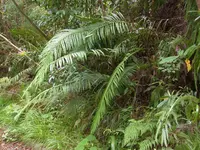
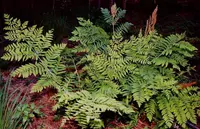
Blechnum orientale, often called Oriental Blechnum or oriental hard fern, is a terrestrial fern with strong, upright fronds and a bold, architectural look. Mature plants form dense clumps that can create a low fern thicket in suitable conditions.
This species is native to tropical and subtropical Asia and the Pacific, where it typically grows in moist forests, clearings, and along stream banks. It favors warm, humid conditions and consistently damp, well-drained, slightly acidic soil.
The plant is moderately demanding under cultivation because it dislikes drying out, cold drafts, and very low humidity. Those factors are the main points to watch when learning how to care for Oriental Blechnum, especially in indoor or container settings.

Care Difficulty
Moderate Care

Light Preference
Partial Shade

Water Requirements
Keep Soil Moist

Temperature Preference
Tropical / Frost Sensitive

Hardiness Zone
11–12

Soil Texture
Loamy, Peaty, Organic-rich

Soil pH
Strongly acidic (4.5–5.5), Acidic (5.5–6.5)

Soil Drainage
Moist but well-drained

Fertilization
Light (every 4–6 weeks)
Scan your plant to receive care tips personalized for your specific plant
Available on iOS and Android
This fern prefers bright, filtered light that mimics forest understory conditions for steady growth.
This moisture-loving fern needs consistently damp but not waterlogged soil to stay healthy.
This tropical fern thrives in warm, frost-free conditions with stable temperatures.
This fern needs sustained high humidity to keep fronds lush and prevent tip dieback.
Blechnum orientale prefers moist, airy, organic-rich soil that never stays waterlogged.
This species adapts well to container growing when moisture and stability are carefully managed.
This fern benefits from light, consistent feeding rather than heavy doses, especially in containers.
Blechnum orientale needs only light pruning to keep the clump healthy and tidy.
This fern prefers stable conditions, so repotting or transplanting should be done only when clearly needed.
Blechnum orientale is usually propagated by spores or by careful division of established clumps.
This tropical fern is frost-tender and needs protection in regions with cool or freezing winters.

Plant Health Check
Not sure what's wrong with your plant? Check your plant's health inside the app.
Young fronds of this fern emerge bright red to pink before slowly turning deep green as they mature, a color change caused by protective pigments known as anthocyanins that help shield tender tissues from strong light.
This species naturally grows along forest margins, stream banks, and disturbed tropical slopes, where it benefits from high humidity, constant moisture, and filtered light rather than deep shade.
Mature plants can form large, dense clumps with fronds over 1 m long in suitable tropical conditions, allowing them to dominate the understory where space and moisture are abundant.

The fibrous rootstock and dense clump of Blechnum orientale help stabilize soil on steep, eroding tropical slopes, so it is sometimes used in reforestation and erosion-control plantings in parts of its native and naturalized range.
Brown fronds usually result from low humidity, underwatering, or exposure to hot, direct sun or dry wind. Check soil moisture, increase humidity, and trim completely dead fronds to encourage healthy new growth from the crown.
Keep your plants happy and healthy with plant identification, disease detection, and easy care guidance.