Use Wider Pots
Choose a pot that is wider than it is deep to allow the shallow, spreading rhizomes to expand and create a fuller fern canopy over time.

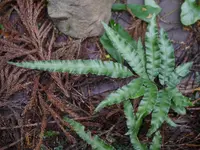
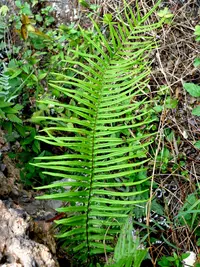
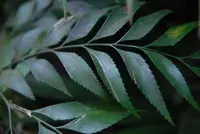
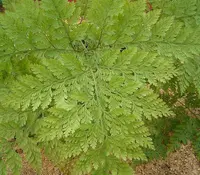
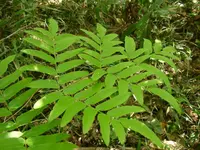
Silver ribbon fern, Pteris parkeri, is a compact, clumping fern grown mainly as an indoor foliage plant. It is valued for its arching fronds with pale, ribbon-like centers and darker green margins. In nature, it occurs in warm, humid regions, often in shaded forest floors and rocky crevices, which explains its preference for consistent moisture and sheltered light. It tends to stay medium-sized and forms dense, graceful tufts rather than spreading aggressively. Because it dislikes drying out or harsh sun, care for silver ribbon fern is moderately easy if humidity, gentle airflow, and a loose, well-drained mix are provided.

Care Difficulty
Moderate Care

Light Preference
Bright Indirect Light

Water Requirements
Keep Soil Moist

Temperature Preference
Tropical / Frost Sensitive

Hardiness Zone
10–11

Soil Texture
Loamy, Peaty, Organic-rich

Soil pH
Acidic (5.5–6.5), Slightly acidic (6.5–7.0)

Soil Drainage
Moist but well-drained

Fertilization
Light (every 4–6 weeks)
Scan your plant to receive care tips personalized for your specific plant
Available on iOS and Android
This fern prefers soft, forest-like light and is sensitive to harsh sun exposure.
This fern needs consistently moist but not waterlogged soil to maintain healthy fronds.
This fern thrives in mild, stable temperatures similar to a cool, sheltered woodland floor.
This fern needs consistently moist air and reacts quickly to dry conditions.
This fern prefers a loose, moist, organic-rich mix that drains freely yet never dries out completely.
This species adapts well to container growing when moisture and root space are carefully managed.
This fern responds well to modest feeding during active growth but suffers if overfed.
Pruning Pteris parkeri focuses on hygiene and maintaining a neat, airy clump.
Container-grown plants benefit from occasional repotting to refresh soil and relieve root crowding.
Propagation of this fern is most reliable by careful division of the root mass.
This fern dislikes frost and benefits from sheltered winter conditions, especially in cooler climates.

Plant Health Check
Not sure what's wrong with your plant? Check your plant's health inside the app.
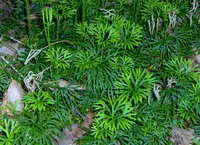
This species stays relatively low and spreading compared with many other Pteris ferns, forming dense, shallow clumps that make it suited to small terraria and dish gardens rather than tall, upright displays.
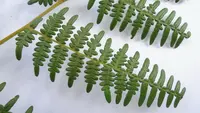
Each leaflet typically shows a pale to silvery midrib contrasted against darker green tissue, which is a stable, genetically fixed trait rather than a temporary nutrient effect.
In the wild it is associated with consistently moist, shaded forest floors and rocky banks in tropical to subtropical regions of the Americas, which explains why successful Pteris parkeri care indoors depends on steady moisture and protection from strong sun.
Brown tips or edges usually result from low humidity, underwatering, or a build-up of salts from fertilizer or hard water. Increase humidity, water thoroughly but not constantly, and occasionally flush the potting mix to reduce salts.
Keep your plants happy and healthy with plant identification, disease detection, and easy care guidance.