horned bladderwort Care (Utricularia cornuta)

horned bladderwort

About horned bladderwort

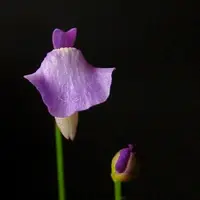
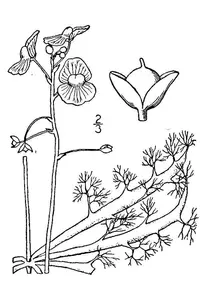
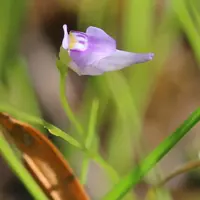
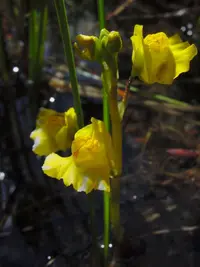
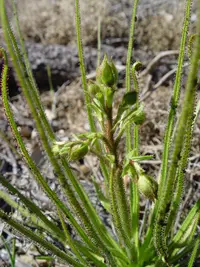
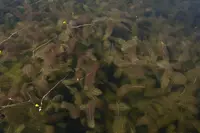
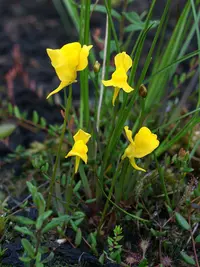
Horned bladderwort (Utricularia cornuta) is a small, carnivorous aquatic or bog plant that traps tiny aquatic organisms in underwater bladders. It typically forms fine, grass-like or thread-like submerged foliage with delicate yellow, horn-shaped flowers emerging above the water or wet soil.

This species is native to North America, where it grows in nutrient-poor wetlands, shallow water, and wet sandy or peaty soils. It can be challenging to grow because it needs consistently wet, low-nutrient conditions and does not tolerate drying out or rich substrates. For those learning how to care for horned bladderwort, it usually prefers bright light, soft low-mineral water, and an undisturbed, stable environment.

Main Plant Requirements

Care Difficulty

Hard Care

Light Preference

Full Sun

Water Requirements

Aquatic

Temperature Preference

Cool Climate

Hardiness Zone

4–9

Soil Texture

Sandy, Peaty, Organic-rich

Soil pH

Strongly acidic (4.5–5.5)

Soil Drainage

Waterlogged tolerant

Fertilization

Minimal (feed rarely)

Get Personalized Care Plan

Scan your plant to receive care tips personalized for your specific plant

Available on iOS and Android

How to Care for the horned bladderwort

This species prefers bright, open conditions that mimic sunny, wet meadows and bog edges.

  • Provide 6–8 hours of direct sun, ideally with morning sun and early afternoon exposure; slight dappled shade after 3 p.m. helps prevent overheating in hot climates.
  • Tolerates light partial shade (3–4 hours direct sun) but flowering horned bladderwort is usually stronger and more abundant in full sun sites.
  • Watch for pale, weak growth and few traps in low light, and for leaf scorch or crispy tips under intense, all-day summer sun without any shade.

Utricularia cornuta thrives in constantly wet, low-nutrient conditions rather than typical potting soil moisture cycles.

  • Keep the substrate saturated or very shallowly flooded; the surface should never dry out, even in the top 1–2 cm, as this damages fine stolons and traps.
  • In warm seasons, watch for dark, drying patches or shrinking water margins as a cue to add low-mineral water; in cooler months, maintain wetness but avoid deep standing water that becomes stagnant.
  • Signs of overwatering are usually linked to poor aeration, such as foul smell or slimy growth; improve water exchange rather than reducing overall wetness.

This temperate bladderwort handles a broad range of outdoor temperatures but is sensitive to hard, prolonged freezes without insulating water or substrate.

  • Optimal active growth occurs around 65–80°F (18–27°C), typical of late spring and summer in many temperate regions with sunny, wet habitats.
  • The plant tolerates short dips to about 25–30°F (-4 to -1°C) if submerged or insulated by saturated peat, but unprotected, exposed crowns are vulnerable to freeze damage.
  • During hot spells above 86°F (30°C), ensure abundant water and some light afternoon shade; overheating in shallow, stagnant pools can stress traps and reduce vigor.

This species prefers consistently moist air but adapts to a range of humidity if roots stay wet.

  • Aim for 50–80% humidity, especially in warm conditions, to support steady growth and flowering of horned bladderwort.
  • Plants tolerate brief dips to 35–40% if the water tray never dries out and foliage is shaded from strong airflow.
  • Crisping leaf tips or stalled growth signal low humidity; group pots, use a nearby open water dish, or a humidifier rather than misting.

This carnivorous bog plant needs a nutrient-poor, waterlogged, airy medium rather than conventional potting soil.

  • Use a mix of 1:1 milled sphagnum peat and silica sand or fine aquarium sand for Utricularia cornuta, creating a loose but cohesive texture.
  • Keep the medium saturated or shallowly flooded; it should stay wet with slow drainage, never drying out between waterings.
  • Maintain slightly acidic conditions, around pH 4.5–6, and avoid any added fertilizer, compost, manure, or bark-based products.
  • Rinse peat and sand thoroughly before use to remove fine particles and improve aeration while limiting mineral buildup that can damage traps.

This species is suitable for container culture when grown in wide, shallow, watertight setups that mimic a bog tray.

  • Choose a broad, shallow container so the spreading stolons can form an even mat instead of stacking in dense, suffocating layers.
  • Use a solid container without drainage holes and stand it inside a larger tray so water depth can be adjusted precisely.
  • Prefer inert plastic tubs or glazed ceramic to reduce mineral leaching and to keep water levels stable during hot, evaporative weather.

This carnivorous species gains most nutrients from captured prey and usually performs best with no fertilizer.

Pruning Utricularia cornuta focuses on tidying growth rather than shaping the plant.

  • Carry out light cleanup after flowering, removing spent flower stalks at the base to maintain a neat look.
  • Trim away dead or decaying foliage and stems with small, clean scissors to limit rot and algae growth.
  • Avoid heavy cutting, which can reduce flowering and weaken the plant’s fine stolons and traps.

Transplanting Utricularia cornuta is done infrequently and mainly when growth is declining or the mat becomes overcrowded.

  • Check for signs like thinning foliage, algae overgrowth, or slow spread rather than roots circling a pot, since roots are very fine.
  • Plan transplanting in spring or early summer when active growth helps recovery.
  • Every 2–3 years, divide the mat gently and move sections onto fresh acidic, low-nutrient medium kept saturated.
  • Handle stolons and traps carefully, keeping them wet at all times to reduce stress and prevent tissue damage.

Propagation of this species is usually done vegetatively to maintain traits and speed up establishment.

  • Use division in spring or early summer, separating small sections of stolons and attached traps from a healthy mat.
  • Place divisions onto shallow, acidic, nutrient-poor medium under bright, indirect light and consistently wet conditions.
  • For seed, sow fresh on the surface of similar low-nutrient medium, keep saturated, and maintain mild temperatures around 65–75°F.

In its native range this bog plant is cold hardy but still benefits from some thoughtful winter care.

  • In-ground clumps in suitable climates typically overwinter without extra protection, even with light to moderate frost.
  • Ensure the planting area or tray remains wet so the fine stolons do not desiccate during dormancy.
  • For containers in colder regions, move pots into a cold but frost-free space or sink them into the ground for insulation.

Care Tips

Use rainwater trays

Stand pots in shallow trays of rainwater or reverse-osmosis water and allow the media to wick moisture from below, which mimics the plant’s bog habitat and prevents mineral buildup on the crown.

Refresh media frequently

Replace the peat- or sphagnum-based medium every 12–18 months to avoid compaction, loss of aeration, and accumulation of dissolved minerals that can weaken the roots and bladders.

Provide seasonal photoperiod

Adjust artificial lighting to give a longer day length in summer and a slightly shorter one in winter, which helps maintain a natural growth rhythm and supports reliable flowering.

Monitor bladder health

Inspect submerged foliage occasionally for clear, turgid bladders and remove any decaying plant matter so trapped debris does not foul the water and promote bacterial problems.

Create stable microclimate

Group this plant with other bog or terrarium species and use a wide, shallow container to keep root-zone moisture and air around the foliage stable, which simplifies caring for horned bladderwort over the long term.

Common Pests and Diseases

Algal overgrowth

Symptoms include mats of green slime or film covering the water surface and plant foliage, especially in bright, nutrient-rich bog setups. This issue competes with the plant for light and can smother fine leaves and traps.

Solution

Reduce fertilizer or nutrient input, shorten lighting duration or intensity, and manually remove algae films with tweezers or a soft brush. Increase water changes with low-mineral rain, RO, or distilled water and ensure the water layer is shallow and gently moving rather than stagnant.

Fungal crown rot

This disease causes the growing points and basal stolons to turn brown, mushy, and collapse, often starting after prolonged water stagnation or high organic buildup. Symptoms include sudden dieback of green growth from the center outward.

Solution

Remove and discard affected clumps, then thin and replant healthy stolons in fresher, low-organic medium with good oxygenation. Keep water clean and cool, avoid buried leaf litter, and maintain only a shallow, fresh water layer to prevent recurring fungal growth as part of Utricularia cornuta care instructions.

Aquatic snails

These pests feed on fine leaves and flower stalks and can damage delicate bladder traps, leading to stunted growth and poor flowering. This pest often arrives hidden on wild-collected moss, peat, or companion aquatic plants.

Solution

Manually remove snails and visible egg clusters, and flush the container or tray with fresh soft water to dislodge small individuals. For persistent problems, reset the setup with snail-free substrate and plants, and quarantine any new bog or aquatic material before introduction.

Midge larvae

These insects develop as small worm-like larvae in wet substrate and shallow water, where they can disturb fine roots and stolons. Symptoms include disturbed substrate, reduced vigor, and occasionally chewed trap structures.

Solution

Rinse and siphon the water layer regularly to remove larvae and organic debris, and use fine mesh over water inlets to reduce egg-laying by adults. In container culture, a brief flooding and careful draining with clean, cool water can physically remove many larvae without chemicals.

Interesting Facts

Specialized bog habitat

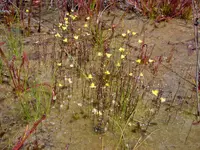
This species is native to nutrient-poor, acidic wetlands of eastern North America, especially sandy, peaty bogs and shorelines that experience periodic flooding and drying.

Tiny underwater traps

It produces microscopic bladder-like traps on its submerged structures that actively suck in small aquatic organisms such as protozoa and tiny crustaceans, using rapid changes in water pressure.

Late-summer flowering

In much of its range, the bright yellow, horned flowers typically appear in late summer on slender stalks that rise well above the water or saturated soil surface.

Botan icon

Did you know?

This species often co-occurs with other carnivorous plants such as Drosera and Sarracenia in the same bog systems, forming part of a specialized plant community adapted to extremely low soil nutrients where most noncarnivorous plants struggle to survive.

FAQs about horned bladderwort

Lack of flowers usually comes from insufficient light, nutrient-rich water, or too-warm, stagnant conditions. This species blooms best in sunny, nutrient-poor, consistently wet sites with some seasonal temperature fluctuation and a natural photoperiod, rather than constant indoor conditions.

Grow Healthy Plants with Botan Care

Keep your plants happy and healthy with plant identification, disease detection, and easy care guidance.

Botan plant care app — identify plants on mobile

Explore More Plants