Portuguese sundew Care (Drosophyllum lusitanicum)

Portuguese sundew

About Portuguese sundew

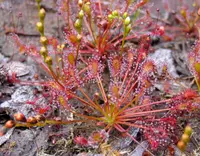
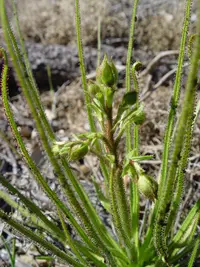
The Portuguese sundew, Drosophyllum lusitanicum, is a carnivorous shrub-like plant with narrow, sticky leaves that trap small insects. It forms a loose rosette and can develop a woody base over time.

This species is native to dry, sandy hillsides in Portugal, Spain, and parts of Morocco, where it grows in full sun and nutrient-poor soils. Unlike many carnivorous plants, it prefers relatively dry conditions around the roots, which makes care for Portuguese sundew quite specialized.

It is considered challenging for beginners because it dislikes disturbance, repotting, and waterlogged substrates. Consistent strong light, excellent drainage, and gentle handling are key to keeping it healthy.

Main Plant Requirements

Care Difficulty

Hard Care

Light Preference

Full Sun

Water Requirements

Low Water

Temperature Preference

Warm Climate

Hardiness Zone

9–11

Soil Texture

Sandy, Rocky, Organic-rich

Soil pH

Strongly acidic (4.5–5.5)

Soil Drainage

Well-drained

Fertilization

Minimal (feed rarely)

Get Personalized Care Plan

Scan your plant to receive care tips personalized for your specific plant

Available on iOS and Android

How to Care for the Portuguese sundew

This sun-loving carnivorous shrub needs strong, direct light to maintain compact, sticky foliage.

  • Provide 6–10 hours of full sun daily; an exposed south- or west-facing site suits Portuguese sundew in most mild, dry climates.
  • Accepts light afternoon shade in very hot regions, but prolonged shade causes weak, stretched growth and fewer insect-trapping leaves.
  • Avoid moving plants abruptly from low light to full sun; harden off over 7–10 days to prevent leaf scorch and stress, especially in late spring.

This species prefers drier conditions than most carnivorous plants and is sensitive to chronic wetness.

  • Use very free-draining, sandy soil and allow the top 2–4 cm to dry before watering again to avoid root rot in Drosophyllum lusitanicum.
  • Water from above until it drains through, then let excess run off completely; never leave the container or bed sitting in a tray of water.
  • In cool seasons reduce frequency, watching for slightly limp, dull leaves as a cue to water, and for blackened, mushy roots or sour odor as signs of overwatering.

This Mediterranean species prefers warm, dry air with mild winters and does poorly in harsh frost.

  • Aim for 60–80°F (16–27°C) during active growth; short spikes to 85–90°F (29–32°C) are tolerated if roots stay airy and soil is not waterlogged.
  • Protect from hard frost; brief dips to about 28–30°F (-2 to -1°C) may be survived, but repeated or lower freezes can kill roots and crowns.
  • In winter, cooler conditions around 45–55°F (7–13°C) with plenty of light and drier soil help prevent weak, etiolated growth and fungal problems.

This species prefers dry air and is sensitive to high humidity.

  • Aim for 20–50% humidity, similar to a dry, airy room or outdoor patio in low-humidity climates.
  • Excess humidity causes limp, fungus-prone leaves and blackening around the base of rosettes.
  • Increase air movement rather than humidity by using strong ventilation and avoiding enclosed terrariums when caring for Portuguese sundew.

This species needs very open, mineral, fast-draining soil that stays barely moist at depth and dry on top.

  • Use a mix of roughly 60–80% coarse sand or fine horticultural grit with 20–40% low-nutrient material such as perlite or pumice.
  • Keep pH slightly acidic to neutral (about 6.0–7.0) and avoid peat-heavy or rich compost mixes that retain water and add nutrients.
  • Ensure strong drainage by using a deep pot with large bottom holes and filling the lower third with extra grit or pumice for air space.
  • Avoid clay, loamy garden soil, or any mix that stays wet for more than 1–2 days, as Drosophyllum lusitanicum is highly prone to root rot.

This species can be grown in containers if the pot is deep, very free-draining, and kept in a well-ventilated, sunny position.

  • Choose a tall, narrow, rigid pot to provide deep rooting space while preventing the light stem from rocking in wind.
  • Prefer unglazed clay to slightly increase evaporation and keep the upper substrate drier than the root zone.
  • Raise the pot on feet or mesh so drainage holes stay clear and excess water leaves quickly after watering.

Drosophyllum lusitanicum is highly adapted to nutrient-poor soils and should not be fertilized under normal cultivation.

Pruning Drosophyllum lusitanicum is minimal and mainly aims to maintain plant health, not to reshape the naturally loose form.

  • Carry out light cleaning in late winter or early spring before strong new growth starts.
  • Use fine scissors or small snips to remove dead, blackened, or damaged leaves at the base.
  • Avoid cutting green, functional leaves, since this species relies on foliage to trap insects and support growth.
  • Do not pinch or shear the plant for shaping, as heavy pruning can weaken or kill it.

This species dislikes root disturbance, so transplanting Drosophyllum lusitanicum must be planned carefully and done as rarely as possible.

  • Use deep, free-draining containers from the start so the plant can stay in one pot for its life.
  • Only consider repotting if roots circle heavily, drainage fails, or growth declines despite good light and water.
  • Transplant in late winter or very early spring, when active growth is just resuming but before high heat.
  • Minimize root stress by keeping the soil mass intact, sliding the whole root ball into a similar mix without teasing roots.

Propagation of Drosophyllum lusitanicum is usually done from seed and demands stable conditions and patience.

  • Sow fresh seed in late winter to early spring in a deep, very well-drained, low-nutrient mix.
  • Lightly scarify seed coats with fine sandpaper to improve water uptake and germination.
  • Maintain bright light, good air movement, and mild temperatures around 60–70°F for germination.
  • Keep the mix just evenly moist, never waterlogged, and avoid transplanting seedlings until well established.

Winter care focuses on keeping this Mediterranean species cool and bright but above hard frost, especially in container culture.

  • Expect poor tolerance to hard freezes; sustained temperatures below about 28°F can be damaging or fatal.
  • In mild climates, grow in very free-draining soil and use a light, dry mulch to buffer brief cold snaps.
  • For pots, move containers under cover in winter, such as an unheated greenhouse or cold bright porch.
  • Ensure soil stays on the dry side in cold weather to reduce root rot risk and cold damage.

Care Tips

Single-pot policy

Grow only one plant per pot and avoid root disturbance after establishment, since disturbing the deep taproot greatly increases the risk of sudden decline or death.

Early staking support

Install a thin, unobtrusive stake when the plant is still small so the main stem has gentle support as it elongates, reducing breakage from wind or accidental bumps.

Rain protection setup

Use a fixed overhead cover such as a clear roof panel or cold frame lid to shield the pot from natural rainfall, preventing the free-draining mix from becoming waterlogged.

Insect attraction management

Position the plant in a permanently open, airy location away from frequently used doors or seating areas, since its resinous leaves attract many flying insects that can become a nuisance indoors or on small balconies.

Low-wear handling

Place the container where it never needs to be rotated or moved, and turn any saucers or supports instead of the pot itself, as repeated handling stresses the brittle root system and stems.

Common Pests and Diseases

Aphids

These insects occasionally colonize young leaves and flower stalks, feeding on plant sap and leaving sticky honeydew. Symptoms include distorted new growth, tacky residue, and the presence of small green, black, or yellow soft‑bodied insects.

Solution

Remove heavily infested leaves or stalks and rinse affected areas gently with a fine spray of water, keeping the soil and crown as dry as possible. For persistent colonies, use a targeted insecticidal soap applied only to infested tissues during cooler parts of the day and improve air movement around the plant to discourage reinfestation, especially when growing Portuguese sundew in outdoor containers or cold frames.

Spider mites

These pests can appear on plants kept in very dry, hot conditions, causing fine stippling, dull foliage, and sometimes thin webbing between leaves. This pest thrives when air is stagnant and humidity is very low for extended periods.

Solution

Increase air circulation and, if possible, briefly raise local humidity around the foliage without wetting the soil, for example by placing open water trays nearby rather than misting the plant directly. Wipe or rinse leaves carefully to remove mites, then apply a light, targeted treatment with insecticidal soap or a miticide labeled for ornamental plants, avoiding excessive moisture at the root zone.

Gray mold (Botrytis)

This disease may develop on old leaves, dead insects, or damaged tissue in cool, humid, poorly ventilated conditions. Symptoms include soft brown patches that develop a fuzzy gray mold, especially on decaying traps and at the base of the rosette.

Solution

Promptly remove and discard any dead or moldy leaves and trapped insects to reduce inoculum. Improve drainage and airflow, keep foliage and crown as dry as possible, and avoid overhead watering; in severe cases, apply a targeted fungicide labeled for gray mold, taking care not to saturate the substrate of this drought‑adapted species.

Crown rot (fungal)

This disease can occur if the plant is kept in soggy or poorly drained soil, leading to sudden collapse of the rosette from the base. Symptoms include a soft, dark, decomposing crown and a foul odor, often without much visible leaf yellowing beforehand.

Solution

At the first sign of softening at the base, reduce watering sharply and allow the substrate to dry toward the surface, never letting the pot stand in water. Improve drainage by using a very open, mineral‑rich mix, ensure full sun and strong air movement, and discard severely affected plants and soil to prevent spread to nearby specimens.

Interesting Facts

Dry-habitat carnivore

This species is one of the few carnivorous plants adapted to hot, dry, coastal scrub in Portugal, Spain, and northwest Morocco, growing in sandy, nutrient-poor soils rather than in bogs or swamps like many other carnivores.

Passive flypaper trap

Its long, narrow leaves are covered with sticky, glistening glands that passively trap insects, which are then digested by enzymes on the leaf surface instead of using rapid movements like Venus flytraps or sundews.

Fire-prone specialist

Natural populations are often associated with fire-prone Mediterranean shrublands, and the species can colonize open, disturbed sandy patches that appear after fires remove competing vegetation.

Botan icon

Did you know?

Unlike many carnivorous plants, its seeds show a strong requirement for alternating temperature cycles and long exposure to cool, moist conditions to break dormancy, which helps synchronize germination with favorable Mediterranean winter–spring growing conditions in the wild.

FAQs about Portuguese sundew

Flowering is strongest on mature plants with full sun, cool nights, and low to moderate nutrients. Lack of blooms often comes from insufficient light, overly rich substrate, or heat stress, rather than age alone.

Grow Healthy Plants with Botan Care

Keep your plants happy and healthy with plant identification, disease detection, and easy care guidance.

Botan plant care app — identify plants on mobile

Explore More Plants