Mark dormancy period
Tag the pot and log the usual months when this orchid drops leaves or slows growth, so you can reliably reduce water and disturbance during its natural rest rather than misdiagnosing it as dying.

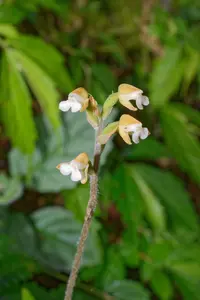
Zeuxine nervosa is a small terrestrial orchid that grows from creeping rhizomes and forms low clumps on the forest floor. Its slender stems carry narrow leaves and a short spike of delicate, pale flowers.
This species occurs mainly in shaded, humid woodlands in parts of South and Southeast Asia, where it thrives in leaf litter and fine, loose soil. It can be challenging to grow because it dislikes disturbance, needs stable moisture, and prefers cool, shaded conditions. For those learning how to care for Zeuxine nervosa, it suits experienced growers who can mimic a cool, consistently moist, low-light forest environment.

Care Difficulty
Hard Care

Light Preference
Partial Shade

Water Requirements
Keep Soil Moist

Temperature Preference
Tropical / Frost Sensitive

Hardiness Zone
11–13

Soil Texture
Loamy, Silty, Organic-rich

Soil pH
Acidic (5.5–6.5), Slightly acidic (6.5–7.0)

Soil Drainage
Moist but well-drained

Fertilization
Minimal (feed rarely)
Scan your plant to receive care tips personalized for your specific plant
Available on iOS and Android
This terrestrial orchid prefers soft, forest-like light rather than direct sun exposure.
This species prefers consistently moist, but not waterlogged, soil around its fine roots and rhizomes.
This orchid favors mild, stable temperatures similar to a cool to warm forest floor.
This terrestrial orchid prefers consistently moist air and reacts quickly to dry indoor conditions.
This species grows best in loose, humus-rich substrate that stays evenly moist yet never stagnant.
This species can be grown successfully in containers if moisture and root aeration are carefully managed.
This terrestrial orchid benefits from light, carefully controlled feeding rather than heavy fertilization.
This small orchid needs minimal pruning, mainly to maintain plant health and hygiene.
This species is usually grown in the ground or shallow trays and dislikes frequent disturbance.
Division is the most practical way to increase plants while keeping this delicate orchid stable.
This orchid prefers mild, frost-free winters and benefits from some protection in colder climates.

Plant Health Check
Not sure what's wrong with your plant? Check your plant's health inside the app.
This small terrestrial orchid is naturally found on shaded slopes and forest floors in parts of India and Sri Lanka, growing in leaf litter rather than on trees like many other orchids.
The species name nervosa refers to the clearly visible veins on its narrow leaves, a feature that helps distinguish it from several similar Zeuxine species in the field.
It behaves as a seasonal herb, with aboveground shoots and small spikes of yellowish to whitish flowers appearing mostly in the cooler, drier months before the plant can retreat back to its underground parts.
Yellowing leaves often result from natural aging of older foliage, root disturbance, or stress from repotting. Prolonged waterlogging, compacted substrate, or sudden temperature changes can also cause chlorosis. Check roots, drainage, and recent environmental changes to identify the cause.
Keep your plants happy and healthy with plant identification, disease detection, and easy care guidance.