Encourage sturdy stems
Expose young plants to steady air movement outdoors and avoid high-nitrogen feeding so stems develop short, strong internodes that resist flopping and wind damage.

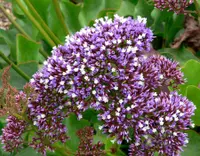
Perez's sea lavender, Limonium perezii, is a perennial flowering plant grown mainly for its long-lasting, papery blooms. It forms low, evergreen rosettes of leathery leaves with sturdy, branching stems that hold dense clusters of tiny purple and white flowers.
This species originates from the Canary Islands and is commonly used in coastal gardens and as a cut or dried flower. It generally prefers bright light, good air circulation, and well-drained soil, which makes it relatively straightforward to care for Perez's sea lavender in mild, low-humidity climates.

Care Difficulty
Easy Care

Light Preference
Full Sun

Water Requirements
Low Water

Temperature Preference
Warm Climate

Hardiness Zone
9–11

Soil Texture
Sandy, Loamy, Rocky

Soil pH
Slightly acidic (6.5–7.0), Slightly alkaline (7.0–7.5)

Soil Drainage
Well-drained

Fertilization
Minimal (feed rarely)
Scan your plant to receive care tips personalized for your specific plant
Available on iOS and Android
This coastal perennial needs strong light to flower well and maintain compact growth.
This species prefers dry to moderately moist conditions and is sensitive to prolonged wet soil.
This plant is adapted to mild, maritime climates but handles a fair range of temperatures once established.
This coastal species prefers relatively dry air and rarely needs special humidity management indoors or outdoors.
This species needs lean, sharply drained soil that dries quickly after watering.
This species adapts well to container growing if given a fast-draining setup and sufficient root depth.
Nutrient needs are modest, but thoughtful feeding supports flowering and foliage quality in Perez's sea lavender.
Limonium perezii benefits from light, targeted pruning to maintain a tidy, floriferous mound.
Best performance comes when the plant is sited correctly at planting, as it dislikes frequent disturbance.
New plants are usually raised from seeds, with some success from careful division of established clumps.
This coastal perennial is only moderately frost tolerant and needs attention in climates colder than mild coastal zones.

Plant Health Check
Not sure what's wrong with your plant? Check your plant's health inside the app.
The small true flowers are white or yellow and hidden inside a persistent, papery purple calyx, so the showy color you see in dried arrangements is mostly from long-lasting calyces rather than petals.
This species is naturally found on rocky coastal cliffs of the Canary Islands, where it is adapted to salty sea spray, strong winds, and very free-draining, often calcareous soils.
The plant can take up and tolerate relatively high levels of salt, which helps it survive in maritime habitats and makes it unusually resilient for ornamental use near roads or coastal sites.

In many cut-flower trials, its inflorescences have shown an exceptional ability to retain color and structure for months when air-dried, which is why it became a standard species for long-lasting dried flower arrangements worldwide.
Sparse or absent flowers usually result from insufficient light, overly rich or wet soil, or excessive nitrogen fertilizer. Ensure full sun, well-drained lean soil, and avoid high-nitrogen feeds to support reliable flowering and sturdy stems.
Keep your plants happy and healthy with plant identification, disease detection, and easy care guidance.