White Artichoke Care (Cynara cornigera)

White Artichoke

About White Artichoke

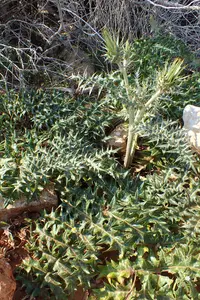
White artichoke, Cynara cornigera, is a perennial thistle grown mainly for its striking architectural form rather than for edible flower heads. It forms a bold rosette of deeply cut, silvery-gray leaves with spines, and sends up tall stems topped with large, showy purple flower heads.

This species is native to the eastern Mediterranean, where it thrives in sunny, dry locations with well-drained, often poor soils. It suits gardeners who can provide strong light, good drainage, and space for its spiny foliage, and it may be challenging in very wet or humid climates.

Those who want to learn how to care for White Artichoke should note its preference for full sun, moderate moisture, and soil that never stays waterlogged.

Main Plant Requirements

Care Difficulty

Moderate Care

Light Preference

Full Sun

Water Requirements

Moderate Water

Temperature Preference

Warm Climate

Hardiness Zone

8–10

Soil Texture

Sandy, Loamy, Organic-rich

Soil pH

Slightly acidic (6.5–7.0), Neutral (7.0)

Soil Drainage

Well-drained

Fertilization

Moderate (every 2–4 weeks)

Get Personalized Care Plan

Scan your plant to receive care tips personalized for your specific plant

Available on iOS and Android

How to Care for the White Artichoke

This sun-loving perennial performs best with strong, direct light in open garden sites.

  • Provide 6–8 hours of full sun daily; in hotter regions, light morning sun with some protection from intense mid-afternoon rays reduces leaf scorch on White Artichoke.
  • Allow for light, shifting shade in the hottest part of summer; plants in partial shade (about 4–5 hours direct sun) grow but may produce fewer, smaller flower heads.
  • Watch for leggy, floppy stems and pale foliage as signs of insufficient light, and for crisped leaf edges as a sign of excessive, drying sun and heat.

This deep-rooted perennial prefers steadily moist but never waterlogged soil.

  • Water when the top 3–5 cm of soil feels dry, applying a slow, deep soak at the base so moisture reaches the full root zone rather than just the surface.
  • Use well-drained, loamy soil; standing water or heavy clay encourages root rot in Cynara cornigera, while very fast-draining sand may need more frequent, deeper irrigation.
  • Expect more frequent watering in hot, windy summer weather and less in cool seasons; drooping, dull leaves suggest thirst, while yellowing lower leaves and a sour soil smell suggest overwatering.

This Mediterranean perennial prefers mild, temperate conditions and dislikes hard frost or extreme heat.

  • Aim for active growth in 60–75°F (16–24°C); plants remain robust and produce best foliage and flower stalks in this moderate range.
  • Protect from frost below about 25°F (-4°C); brief dips may be tolerated, but repeated freezes damage buds and crowns, so mulch crowns in cold winters.
  • In summer, plants handle short spells up to 90–95°F (32–35°C) if soil moisture is maintained; prolonged extreme heat combined with drought can halt growth and scorch outer leaves.

Humidity is not a critical factor for Cynara cornigera, which copes well with typical household and outdoor conditions.

  • Aim for 30–50% relative humidity; avoid very prolonged air below 25% if possible.
  • Mild leaf edge browning or crisping can indicate extended exposure to very dry, heated indoor air.
  • If air is extremely dry, group plants together or place the container on a pebble tray to slightly raise local humidity for the White Artichoke.

Cynara cornigera prefers deep, well-drained, moderately fertile soil that keeps roots aerated and dry between waterings.

  • Use a loamy or sandy-loam mix with 30–40% coarse material such as sharp sand, perlite, or fine grit to promote drainage.
  • Incorporate 20–30% compost or well-rotted manure for steady nutrients without making the mix heavy or waterlogged.
  • Target a slightly acidic to neutral pH around 6.5–7.5, avoiding strongly acidic or alkaline substrates that reduce nutrient availability.
  • On heavy clay sites, raise the planting area or use a tall container with added grit to keep the root zone from sitting in stagnant moisture.

This species can be grown in containers if the pot is large, deep, and very stable.

  • Select a container at least 40–50 cm deep to accommodate the long taproot and prevent stunted growth.
  • Choose a heavy terracotta or stone pot to counterbalance the tall, top-heavy foliage and reduce tipping in wind.
  • Elevate the pot on feet or bricks so large drainage holes stay clear, allowing rapid outflow of excess irrigation and rainwater when you grow Cynara cornigera.

Cynara cornigera responds well to moderate feeding during its active growing season for strong foliage and flower production.

  • Apply a balanced NPK granular or slow-release fertilizer at 1/2 label rate every 4–6 weeks in spring and early summer.
  • Work in well-rotted compost around the root zone once per year to improve soil structure and nutrition.
  • Water thoroughly after feeding to move nutrients into the root zone and prevent salt buildup.
  • Stop fertilizing White Artichoke by late summer and do not feed in winter dormancy.

Pruning Cynara cornigera helps maintain a tidy clump and supports healthy flowering.

  • Cut spent flower stalks back to the base in late summer to tidy the plant and reduce self-seeding.
  • Remove dead, damaged, or diseased leaves whenever noticed using clean, sharp pruners or a knife.
  • Thin out congested basal shoots in early spring to improve air flow and reduce fungal problems.
  • Avoid cutting healthy foliage too hard, since leaves are needed to recharge the plant’s roots.

This deep-rooted perennial is usually grown in the ground, so transplanting focuses on young plants rather than mature clumps.

  • Transplant when roots fill starter pots, circle the container base, or growth slows despite good care.
  • Move Cynara cornigera seedlings or young plants in early spring or early fall, avoiding extreme heat or frost.
  • Transplant only every few years, choosing a deep, well-drained site that allows room for mature spread.
  • Water thoroughly before and after moving, keep the root ball intact, and shade temporarily to reduce transplant shock.

Cynara cornigera is most often propagated by seed, with division used for established clumps.

  • Sow fresh seeds in late winter–early spring indoors at 65–75°F in a bright spot with free-draining mix.
  • Lightly cover seeds, keep evenly moist but not waterlogged, and provide good air flow to limit damping-off disease.
  • Harden off seedlings before planting outside, gradually exposing them to sun and cooler air over 7–10 days.
  • Divide mature clumps in early spring, lifting carefully, splitting into sections with buds and roots, then replanting promptly.

In mild climates this perennial is fairly hardy, but extra winter care helps it survive cold, wet conditions.

  • Tolerates light frost, but prolonged freezes below about 15°F can damage crowns and roots.
  • After foliage dies back, cut stems low and mulch 5–10 cm over the crown with straw or leaves.
  • Ensure soil drains well in winter, since waterlogged conditions increase rot risk.
  • In colder zones or containers, move pots to an unheated garage or cold frame to avoid deep freezing.

Care Tips

Sturdy plant support

Install strong stakes or a low wire cage early in the season so the tall, heavy flower stems grow upright and are protected from wind damage.

Staggered flower harvest

Cut some buds young for culinary use and leave others to open fully so the plant is not overtaxed and you can still enjoy the ornamental flowers and support pollinators.

Mulch for crown protection

Apply a 5–8 cm layer of coarse organic mulch around but not on top of the crown to stabilize soil moisture, reduce weed competition, and buffer roots from temperature swings.

Targeted slug and snail control

Place slug traps or barriers around young plants and check them regularly, since tender new growth is highly attractive to slugs and snails and early damage can stunt the plant.

Rotate planting site

Move plants or replant crowns every 3–4 years to a fresh bed to reduce soil-borne pest and disease buildup and maintain vigorous growth when growing White Artichoke.

Common Pests and Diseases

Aphids

This pest feeds on young leaves, stems, and flower buds, sucking sap and causing curling, distortion, and sticky honeydew deposits that can attract sooty mold. Symptoms include slowed growth and misshapen buds, especially on vigorous spring shoots.

Solution

Prune off heavily infested shoot tips, then wash remaining colonies off with a firm stream of water, repeating every few days. For persistent infestations, use insecticidal soap or a ready-to-use neem oil spray directed to the undersides of leaves and buds, and encourage natural predators such as lady beetles by avoiding broad-spectrum insecticides when managing Cynara cornigera care.

Artichoke plume moth

This pest is a caterpillar whose larvae bore into flower buds and stems, leaving frass-filled tunnels, distorted buds, and browning tissues. Symptoms include wilting shoots and damaged or unmarketable flower heads.

Solution

Inspect buds and stems regularly and remove and destroy any with visible frass, entry holes, or internal tunneling to break the life cycle. In outdoor plantings, use floating row covers early in the season where practical, and apply a Bacillus thuringiensis (Bt) caterpillar spray in the evening to young larvae before they enter buds and stems.

Powdery mildew

This disease appears as white to gray powdery patches on upper leaf surfaces, which can expand to cover large areas and cause yellowing and premature leaf aging. Symptoms include reduced vigor and unsightly foliage, especially in warm, dry days with cool, humid nights.

Solution

Improve airflow by spacing plants adequately and removing dense, lower leaves, then avoid overhead watering in the evening. At first signs, remove the worst-affected leaves and apply a labeled sulfur, potassium bicarbonate, or horticultural oil product, making sure leaves dry quickly after treatment.

Botrytis blight

This disease causes brown, water-soaked spots on leaves and flower buds that quickly develop gray, fuzzy mold, particularly in cool, humid conditions. Symptoms include collapsed flower heads, rotting bracts, and general decline in wet weather or crowded plantings.

Solution

Remove and discard all affected leaves, buds, and plant debris promptly, and improve air circulation by thinning crowded stems and keeping foliage off the soil surface. Avoid wetting the flower heads and water at soil level; in severe or recurring cases, use a fungicide labeled for Botrytis on ornamental artichokes, applied preventively during prolonged damp periods.

Snails and slugs

These pests chew irregular holes in leaves and young shoots, often leaving only leaf veins and a shiny slime trail behind. Symptoms include ragged foliage and damage concentrated on tender new growth and seedlings, especially in damp, shaded areas.

Solution

Hand-pick snails and slugs in the evening or early morning and remove hiding places such as dense mulch against the crown or boards on the soil. Use iron phosphate slug baits around the base of plants and consider barriers such as copper tape or rough diatomaceous earth rings to protect young Cynara cornigera plants.

Interesting Facts

Naturally woolly foliage

This Mediterranean thistle forms a dense rosette of sharply lobed leaves that are thickly covered in white felt-like hairs, an adaptation that reflects sunlight and reduces water loss in hot, dry habitats.

Architectural flower structure

Its tall stems carry large, spiny involucral bracts surrounding a purple-blue flower head composed of many individual florets, closely resembling the edible artichoke but grown primarily as an ornamental for its striking display.

Insect-attracting nectar source

The open purple florets are rich in nectar and pollen and are known to attract bees and other pollinating insects, making this species valuable for pollinator-friendly gardens in suitable climates.

Botan icon

Did you know?

The deeply divided, silver-white leaves and robust spiny flower heads of this species have led to its frequent use in historical Mediterranean gardens as a living barrier plant, where the dense, armed clumps could discourage animals and people from passing through certain areas.

FAQs about White Artichoke

Lack of flowering usually comes from insufficient sun, too much nitrogen fertilizer, or plants that are still immature. Ensure full light, use a balanced fertilizer, and be patient; many plants bloom reliably from the second or third year.

Grow Healthy Plants with Botan Care

Keep your plants happy and healthy with plant identification, disease detection, and easy care guidance.

Botan plant care app — identify plants on mobile

Explore More Plants