Root-zone cooling
Place a flat stone or light mulch around the crown to shade the root zone and reduce soil temperature, which helps this coastal species maintain stronger, longer-lasting foliage in warm summers.

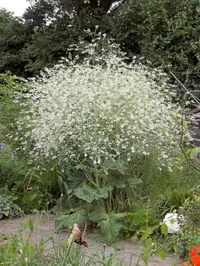
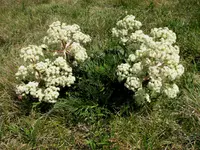
Greater sea-kale (Crambe cordifolia) is a long-lived herbaceous perennial grown mainly for its dramatic, cloud-like masses of small white flowers. It forms a large mound of broad, crinkled gray-green leaves, then sends up tall, branching flower stems that create a light, airy effect in early summer.
This plant is native to rocky slopes and coastal areas of the Caucasus region, so it is adapted to cool climates and well-drained soils. It suits mixed borders or a focal spot where its size and bloom display can be appreciated.
Gardeners who want to know how to care for greater sea-kale should note that it prefers full sun, consistent but not waterlogged moisture, and deep, fertile soil to develop its full stature.

Care Difficulty
Moderate Care

Light Preference
Full Sun

Water Requirements
Moderate Water

Temperature Preference
Cold Hardy

Hardiness Zone
4–8

Soil Texture
Loamy, Sandy, Organic-rich

Soil pH
Slightly acidic (6.5–7.0), Neutral (7.0)

Soil Drainage
Moist but well-drained

Fertilization
Minimal (feed rarely)
Scan your plant to receive care tips personalized for your specific plant
Available on iOS and Android
This large perennial needs consistent sun to build strong foliage and flower well.
This deep-rooted perennial prefers evenly moist but not saturated soil, especially in its first seasons.
This hardy perennial thrives in cool to mild conditions and tolerates substantial winter cold once established.
Humidity is rarely critical for this hardy perennial, which thrives in typical outdoor air conditions.
This deep-rooted perennial prefers a free-draining but moisture-retentive mineral soil to support its large foliage and flowering stems.
This species is generally unsuited to long-term container growing because of its very large size and deep root system.
Crambe cordifolia benefits from modest feeding but grows acceptably in average, fertile garden soil.
Crambe cordifolia needs minimal structural pruning, mainly focused on cleanliness and flowering performance.
This deep-rooted perennial is best grown in open ground and resents frequent disturbance or repotting.
Propagation of Crambe cordifolia is possible but somewhat specialized, mainly through root cuttings and seed.
This perennial is generally cold hardy in temperate climates and needs little active winter care once established.

Plant Health Check
Not sure what's wrong with your plant? Check your plant's health inside the app.
This species produces huge, airy branching panicles up to 2–3 m tall, carrying hundreds of tiny white flowers that create a distinctive billowing, cloud-like effect over the foliage.
It belongs to the Brassicaceae family and is closely related to the edible sea-kale Crambe maritima, sharing the same cabbage-mustard lineage that includes crops like broccoli and kale.
The plant forms a thick, deep taproot that stores energy and helps it tolerate periods of drought and nutrient-poor soils better than many other ornamental perennials.

In suitable conditions this long-lived perennial can remain in the same spot and flower reliably for decades, gradually forming an impressive, almost shrub-sized clump from its persistent rootstock.
Lack of flowering is usually due to plants being too young, insufficient light, or nutrient imbalance from excessive nitrogen. Division or transplanting can also delay blooms for 1–2 seasons while the root system re-establishes.
Keep your plants happy and healthy with plant identification, disease detection, and easy care guidance.